
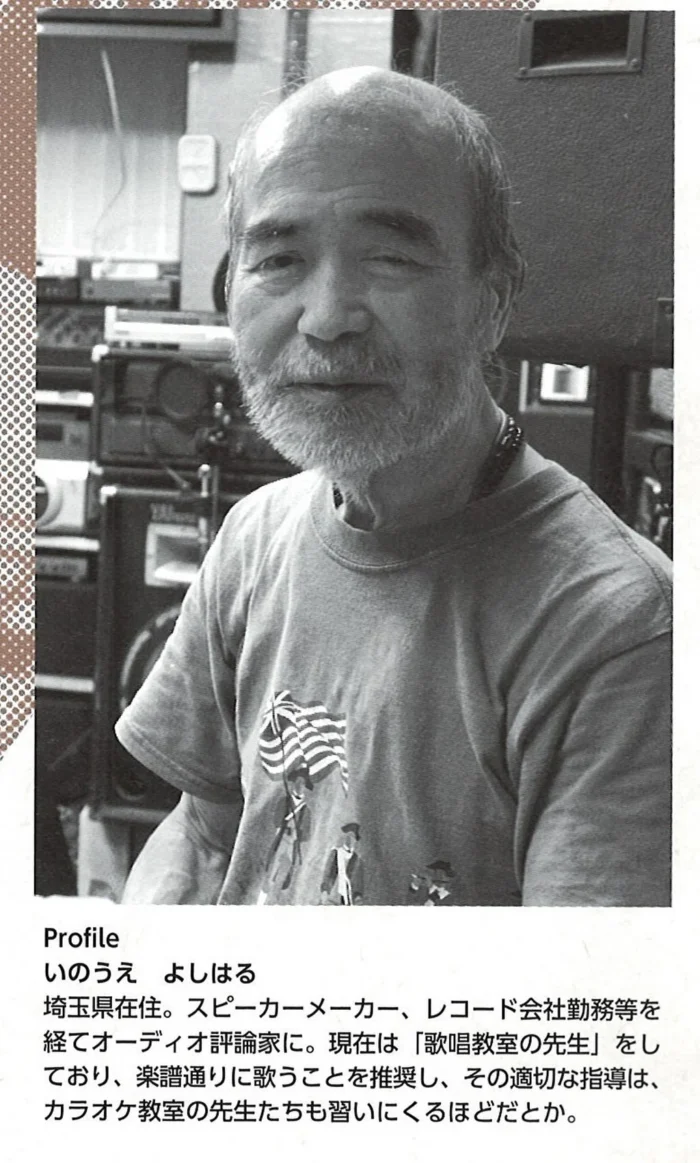
Audio critic Inoue Yoshiharu, who was actively writing for the legendary magazine “FM STATION,” effectively became the evangelist of cassette culture. “In the hierarchy of recognition I was about one step below the most famous and popular audio critics of the time, and that’s precisely why I often got delegated the work of reviewing and critiquing cassette tapes,” Inoue recalls. As a result of these circumstances, he can legitimately be called the person who in Japan came into contact with more varieties of cassette tape than anyone else. We asked him to share his memories of the golden era of that format.
Behind the founding of FM STATION: Inoue’s key role
Today we’re showing Inoue those very articles he wrote for “FM STATION” (Diamond publishing) many years ago. “Oh my, I really was doing all this… I’ll be honest, I barely remember the details anymore. But this magazine - pure nostalgia. In that era the FM press market was dominated by three giants: ‘Weekly FM,’ ‘FM Recopal’ and ‘FM fan.’ When ‘FM STATION’ was being planned, at one of the audio manufacturer parties the representatives of all three publications gathered. Everyone was laughing loudly, quoting the proverb: ‘You can’t catch a fourth loach under the same willow!’ - hinting that there was nothing left for a fourth player in this field. But when the magazine actually came out, its circulation turned out to be bigger than the combined circulation of all three competitors.
The founder of the project was a man named Takahashi - an absolute professional in publishing and an incredibly talented editor. The magazine ‘CAR and DRIVER,’ which served as the conceptual foundation for ‘FM STATION,’ was also his work. In those days the deputy editor-in-chief of ‘Weekly Playboy’ (Shueisha), with whom I had a business relationship, approached me: ‘A friend of mine is burning with the idea of launching a new audio magazine or music publication. Could you clarify for him what’s actually happening in the audio industry right now?’ So I gathered a stack of relevant magazines and went to meet Takahashi. It was in the course of that exchange that the final decision was born: ‘Right then, it’s decided, let’s make a new audio magazine.’” And so, through a personal conversation between Inoue and Takahashi, “FM STATION” came into existence - the publication that became a massive phenomenon in the 80s.
Philosophy of quality: what makes a good cassette, according to Inoue?
What did the cassette tape market look like through professional eyes in the 70s and 80s? “As many people know, market share at the time was practically completely divided among the three industry giants: Sony, TDK and Maxell. All the other brands - I don’t want to offend anyone with the word ‘also-rans,’ but they were perceived more as interesting variations on the main menu. True cassette recording enthusiasts would first try the Big Three, and only then - wanting a kind of ‘side adventure’ - would dare to test other brands.
At the time about twenty consumer electronics companies had their audio divisions. Each one worked tirelessly to put out new products. It wasn’t that the old models were bad - it’s just that consumer psychology demanded constant renewal. The market lived by the motto ‘New product after new product!’ It was on this wave that companies previously not in the tape business, like Taiyo Yuden, joined the fight. I think the main battleground for all brands was the Normal Position segment. The strategy was: create a flagship Metal-class model as a symbol of technological superiority - a kind of ‘crown’ for the brand - and make the main sales volume on affordable Normal cassettes.
Against this backdrop, FUJI had moderate recognition for a long time, right up until they rebranded as AXIA and brought in Yuki Saito as their image character - then their popularity shot up instantly. As for DENON, they probably saw cassette production as a tool for promoting their cassette decks. So the industry got the strong impression that their tape was just a secondary product - a sort of free extra that came with their equipment.”
It’s worth noting that Inoue was directly involved in the birth of the That’s brand. “Many manufacturers came to me for expert assessment of their developments, and among them was Taiyo Yuden, the company behind That’s. Their engineers, preparing to launch a new brand, would come to me for consultations and advice on the characteristics of the cassettes they were planning to bring to market.”
Balance - the central criterion for quality
Looking at contemporary photos of That’s cassettes, you can’t help but be struck by their unique appearance. “Their designer came up with a completely original triangular window for monitoring tape movement. Since they were entering the market later than competitors, it was vital for them to create a strong visual feature so as not to get lost in the crowd. Over time both the sound quality and reliability figures improved significantly, and in the second half of the era they were releasing genuinely elite models.
By the end of the cassette era the arguments about ‘metal is inherently better’ or ‘chrome is preferable’ had gradually faded, but earlier each tape type had its own clear niche. Metal was for those who needed the widest possible dynamic range, High Position was chosen by listeners who valued clarity and treble detail, and Normal served standard everyday use. Moreover, gradations of quality existed even within a single Metal type. In this regard, Taiyo Yuden had such a depth of resources that they could afford detailed sub-classification within each position.”
Inoue is the person who has listened to and tested more cassettes than anyone else. So what’s his verdict on the ideal tape? “A good tape needs what we call ‘merikari’ - clear, contrasting, dynamically articulated sound with sharp accents. It needs a wide dynamic range and confident handling of the full frequency spectrum. But the most critical aspect for me is vocal balance. There’s no point in excessive bass or hypertrophied treble if the overall harmony is broken. With poor balance, the vocal image doesn’t localize properly - the voice just doesn’t focus in the center of the soundstage. That’s why for me, balance is the alpha and omega of any cassette tape evaluation.”
Professional path: from speaker design to audio critic
After studying radio engineering at a specialist school, Inoue in 1970 got a job at audio company Chrysler - a loudspeaker manufacturer. “My path started right on the assembly line, where I built speakers with my own hands. Then I moved to design, quality control and engineering inspections. Chrysler speakers were enormously popular in those years. To be honest, the company also acted as an OEM supplier of speakers for a number of other well-known audio brands. But over time, competitors started investing enormous amounts in advertising. Chrysler didn’t have the financial resources to blanket the magazine pages with ads, and sales began to decline gradually.
During that period, well-known Japanese jazz musicians would often drop by our office - people like clarinetist Kitamura Eiji. We’d spend a long time discussing the nuances of speaker sound with them, and that’s when they decided to found their own recording company.”
Remember the cartoon illustration of a man with a big afro that regularly appeared on the pages of “FM STATION”? That was the graphic image of Inoue at that time. He was an enormously prolific writer, covering not just cassettes but practically every type of audio equipment.
“The jazz musicians asked me to join their new company as an engineer, and I agreed. At first there was tons of work, but after two years the situation changed. With no clear planning and nobody doing active sales, the work kept drying up and things got quiet. I realized that long-term this project had no future, and after discussing the situation with colleagues we started leaving one by one.”
The next step was an artists’ agency, connections with which had formed through previous projects. There Inoue took on the role of sound engineer at concert venues. “The nature of production work is this: when a concert tour is on - you’re run off your feet; when there are no concerts - you’re left to your own devices.” And then one day, during one of those stretches of forced idleness, an entirely unexpected request came in from “Weekly FM”: they needed help preparing a special issue on DIY loudspeaker building.
“In those days the undisputed authority on DIY audio was Tetsuo Nagaoka. He was probably the most media-savvy and well-known person in the Japanese audio world. But after I put out just that one piece, readers instantly placed me in the same category as Nagaoka himself.” The article had the effect of a bombshell, and Inoue - without having planned it at all - stepped onto the path of professional audio criticism.
Looking back at his whole previous career, it’s clear this path was preordained. “First came foundational radio engineering and deep knowledge of electronics, then an immersion in the world of vinyl records, and after that the invaluable practical experience of working with concert PA systems at real venues. Even though I didn’t consciously head toward it, my whole life had been a kind of preparation for audio criticism.”
The recognition of Inoue’s contribution reached its peak when he was officially included on the honor roll of “60 cultural figures representing Japan.” “The fact that this choice was made by the people around me and colleagues in the field - I consider that the greatest honor.”
The analog revival: space for expert nuance
“For me it was a genuinely exciting era. During the period of my most active cassette work, I traveled across Japan dozens of times a year with audio seminars, at TDK’s request. I still have a huge archive of materials from those years, and when I look back through them I’m flooded with deep nostalgia.
I’m convinced that one of the key factors in the decline of traditional audio was the arrival of the CD format. Why? Because in the analog sound world, the result depended directly on the person who set up the equipment and played the recording. Through skill in handling the equipment you could achieve truly outstanding sound. With a CD player, the result will be identical no matter who presses the button. You can’t adjust the laser wavelength in a player to your taste. In those sterile conditions, true enthusiasts and sound fanatics are simply left with no space for ‘untiku’ - the conversations, the stories, the accumulated knowledge, discussions of technical nuances and expert details. It was precisely that deficit of involvement that caused people to drift away from audio as a serious hobby.”
But in recent years we’re seeing a triumphant return of analog formats. “The reason for this renaissance, in my view, is precisely that analog once again lets people demonstrate their expertise and discuss those subtle details in many senses. I see cassettes coming back into the spotlight, back into the light, and I genuinely think this is a wonderful trend.”