
In January 1934 the film division of Dainippon Celluloid, now Daicel, became Fuji Photo Film. Fuji began researching magnetic materials in 1954 and built a pilot magnetic-tape plant at Odawara in 1958. It started with video tape, then released reel-to-reel audio tape in 1965, music tape in 1967 and entered the cassette market in April 1969. In 1985 it created AXIA, a youth-oriented brand, and quickly increased its market share.
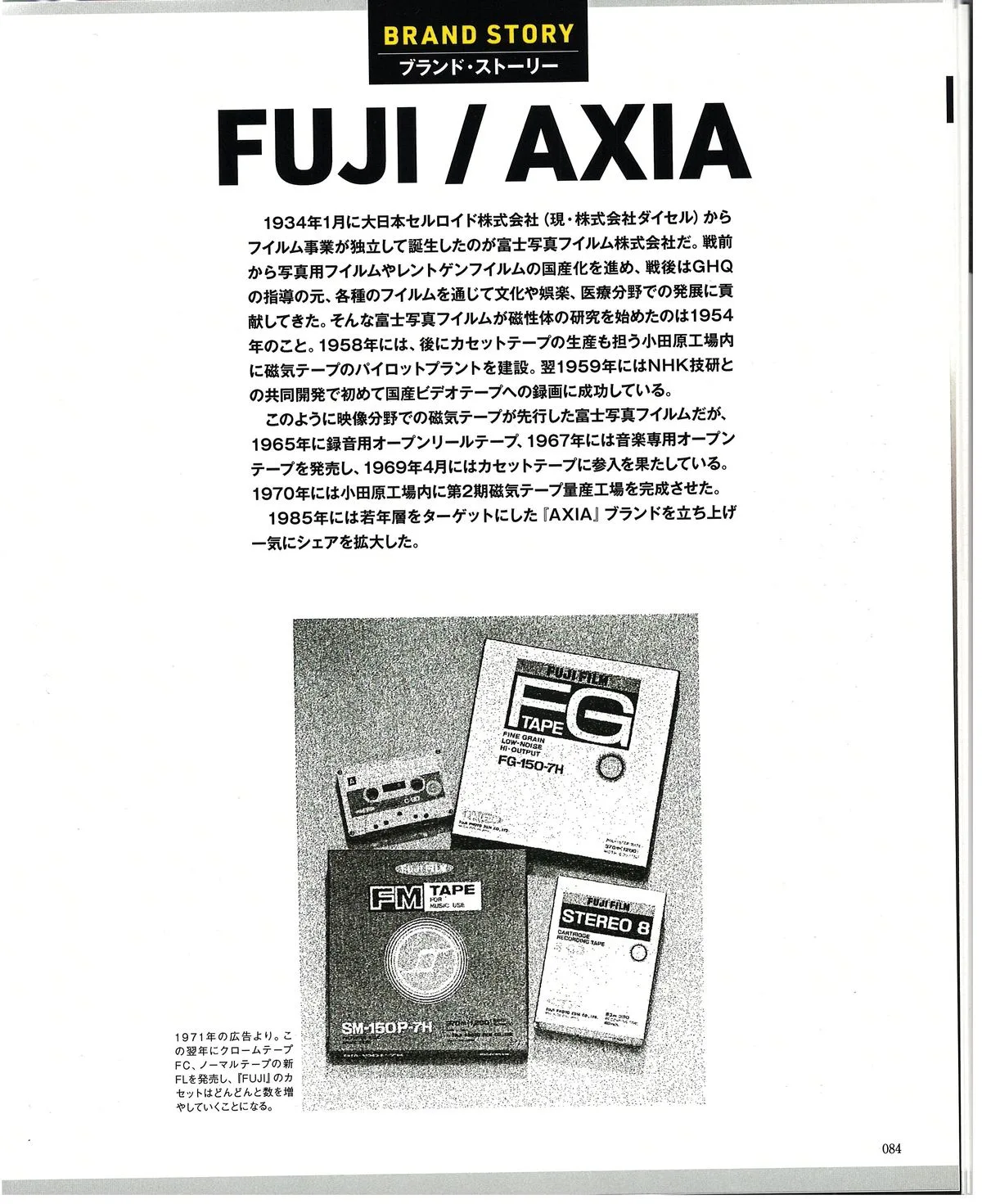
HD-Master/SD-Master/XD-Master
Fuji Photo Film had made cassettes since the format’s beginning, but its share remained low. AXIA redirected the company toward younger buyers. The 1985 range included JP, JC, PS-I and PS-II, plus GT-I and GT-II inherited from the Fuji name: six models in all. To add premium products, Fuji introduced the Master series.
It used HD-Master normal tape, SD-Master high-position tape and XD-Master metal tape. Beridox Master developed the magnetic material used in PS. Its Thermal Transfer 4LC shell had four layers: a protective surface, alloy-coated foil, adhesive and latex-compound resin. The cassettes were also designed for noise reduction, with advertising promising unchanged sound when Dolby or other systems were used.
HD-Master, SD-Master and XD-Master, 1987.
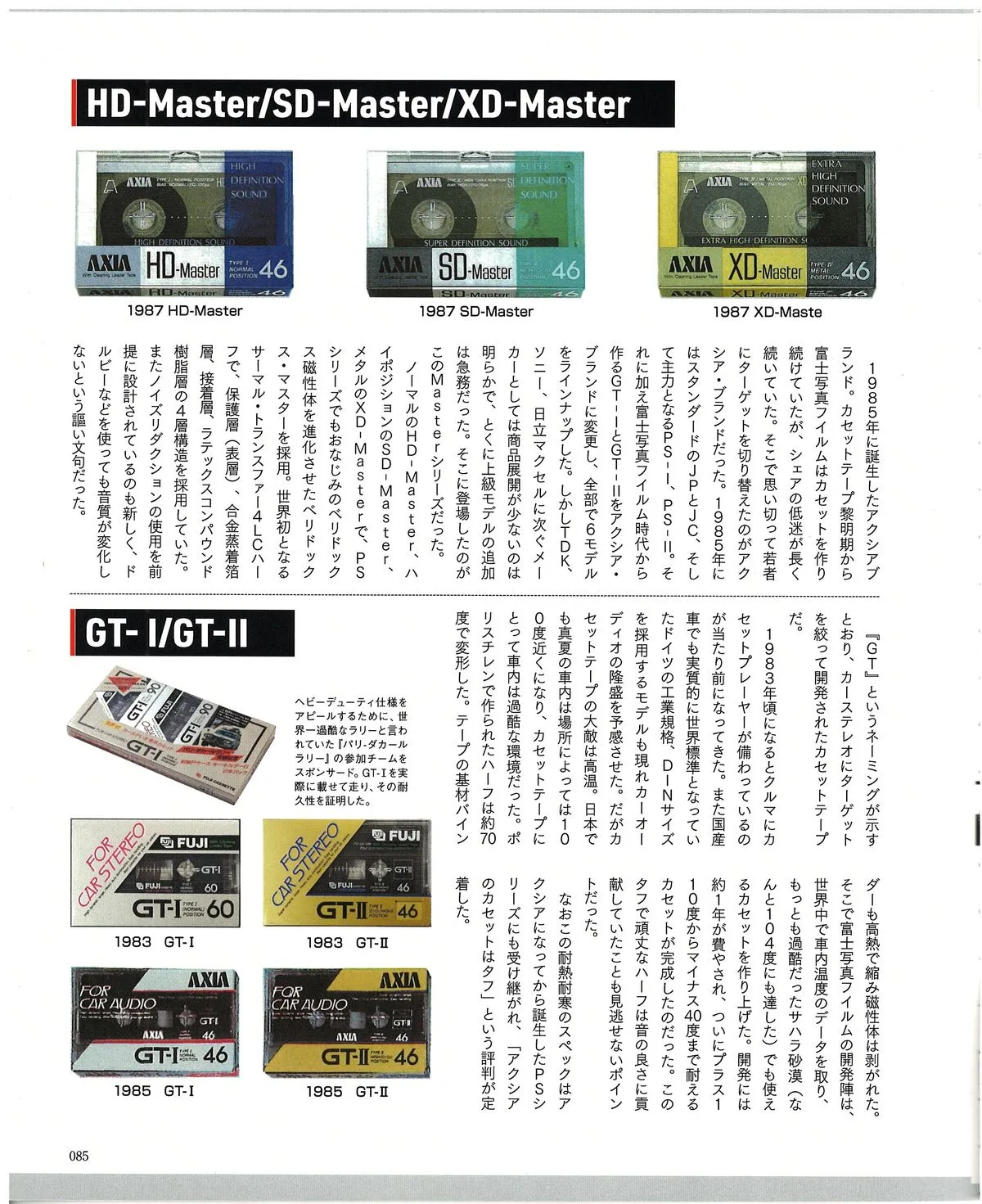
GT-I/GT-II
As the name suggests, GT cassettes were designed for car stereos. By 1983 the car cassette player was common, but heat was the cassette’s greatest enemy. Cabin temperatures in Japan could approach 100 °C. Polystyrene shells deformed around 70 °C, while the tape base and binder shrank and the magnetic layer peeled away.
Fuji collected temperature data from cars around the world and developed a cassette for conditions as severe as the Sahara, where temperatures reached 104 °C. After about a year of work, it produced a shell rated from +110 to -40 °C. The strong, stable shell also helped sound quality. PS inherited this heat-and-cold resistance, establishing AXIA’s reputation for durable cassettes. Fuji sponsored a team in the Paris-Dakar rally, and GT-I proved its strength in the race car.
GT-I and GT-II, 1983; GT-I and GT-II, 1985.
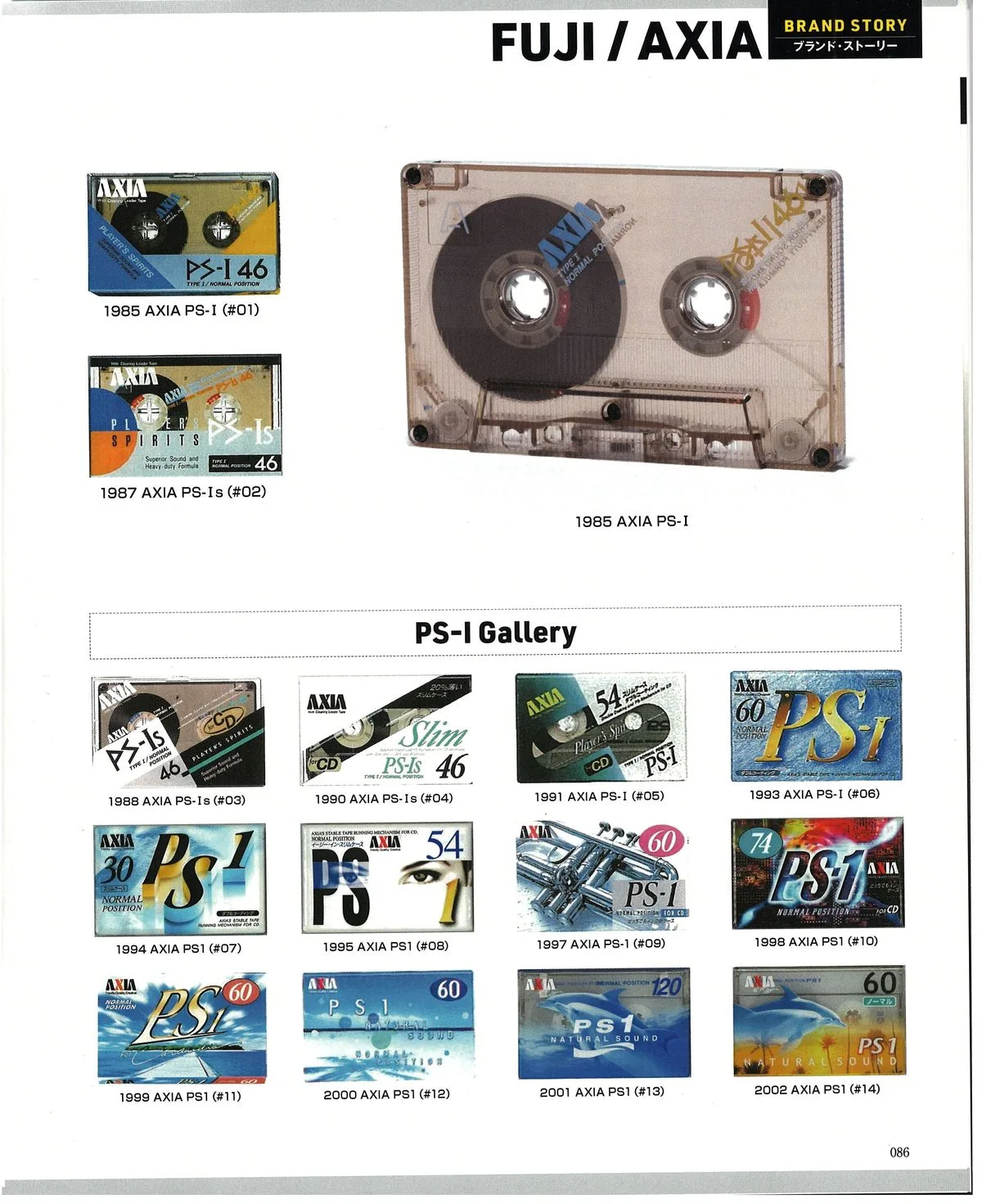
PS-I gallery
AXIA PS-I 1985 (#01); AXIA PS-Is 1987 (#02); AXIA PS-I 1985.
AXIA PS-Is 1988 (#03); PS-Is 1990 (#04); PS-I 1991 (#05); PS-I 1993 (#06); PS1 1994 (#07); PS1 1995 (#08); PS-1 1997 (#09); PS1 1998 (#10); PS1 1999 (#11); PS1 2000 (#12); PS1 2001 (#13); PS1 2002 (#14).