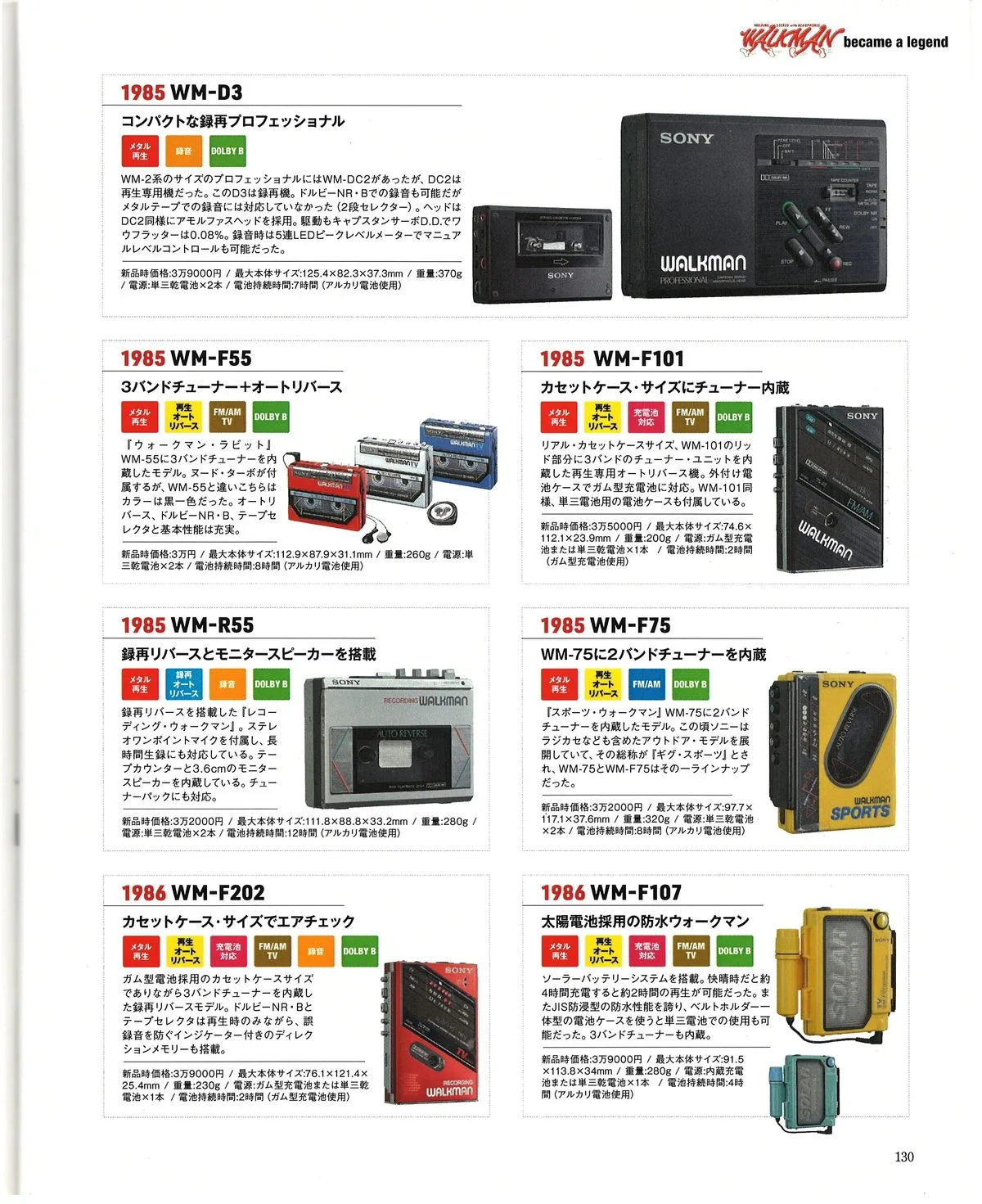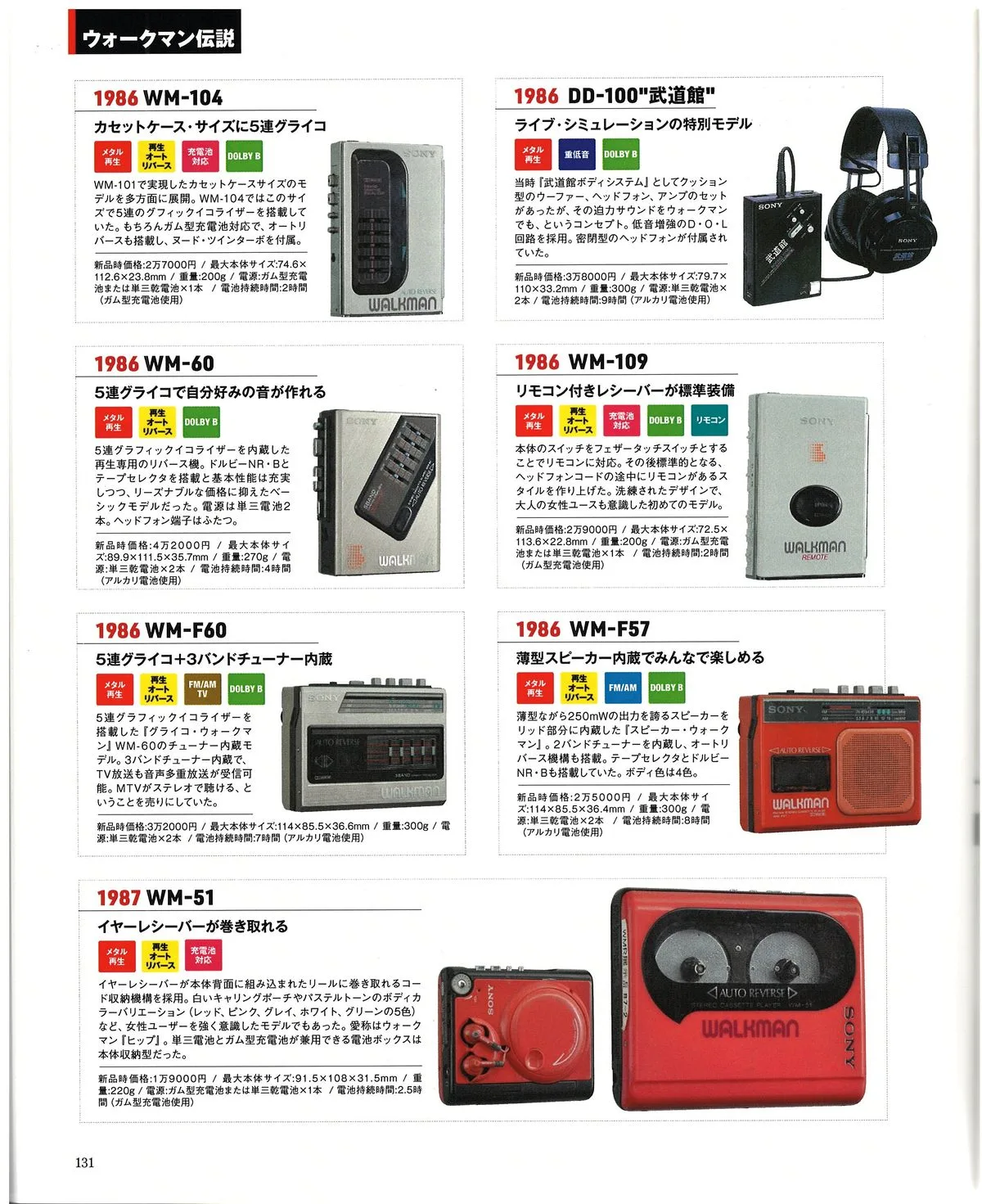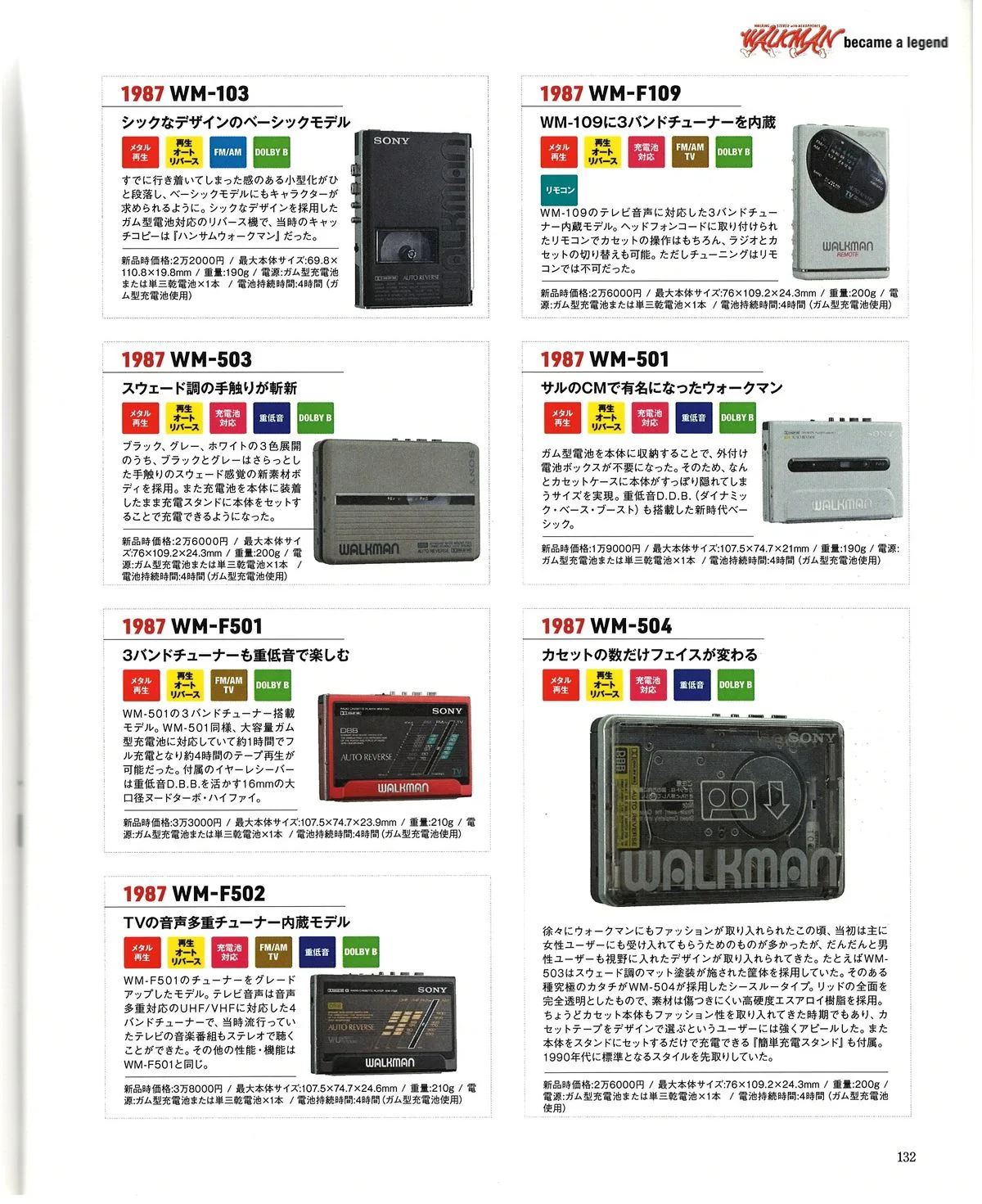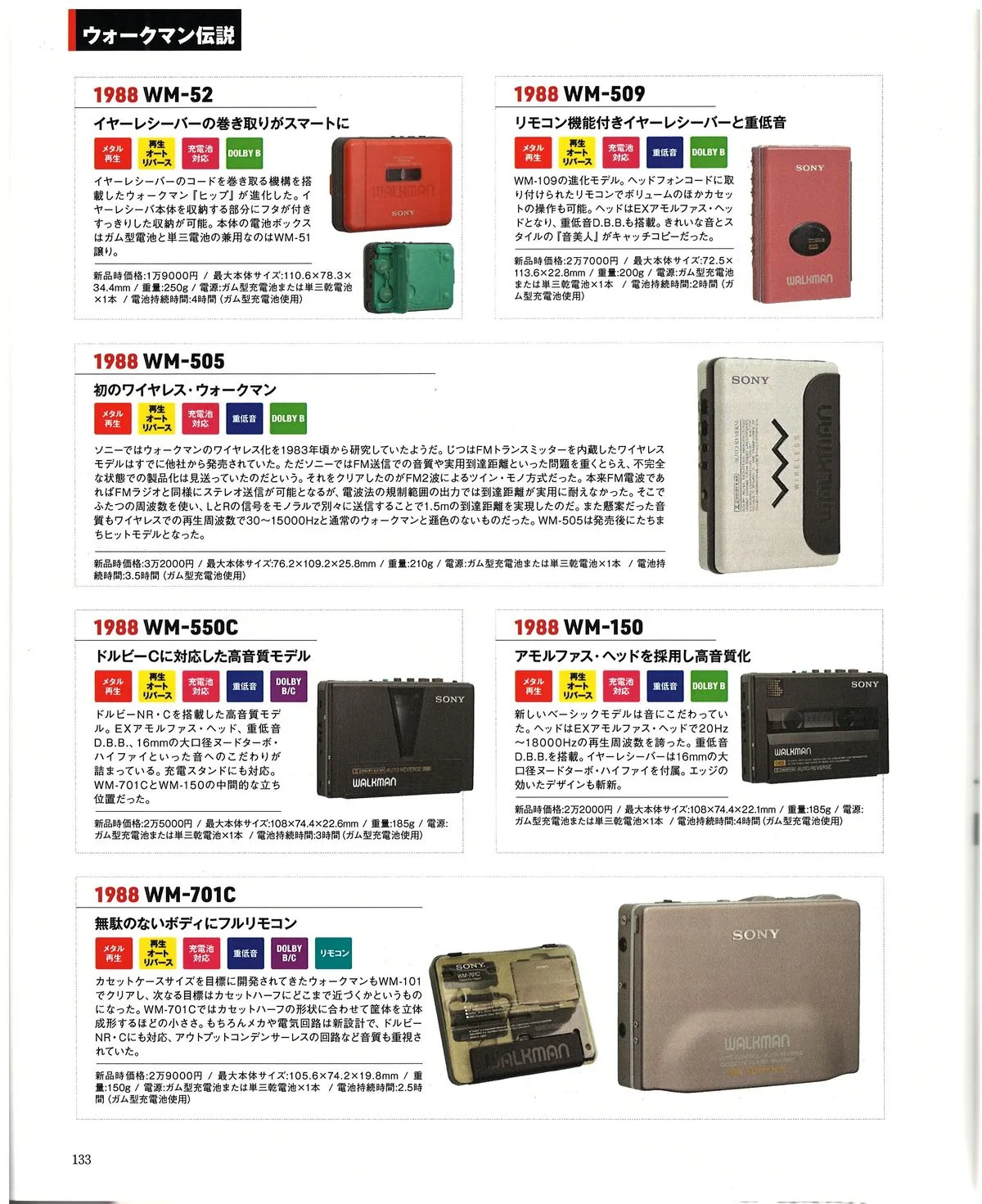
“If we do not sell 30,000 units, I will leave the presidency”
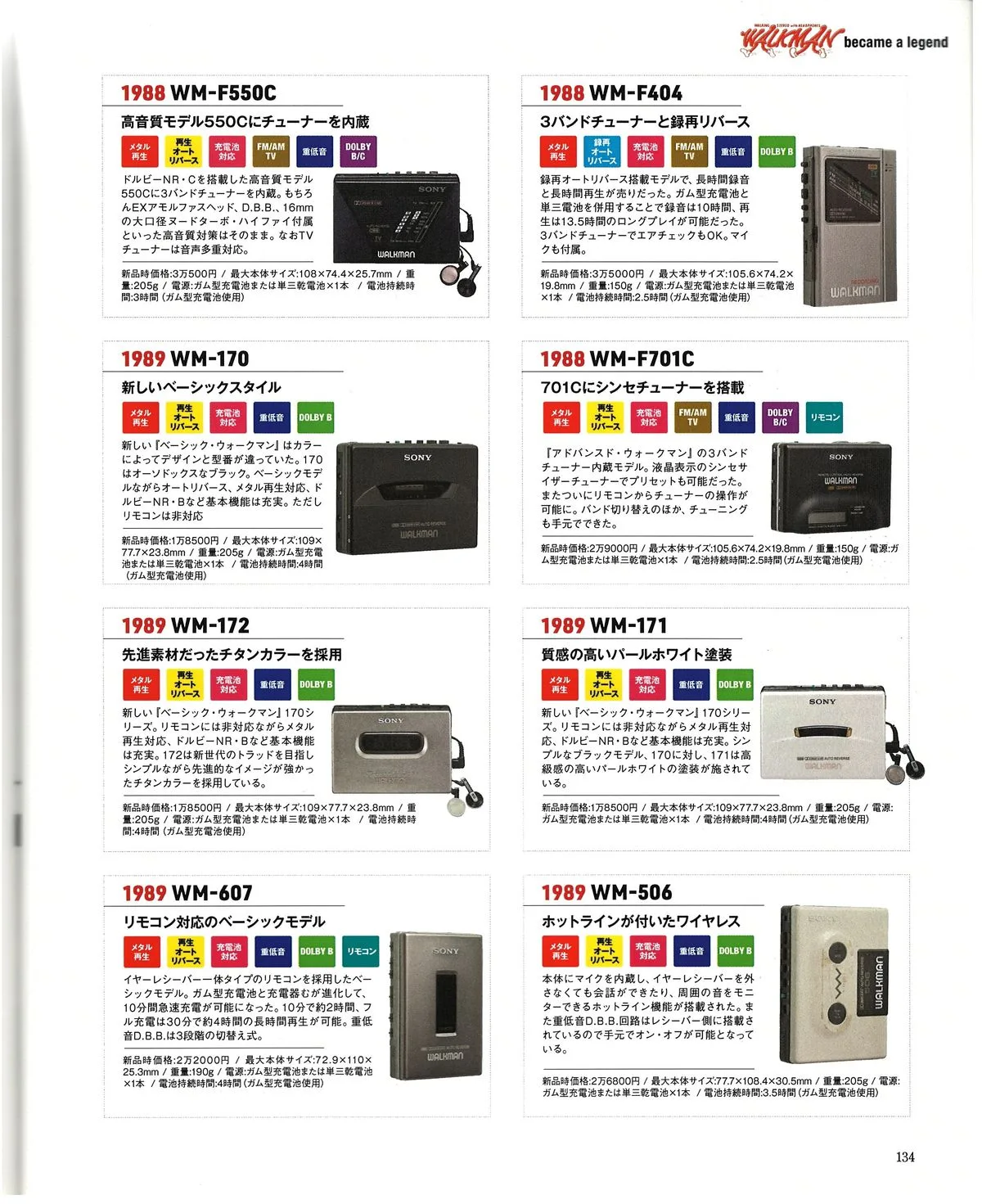
Masaru Ibuka carried a TC-D5 “Densuke” and headphones on business trips, but the 1.7 kg recorder was too large for listening alone. He asked engineers for a compact playback-only player, and Akio Morita saw its commercial potential. The prototype became Walkman and created the culture of carrying music with you.
Morita’s quotation is only a legend, although Ibuka and Morita were clearly passionate about Walkman.
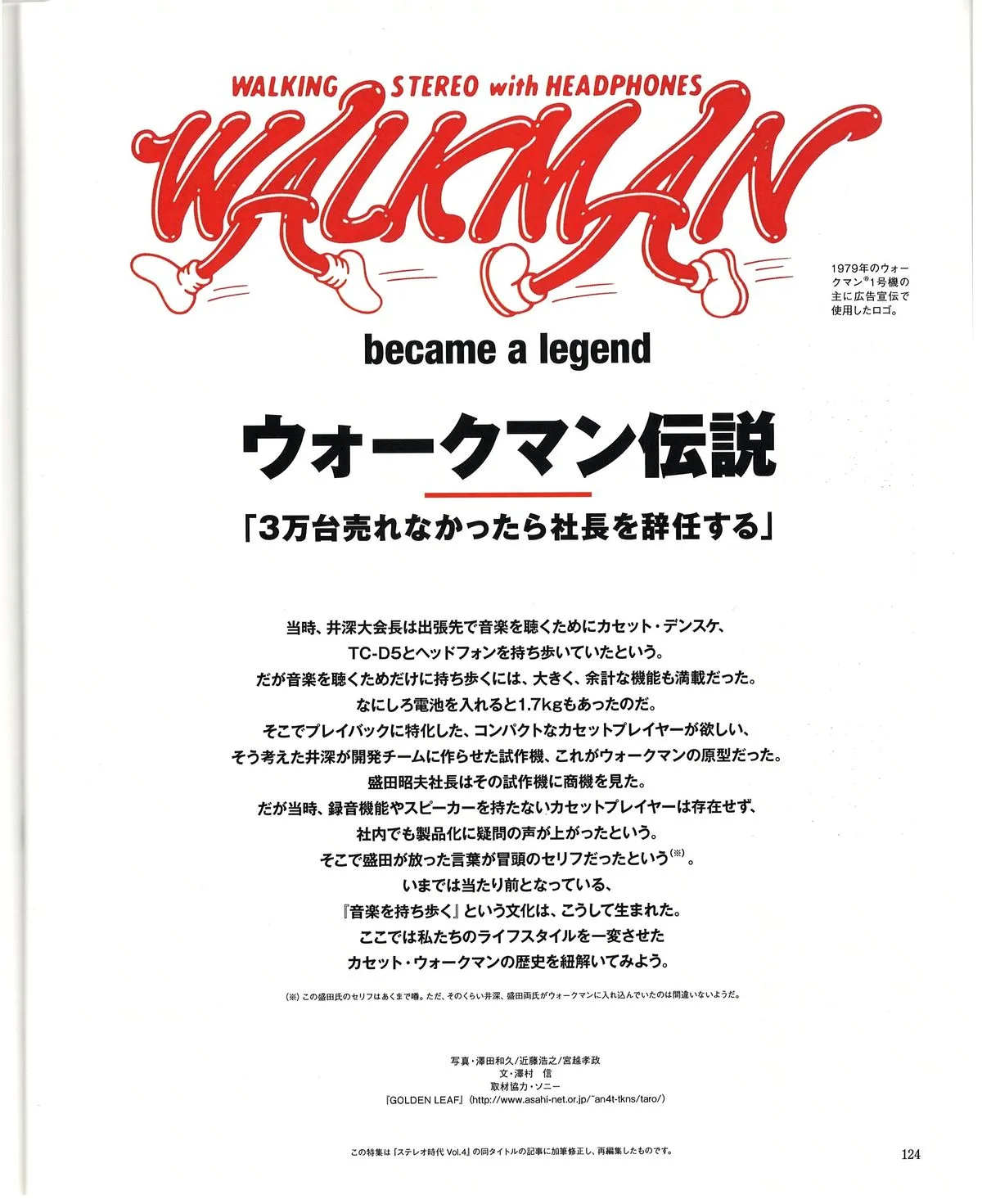
The logo used mainly in advertising for the first Walkman in 1979.
Text: Makoto Sawamura (澤村信). With Sony and GOLDEN LEAF.
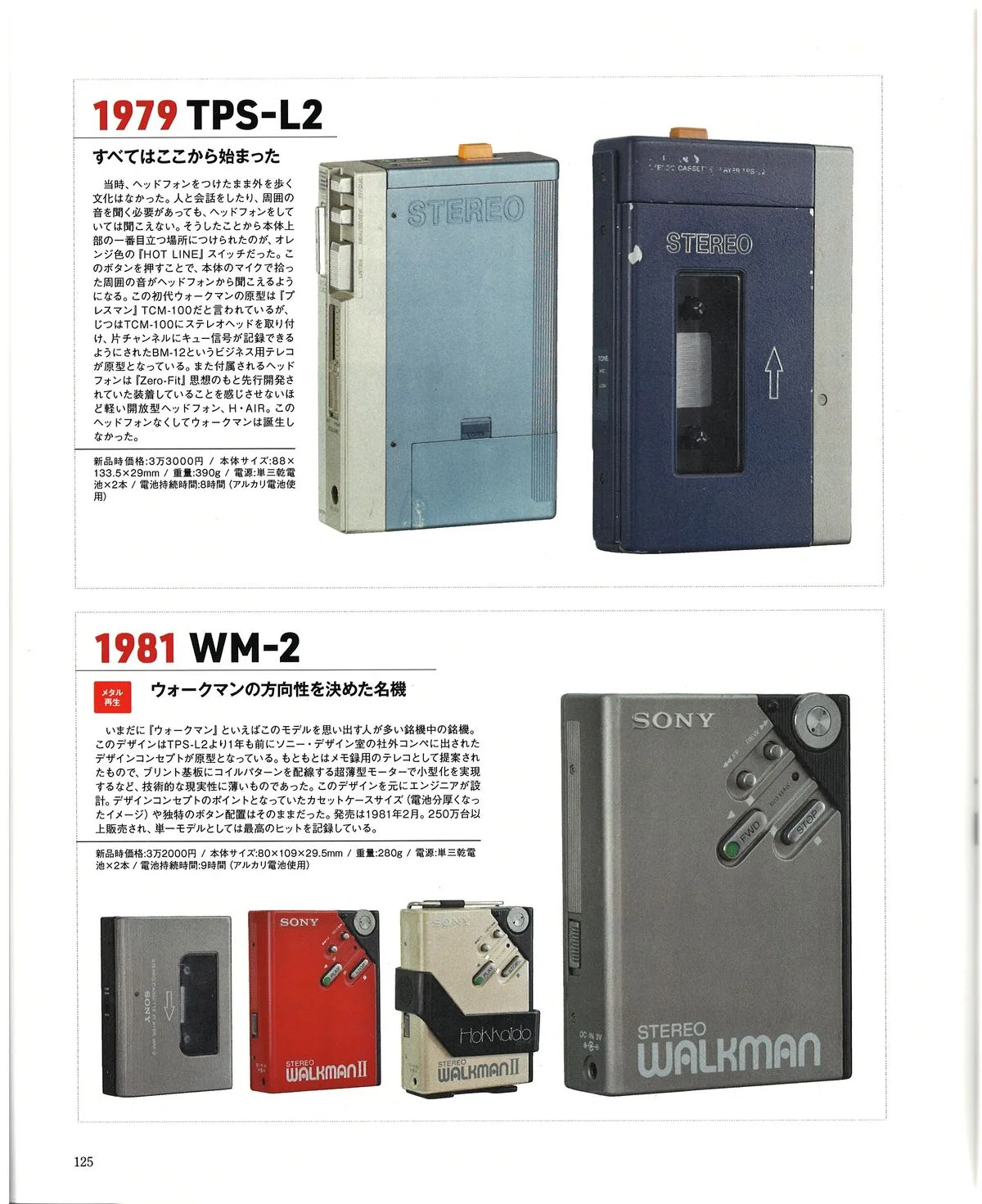
1979 TPS-L2. It started here
The orange HOT LINE button let users hear surrounding sound through the built-in microphone. The player used open H・AIR headphones developed on the Zero-Fit principle.
1981 WM-2. The model that defined Walkman
The cassette-case-sized WM-2 sold more than 2.5 million units. Its unusual button layout and support for Metal playback became the image many people still associate with Walkman.
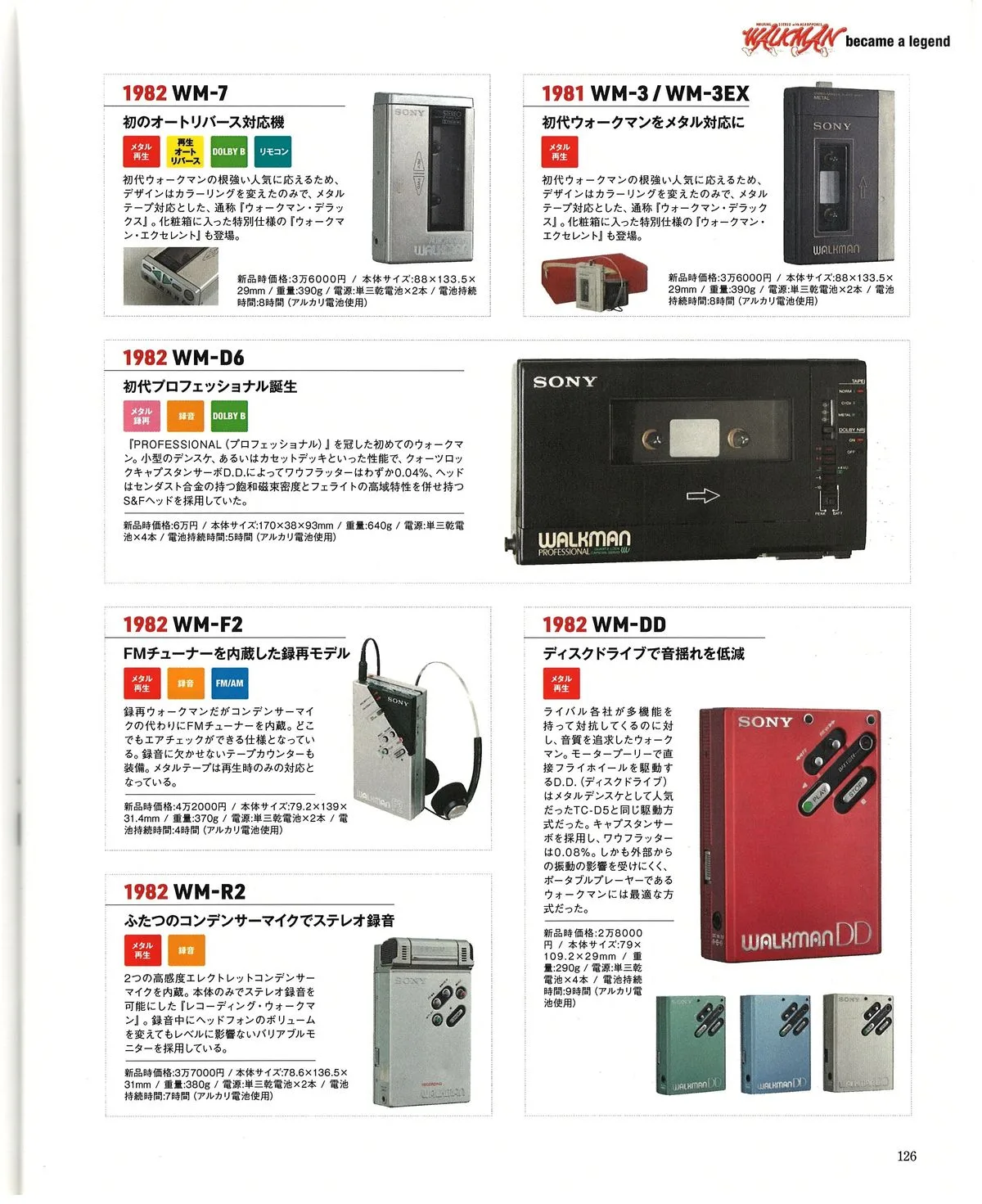
1981 WM-3 / WM-3EX. First Metal-compatible Walkman
The first Walkman design returned in a new colour with Metal playback. A gift-box Walkman Excellent version was also offered.
1982 WM-7. First auto-reverse model
Auto-reverse, full-logic control, Dolby B and a remote packed ambitious technology into a player that arrived too early.
1982 WM-D6. The first Professional
Recording and playback, Metal support and quartz-controlled D.D. transport gave 0.04 percent wow and flutter. It was a small Densuke rather than an ordinary Walkman.
1982 WM-DD. Disc drive reduces wow
The motor directly drove the flywheel, achieving 0.08 percent wow and flutter and good resistance to external vibration.
1982 WM-F2. Recording with an FM tuner
This recording Walkman replaced the microphone with an FM/AM tuner, allowing radio broadcasts to be recorded anywhere.
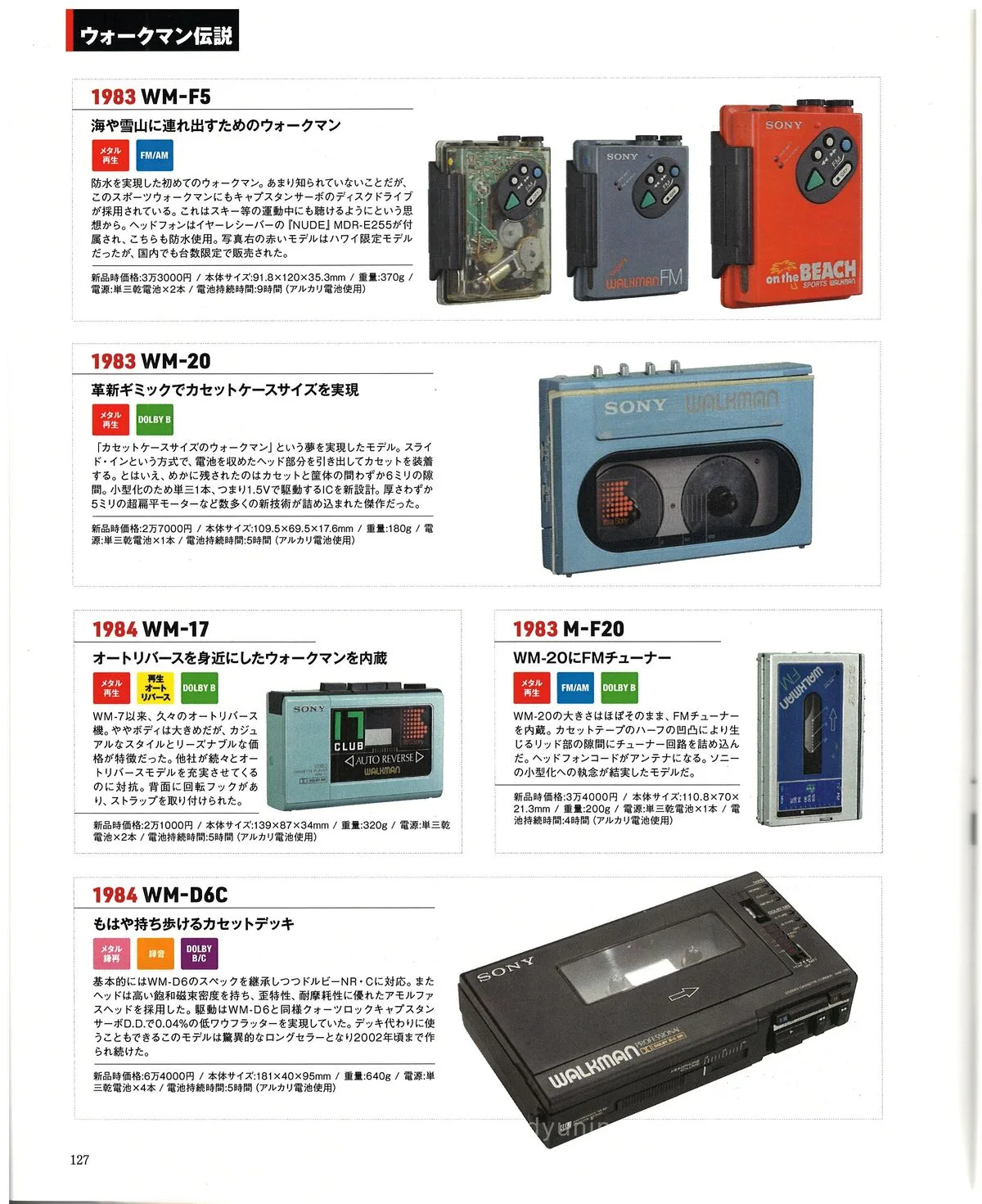
1983 WM-20. Cassette-case size
A thin motor and sliding head block achieved cassette-case dimensions.
1984 WM-D6C. Professional recording
Dolby C, Metal support and a precision transport made WM-D6C a professional recorder; its detailed development is covered in the separate article.
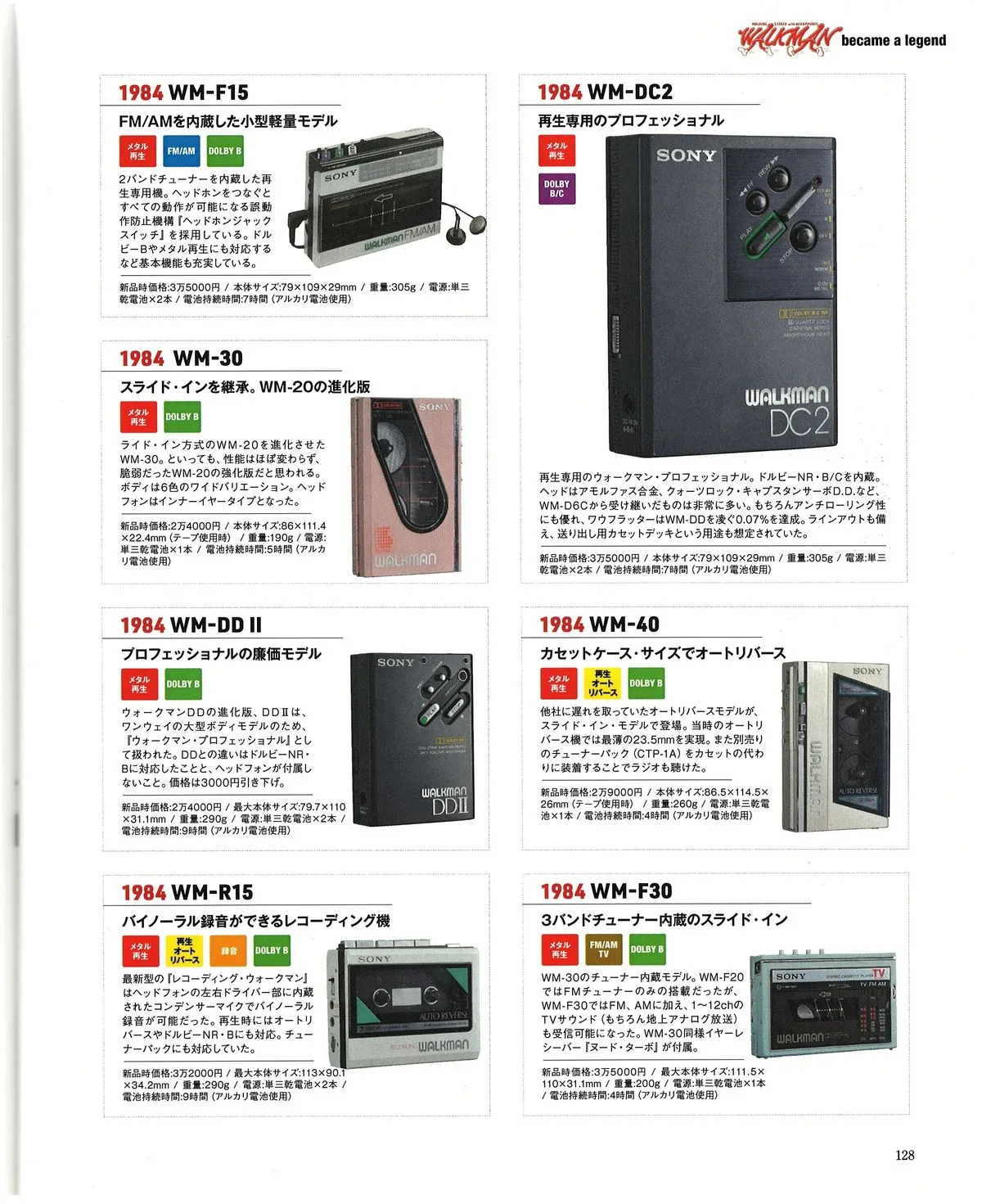
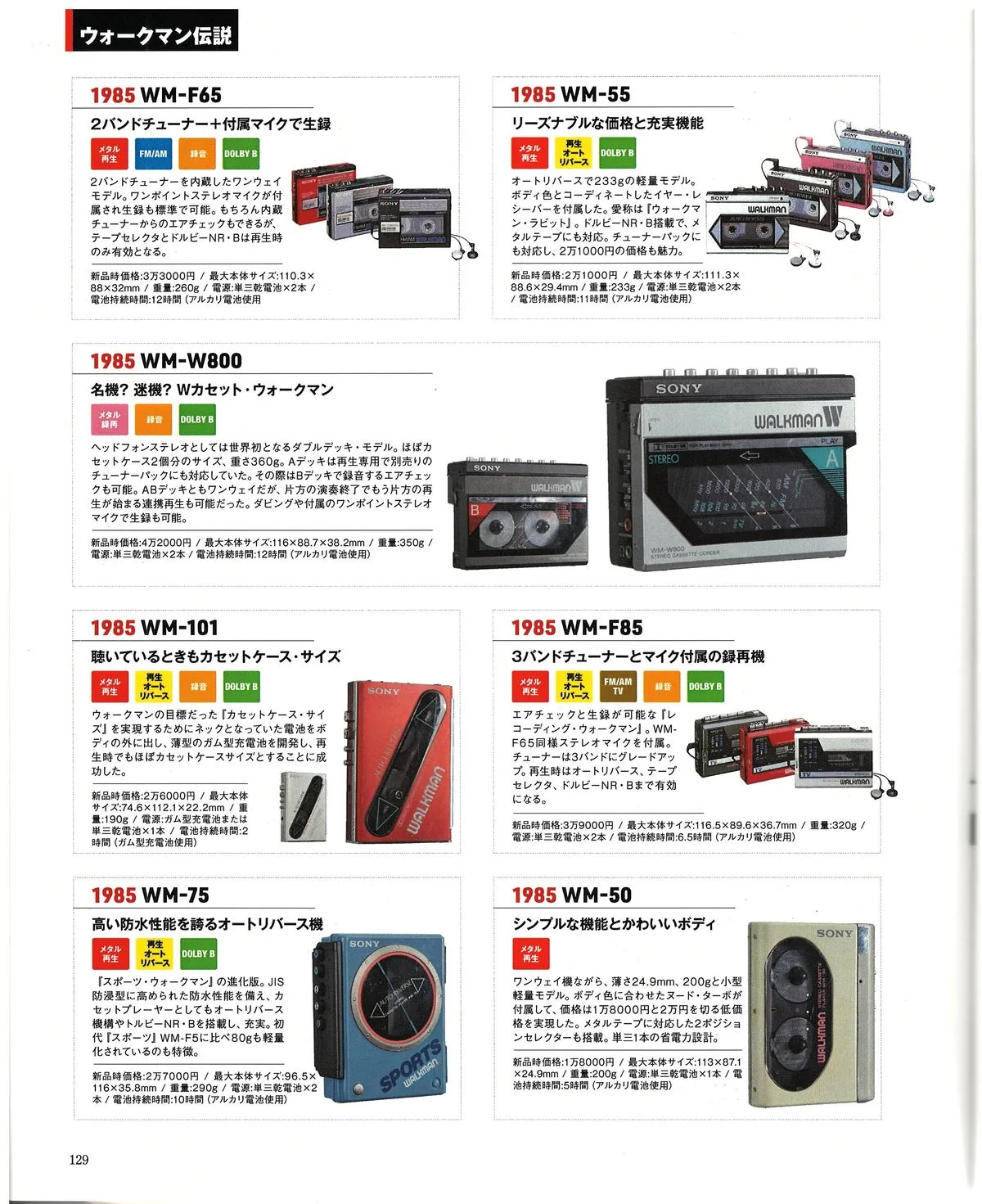
1985 WM-101. Flat rechargeable battery
The flat battery finally made a genuinely cassette-sized player practical.
1986 WM-109. Long battery life
Sony’s engineers refined the transport and power circuits to extend operation without enlarging the shell.
1987-1990. More functions in less space
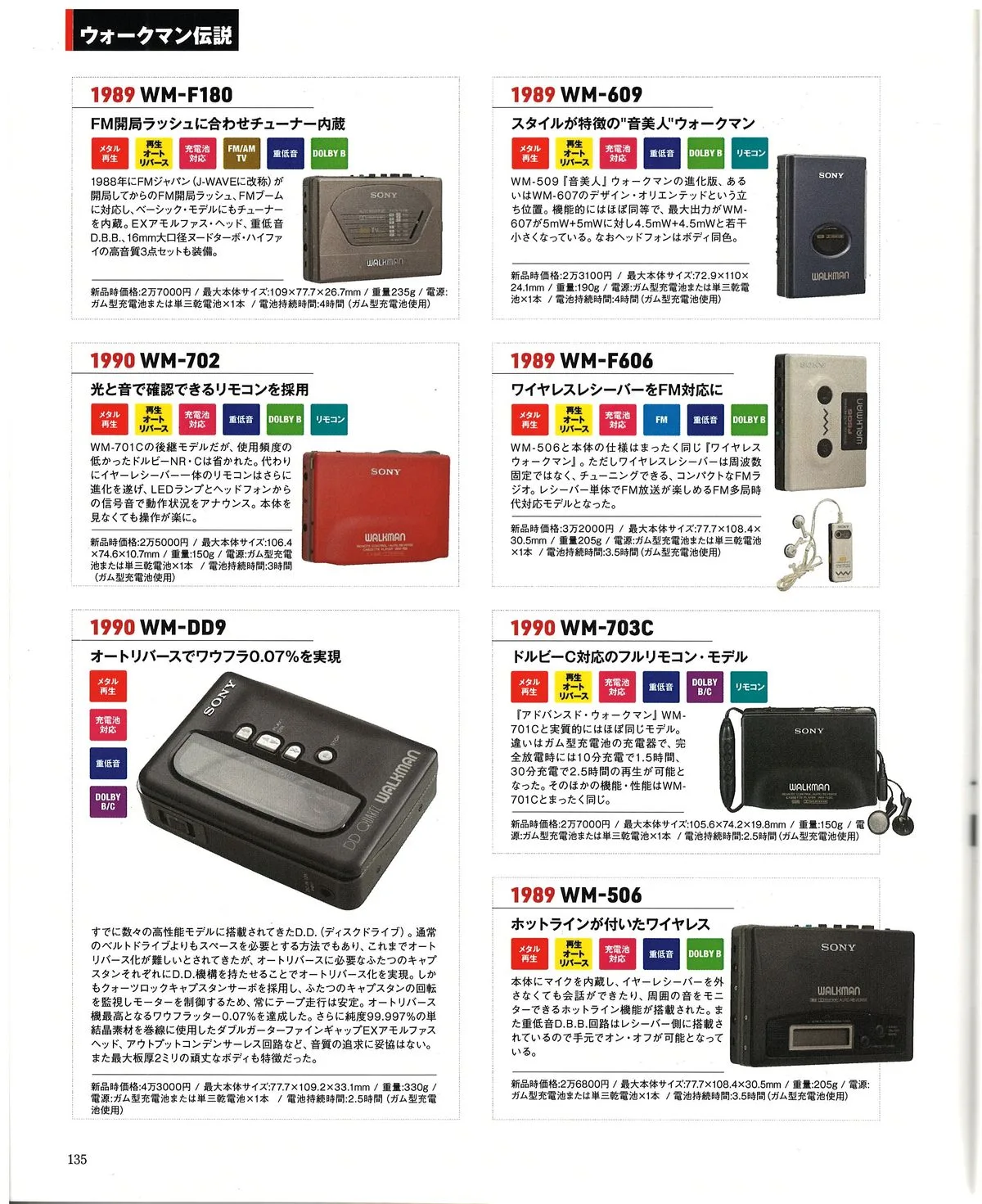
Auto-reverse, Mega Bass, Dolby B, remote controls and tuners spread through the range while the bodies became thinner and battery life longer.