
What were TDK cassettes?
A conversation with key figures in product planning and advertising who created the golden age
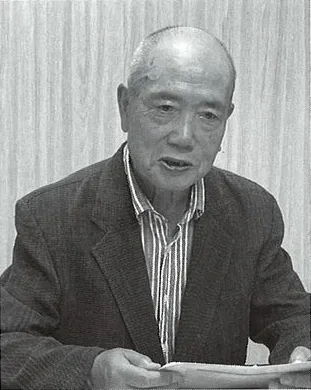
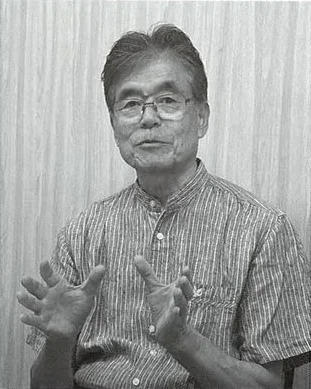
TDK’s success was perhaps not only a victory for technical expertise but for its combined strengths, including product development, communication, sales and more. We asked two former employees, Shunzo Hatakeyama and Hiroshi Yoshino, who played central roles in product planning and advertising during TDK’s golden age, to recall those days.
Interview and text: Kazuhiro Oku.
Building your own brand. Making commercials with artists
You worked on the company newspaper at head office, didn’t you?
Shunzo Hatakeyama (hereafter Hatakeyama): I joined in 1960. Initially I worked at the Hirasawa factory in Nikaho, Akita Prefecture. In 1963, I was transferred to the Tokyo head office and became editor of the company newspaper, TDK Times. My boss then was Shohachi Okiyama. In 1968, he became sales manager of the tape division and invited me: ‘Would you like to join us? An amazing cassette is coming out soon.’ He meant SD.

The world’s first cassette for music.
Hatakeyama: Yes. Okiyama was a great strategist. He decided: ‘Rather than release it first in Japan, let’s start in America. When you think of a country of music, it has to be America.’ It came out there in autumn 1968 and in Japan the following March. My first assignment in the tape division was special sales under Tetsuo Tomita. I handled sales to broadcasters, audio manufacturers and record companies. In 1970, I moved to the retail division, serving electronics shops and other consumer-market customers, and was assigned to sales administration. Components were TDK’s main business, so salespeople were considered the leading players and sales administration’s role was to support them.
Something like OEM sales, then.
Hatakeyama: Yes, exactly. But above my immediate boss was Hiroshi Sawano. In 1975, he created the product-planning department and assigned me to it. Sawano believed the cassette business could not be profitable without strengthening our own brand, and that product-planning capability was essential. Sales opinions matter when making a good product, but planners must take the user’s position, set the product’s direction, work with engineering and the factory to make something good, then hand it to sales. He thought such a central department was needed and established it. My product-planning work was guided by the conviction that sound is the heart of TDK cassettes, so listening evaluation deserved particular emphasis.
Hiroshi Yoshino (hereafter Yoshino): I joined in 1970. They hired 28 graduates then, and only two wanted to work in the tape division. Almost everyone wanted capacitors or other electronic components. The company was called Tokyo Denki Kagaku Kogyo at the time. TDK already existed as a trademark. I joined thinking it was a cassette company, then discovered: ‘What? It isn’t!’ (laughs). I was assigned to sales and sold tape at the Kobe office for about three and a half years. At an electronics show in Osaka, an advertising employee from Tokyo said, ‘We’re expanding the advertising department. If you’re interested…’ So I moved to advertising at head office. Hatakeyama planned the tapes and I advertised them. Various projects with a worldwide perspective followed. The most successful was American Sound Scene. We invited Stevie Wonder to make television commercials and even traveled to America to film them.
The location filming was impressive. In a desert, in grassland…
Yoshino: Yes. We filmed in New Mexico. Near Alamogordo, a town with an American military base, is the White Sands desert. That’s where we filmed. Stevie Wonder cannot see, so we asked his brother to take a large radio-cassette recorder, stand about fifty meters away and play music, with Stevie running toward the sound. It was sand underfoot, so even if he fell, it wouldn’t show: ‘Run again; we’ll edit it together later.’ And he really did run. Stevie himself!
I remember the slogan ‘Put good sounds together and they become music.’ Then there was ‘I can see music.’ It’s remarkable how much he helped you.
Yoshino: Yes, really. Because he cannot see, he listens to music all the time. The first cassettes he used were TDK. There’s his famous line, ‘Before TDK chose me, I chose TDK.’ We used that slogan in America. He truly was a TDK fan. I worked in advertising for about five years, and I think that campaign was the most successful.

That was the black AD advertisement. Sales rose substantially afterward, didn’t they?
Yoshino: Yes. Production couldn’t keep up. Advertising is basically there to sell products, of course. But once we ran an apology: ‘Production cannot meet demand; please wait a little.’ You might call it advertising that doesn’t sell products (laughs). People from other tape manufacturers later told me how unpleasant that is for competitors to see (laughs).
Before Stevie Wonder, you also used Miles Davis in advertising.
Hatakeyama: Miles was invited to express AD’s penetrating high-frequency clarity. The sound of his trumpet was perfect.
Yoshino: That penetrating, ringing sound.
Hatakeyama: Exactly. Recorded on AD, it sounded more penetrating than on other tapes. I think it was a very successful example of communicating a product concept clearly.
Stripes as a major milestone
I’d like to hear more about product planning. Which product did you first work on, Hatakeyama?
Hatakeyama: SD. Even before product planning was established, I worked in special sales with audio manufacturers and record companies. I was already feeding back customers’ requests concerning SD. After moving into sales planning in the retail division, I proposed things such as suitable pieces for the SD demonstration tape. I think senior colleagues, Sawano, Okiyama and Tomita, saw how I worked, assigned me to product planning and eventually made me its head. In 1972, we switched the whole range to striped packaging. That was a major milestone for the business. Sony then held about 70% of the cassette market. Other companies, including TDK, shared the remaining 30%. Sony announced that its standard C60, previously 500 yen, would sell for 400. Sawano, Okiyama and Tomita sensed a serious threat: ‘If they do that, the other manufacturers will be wiped out.’ The striped-packaging strategy was our response. It involved a plastic case, improved performance, stripes making selection easier for customers, and a 400-yen price. It was a bold strategy and worked beautifully. Previously, cassettes sold because they were cheaper than Sony; now they sold on the product’s own merits. Three years later, the market-share balance had reversed in our favor.
With striped packaging, D was red, SD blue and KR light green. How were those colors chosen?
Hatakeyama: Hiroshi Hamasaki handled the design. He had a wonderful understanding of it. When someone at the factory called him an artist, he replied: ‘Design is not art. It’s part of marketing.’ He believed design existed for the sound and the customer. D was red because we wanted a wide range of customers to feel its dynamic sound. SD’s blue conveyed clarity and extension. KR felt cool. It was sound from another dimension, so green was chosen. Then came ED, shifting emphasis from high frequencies to low and middle frequencies. A warm tone. Hamasaki therefore made ED yellow. But it was ahead of its time (laughs). It didn’t sell. We realized again that cassette sound still lacked high frequencies, not low and middle ones. ED was followed by SA, AD, MA-R, MA and others. In 1987, I passed the baton to Yoshino and his colleagues.
Yoshino: I later made a product emphasizing low and middle frequencies: AR. Among Normal cassettes, it had the fullest low and middle frequencies. Rock was popular then. On cassette, a bass drum becomes light, going ‘pan.’ We wondered whether we could make it go ‘bashin’ instead…
Gated reverb was everywhere in rock drums at the time.
Yoshino: So I talked to development. Cassette decks themselves were already reproducing high frequencies well, so we decided, ‘Then let’s work on the low frequencies.’ I feel we made a product that matched the concept well.
The cassette market changed completely with the spread of CDs
Hatakeyama: When CDs arrived in the 1980s, they became the source of the overwhelming majority of copies. Cassette names such as CDing appeared too. CD-R’s arrival was especially important. When recording becomes digital… Previously, we compared sounds: TDK’s SA sounds like this, Maxell like that, Sony like this, highlighting TDK’s characteristics. But with digital recording, there’s hardly any sonic difference. And it can be done very cheaply. That era had arrived. I think Yoshino, who succeeded me in product planning, had a very difficult time.
Yoshino: After advertising, I succeeded Hatakeyama in product planning. Audio still had a hierarchy then. JBL and McIntosh at the top, radio-cassette recorders at the bottom. Within such a hierarchy, everyone can make good profits. Cassettes were similar: basic manufacturing costs weren’t very different (laughs), but added value enabled different prices. That was possible. At some point, however, I felt something had changed. It was the arrival of CDs. It became easy to make good-sounding copies from them. Tape became a commodity. People felt High Position wasn’t necessary and stopped worrying about tape grade. That wasn’t a direction in which TDK excelled.
From outside, it also seemed to have become more casual. Even the cases were much brighter and more relaxed.
Yoshino: With if, we tried to move away from the earlier square plastic form, making it rounded and convenient even in a woman’s handbag. We also conceived a cassette with adjustable recording time, though it never saw the light of day. In Hatakeyama’s time, lengths were fixed at 60, 90 and 120 minutes. Then 45 minutes was added for LPs. But once we started CDing, we began trying to match the exact length of released LPs. If Yuming’s new album became a hit, for example, people wanted a cassette exactly as long as that album. Customers wanted recordings to fit without waste. This became quite an internal problem. People said, ‘We’ll have to release cassettes in one-minute increments.’
So we conceived an adjustable-time cassette that let customers choose the length freely. The idea was simple: essentially a bookmark. When you stop reading for the day, you put a bookmark in the book. Likewise, pressing a switch where recording finishes inserts a sort of bookmark there. Next time you can start from that point, eliminating blank sections.
A revolutionary idea.
Yoshino: I took the project that far but was transferred overseas before the final release. From 1991, I worked in product planning in America. I had proposed the idea and heard about preparations for mass production, but didn’t know the final decision. Later I was told there were several problems. One was mechanical. People also asked, ‘How many could we actually sell?’ As TDK became bigger, administrative departments grew more demanding (laughs). Anyway, I heard these things meant the project never saw the light of day.

Cassettes linked music and TDK
How do you feel now, looking back on the cassette era?
Hatakeyama: I think cassettes sustain us, both me and Yoshino. TDK left the cassette business, but people still say, ‘TDK, famous for its cassettes.’ It’s wonderful that publishers are still putting out cassette books even now, in the Reiwa era. In that sense, thanks to cassettes, life after retirement has meaning too (laughs).
This may be a strange question, but would your lives have been different without cassettes?
Yoshino: Yes. First of all, I probably wouldn’t have joined TDK. I actually wanted to work for a trading company. But hearing that Tokyo Denki Kagaku Kogyo was recruiting, I thought, ‘Well, if it’s them…’ I’d first used Synchro open-reel tape and then TDK cassettes. That’s how I decided to join. Without cassettes, I probably wouldn’t have gone there.
And perhaps you wouldn’t have met Stevie Wonder. Incidentally, TDK also supported The Rolling Stones then, didn’t it?
Yoshino: Yes. The European advertising department had someone rather like me. He helped with Stones tours and brought in Phil Collins and Paul McCartney.


Hatakeyama: In that sense, cassette culture is a very apt expression. Connections with artists of that stature… I think cassettes really gave us a great deal.
Yoshino: Cassettes linked music and TDK. I feel we weren’t simply selling cassettes as products but creating a kind of TDK music culture together. After all, a cassette originally conforms to a Philips standard. Fundamentally, everyone’s product is the same. But I think TDK, Sony and Maxell gave it their own colors. For all the world’s diversity, only Japanese companies created so many varieties. Even Philips probably never imagined things would turn out this way.
Japanese companies developed the cassette beyond the limits of the standard.