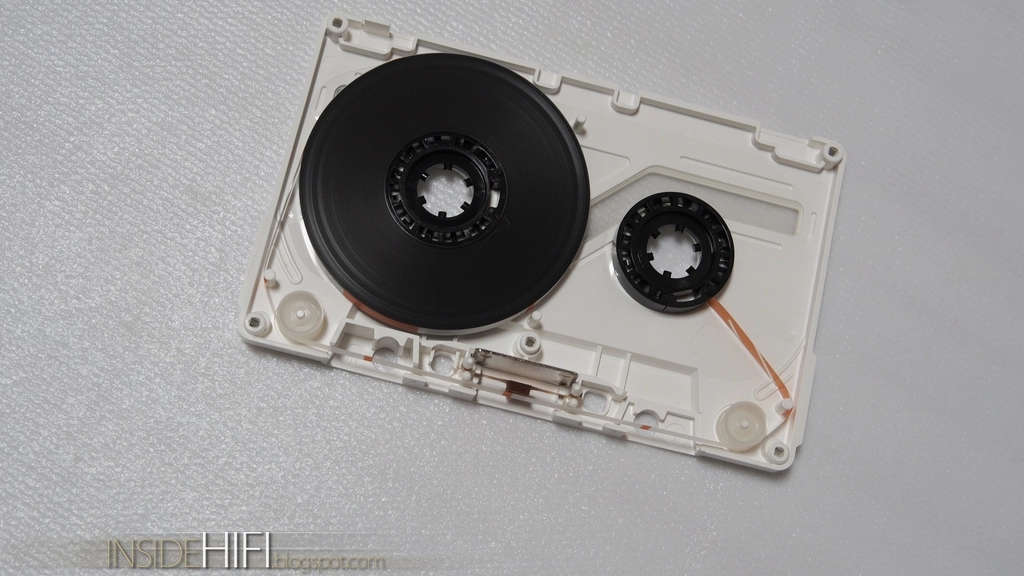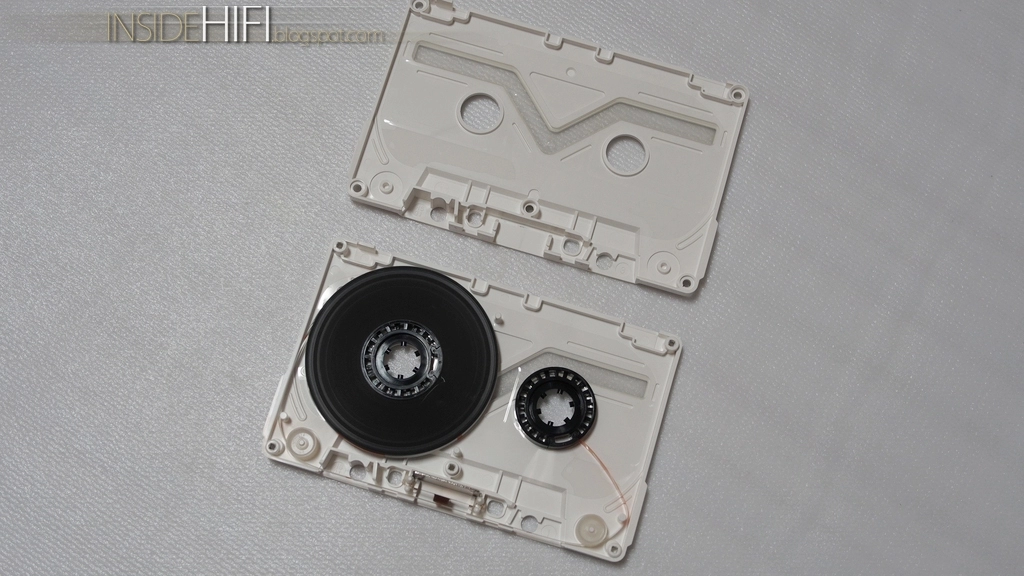
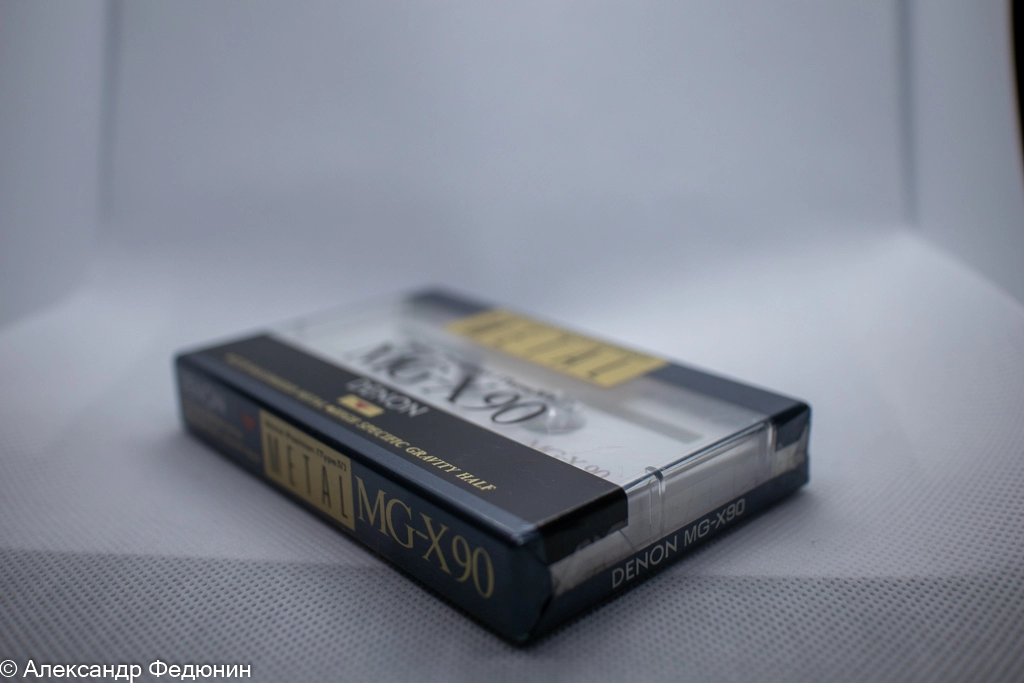
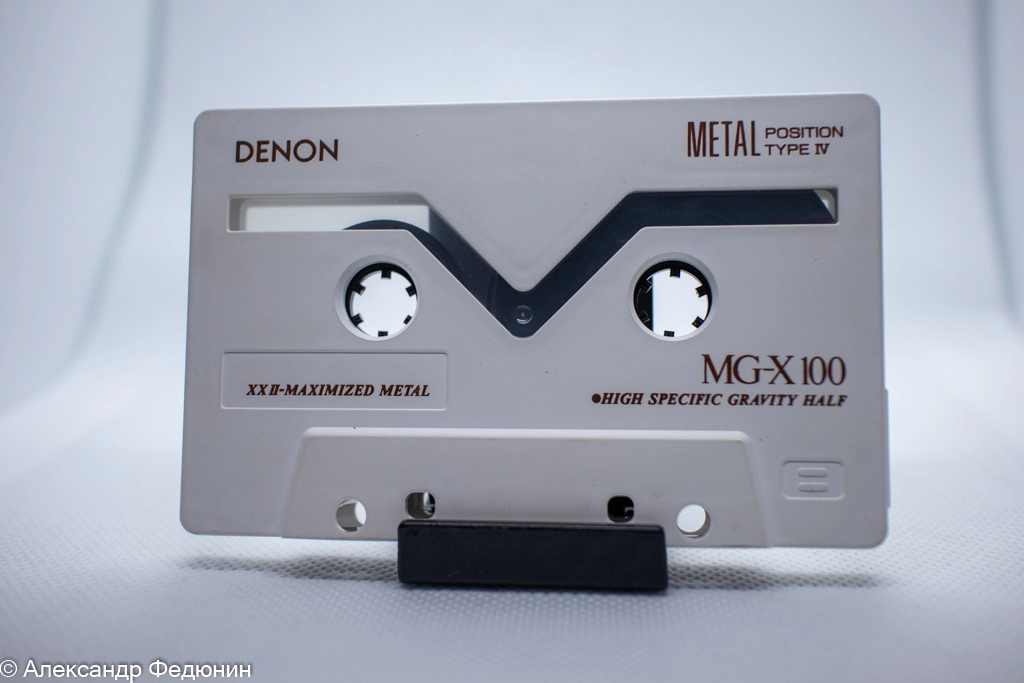
Early 1990s - every manufacturer was fighting on two fronts at once: against each other, and against the advancing CD. The pressure was on to release something extraordinary, something that could compete with CD on sound quality. Everything was on the table - shell materials, assembly technology, tape formulation, even the packaging. One of the contenders: the Denon MG-X, with its distinctive samurai-style cutout on the shell. Like a pair of angry furrowed eyebrows when you look at it straight on.
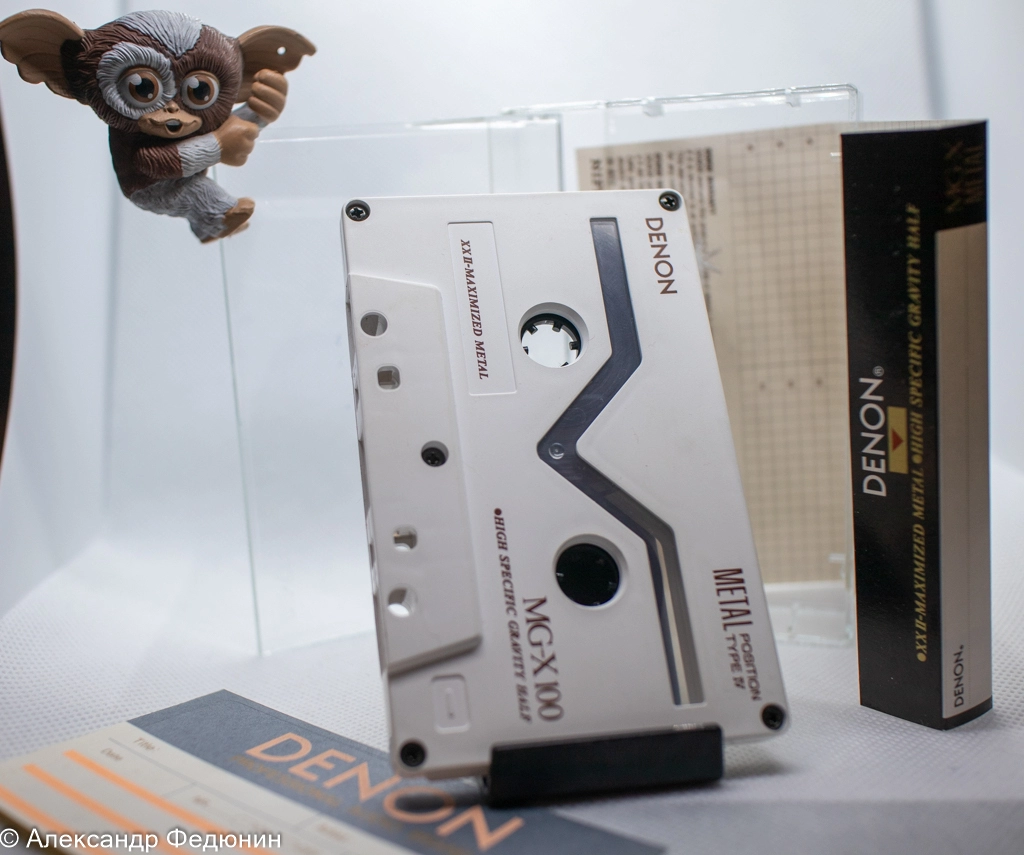
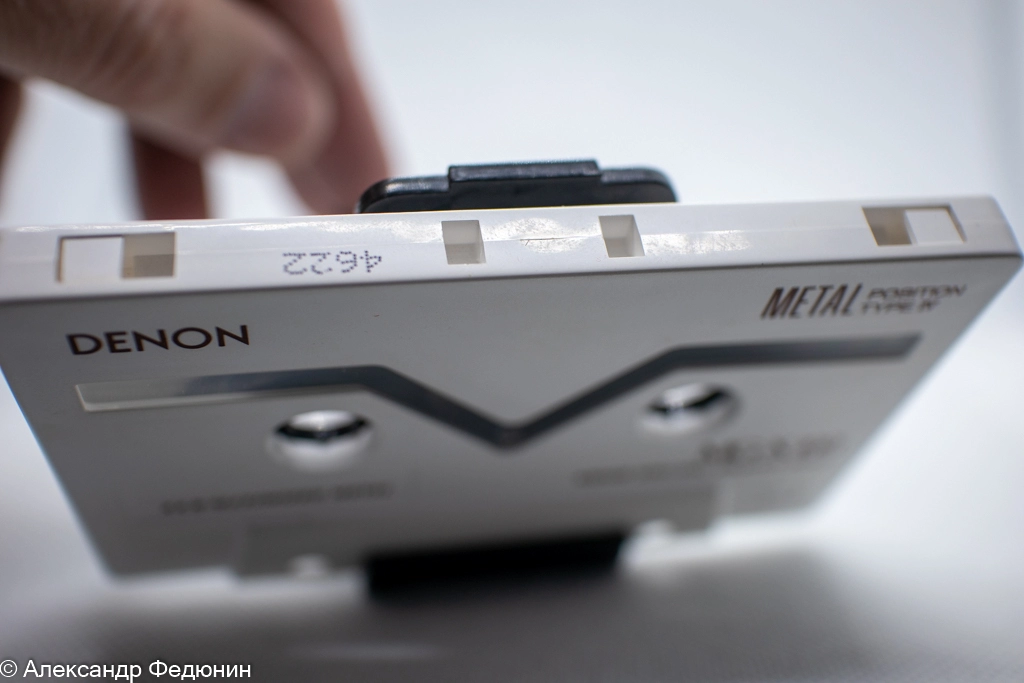
The shell is composite, and heavy as it should be. The cassette weighs nearly 70 grams, while a typical cassette from the same era (even a dual-window one, not just a plain slab) was only 35-37 grams. So one MG-X weighs as much as two regular cassettes - the idea being that all that mass stabilizes playback by damping vibrations.
As for lengths, four variants are confirmed: 46, 60, 90, and 100 minutes. Production started in late 1991, so it’s fair to place it in the 1992 lineup onward.
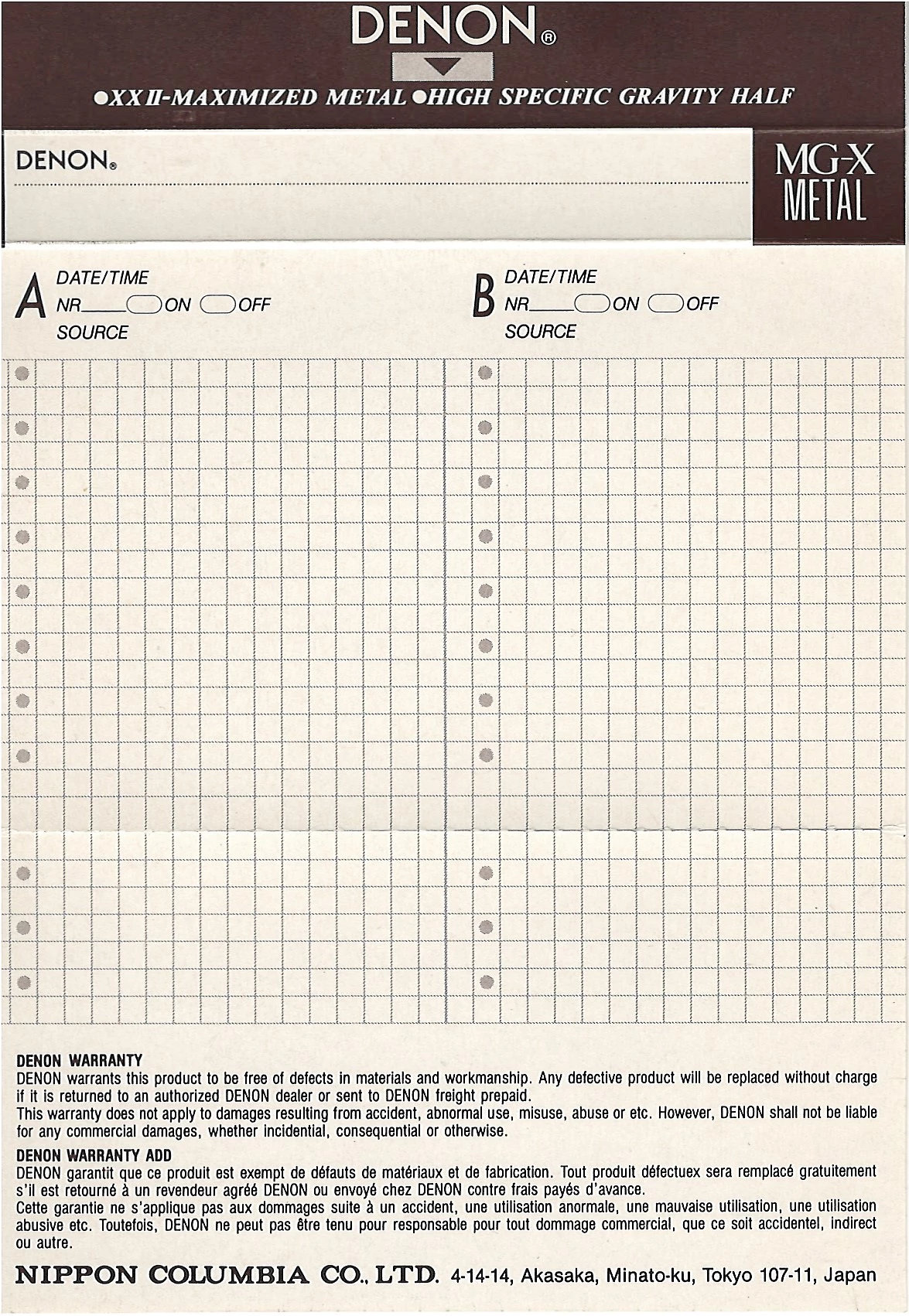
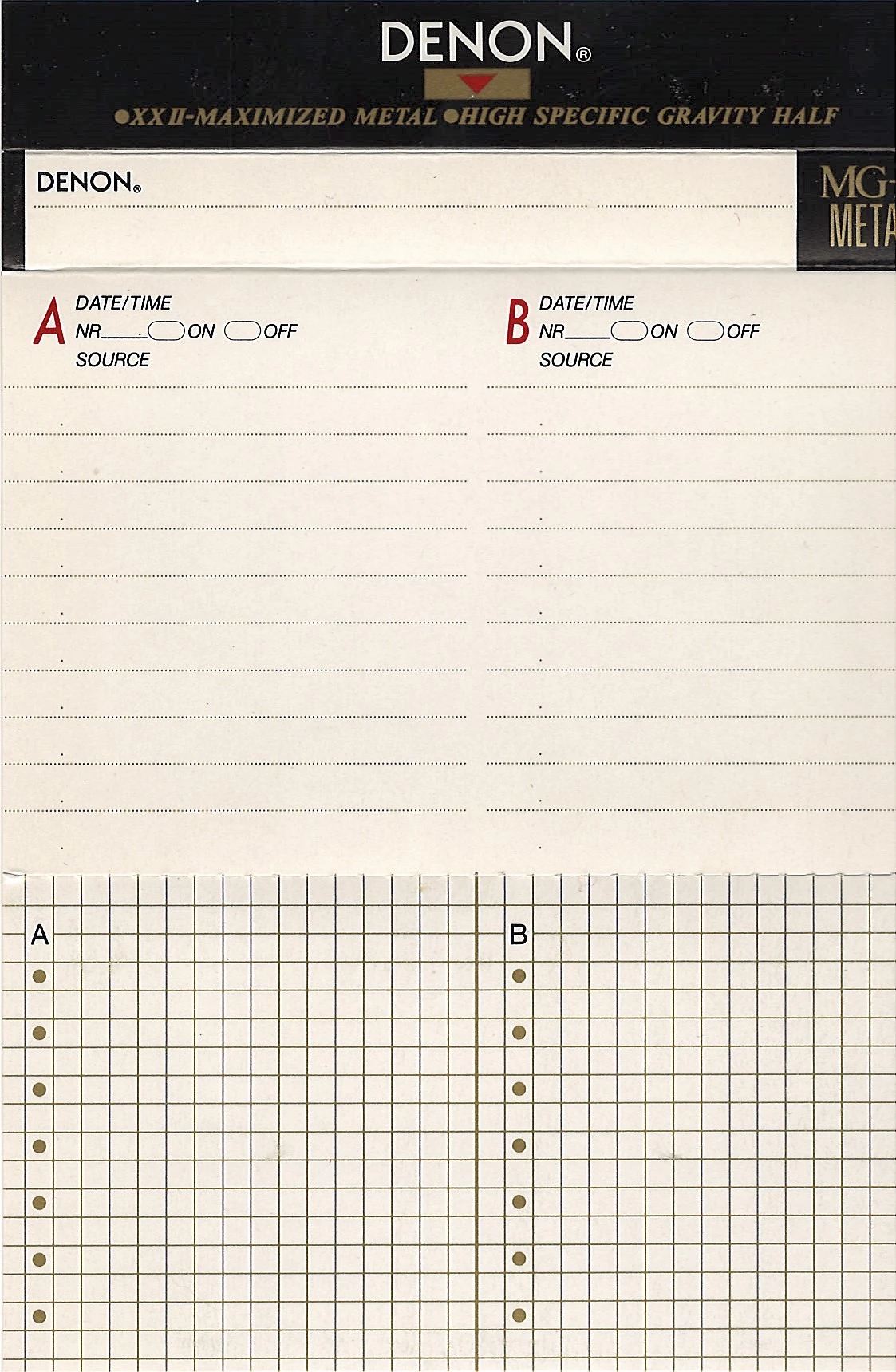
The tape itself is Type IV, loaded with every technology Denon could throw at it for maximum frequency range. They called it XX II - MAXIMIZED METAL.
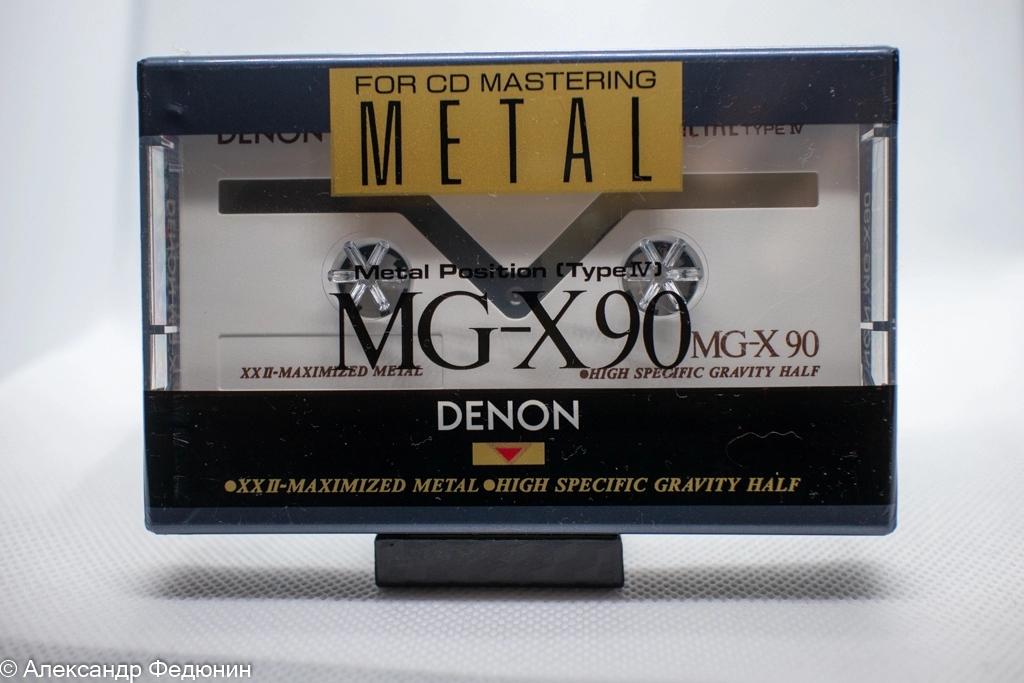
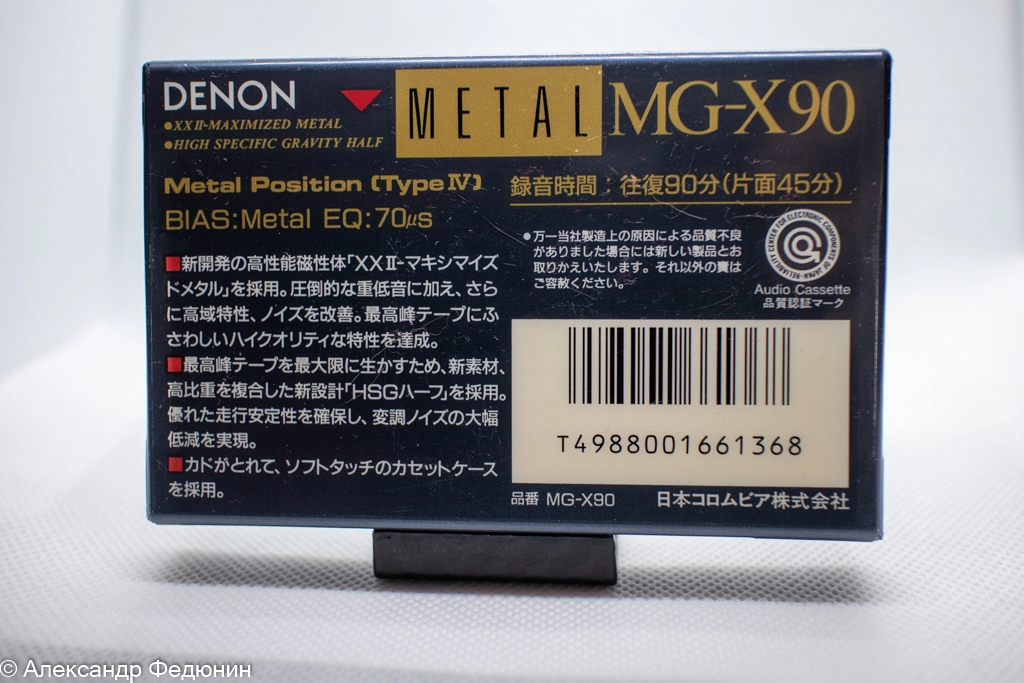
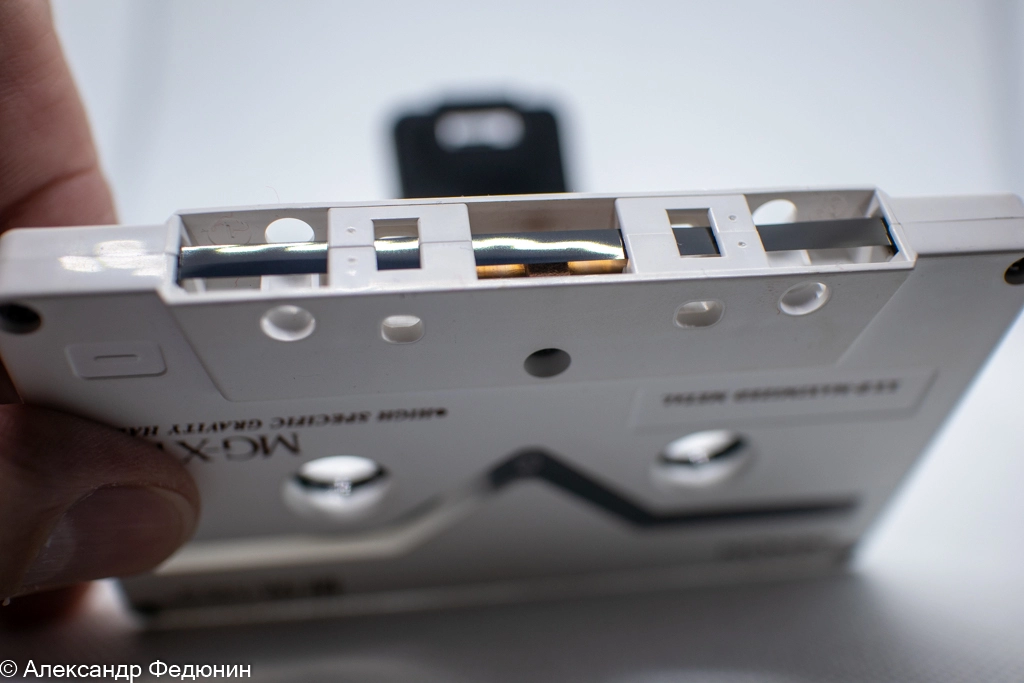
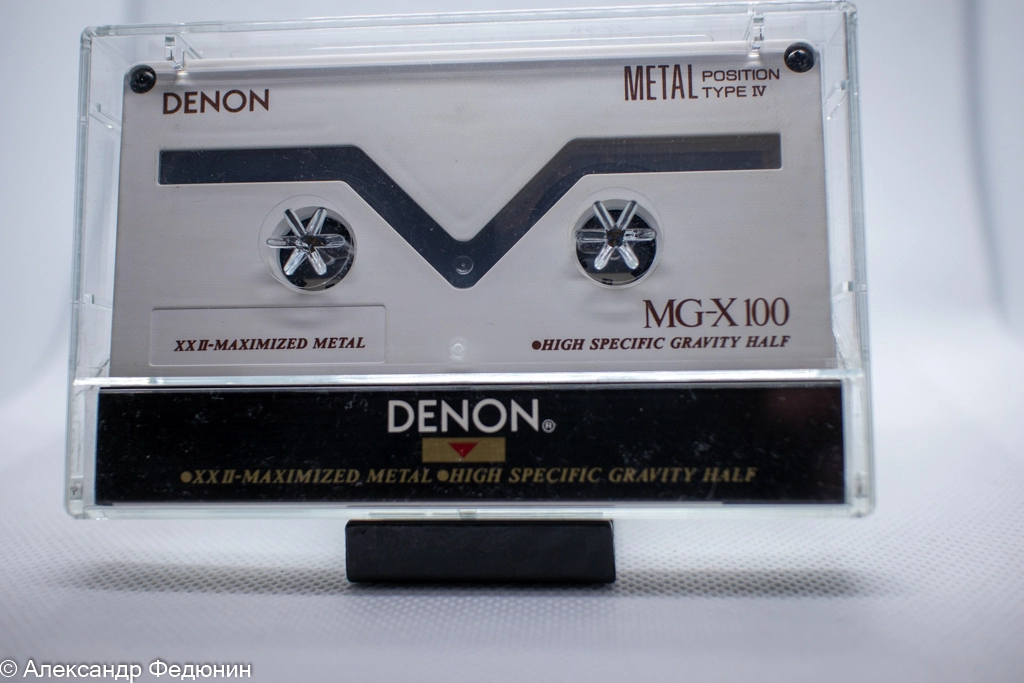
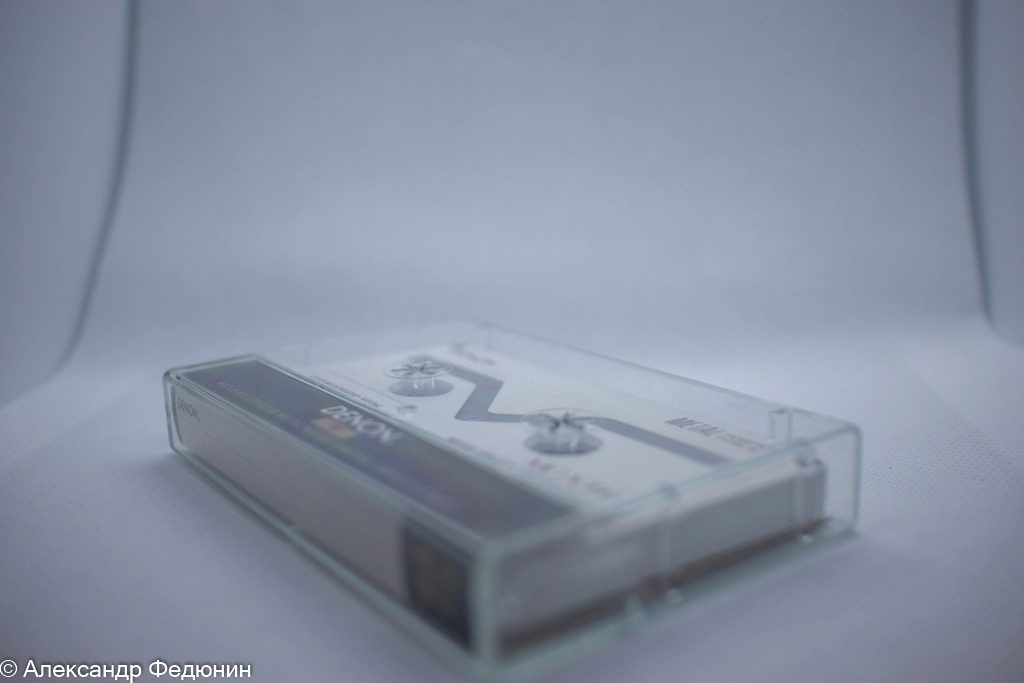
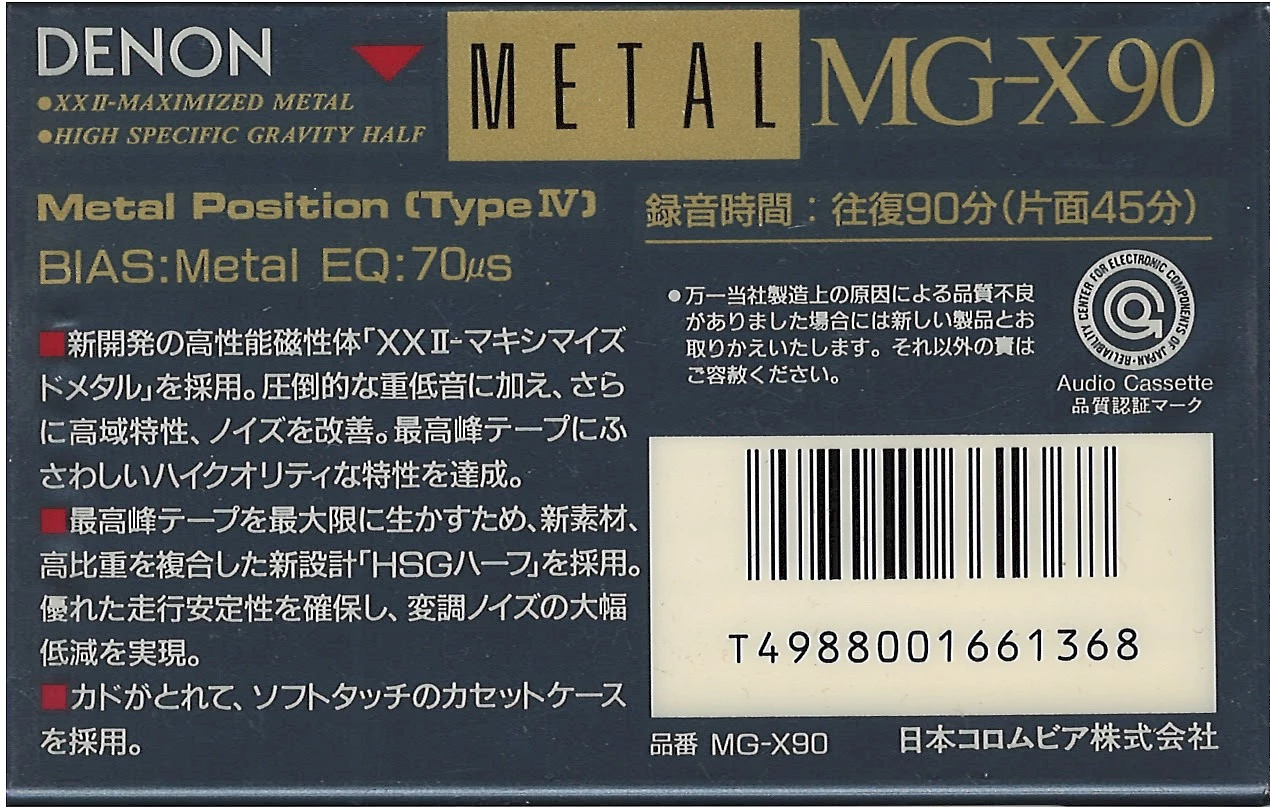
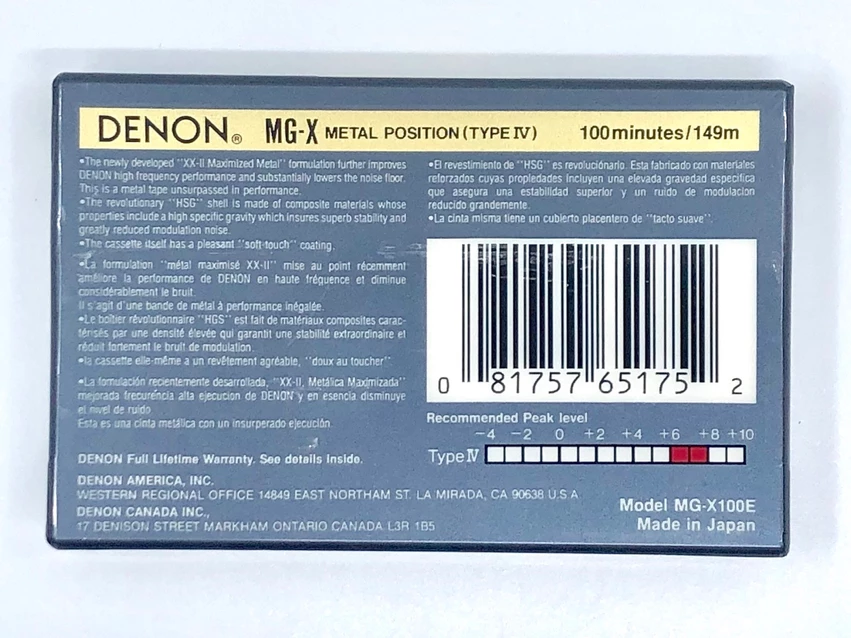
Translation of the Japanese back panel:
- The newly developed high-performance magnetic material XX - Maximized Metal has been adopted. In addition to overwhelming deep bass, high-frequency characteristics and noise have been improved. Achieves high-quality characteristics befitting the highest-bias tape.
- To make the best use of the highest-bias tape, the new HSG shell is used, combining new materials with high specific density. Achieves superior operational stability and significantly reduces modulation noise.
- A soft-touch cassette shell is used with chamfered edges.
HSG is apparently a proprietary material name - I don’t know the full details of what this composite actually is. The last point about the chamfered-edge case suggests that at the time, it wasn’t yet a mainstream feature.
The international version’s rear differed in one detail: the lower right corner showed the recommended recording level (and, as usual, text in three languages).
Found photos of a teardown online too - interesting stuff. Original photos here.