




In 1984 transparent-shell models such as the second-generation AD-S and DS flourished. This was probably made possible by improved resin quality: inexpensive plastic could now provide high transparency too. Colouring technology also improved.
TEAC completed its range of reel-type cassettes, still popular today: it included metal, high-position and normal tapes, as well as the unusual MIRROR BOWL. These cassettes, designed for their appearance, were offered in different colours: metal STUDIO in gold and silver; high-position COBALT in gold, silver and black; normal SOUND in those three colours as well as pink, blue and green. The tape itself was made by Hitachi Maxell; probably as a result, the reel-type SOUND BREAK appeared under the Hitachi brand.
Sony unified its range around the packaging design begun in 1983 with HF-S and HF. The new AHF, introduced only a year earlier, also gave way to HF-ES. UCX and UCX-S were redesigned too. That’s introduced EM-X, with a triangular-window shell that remained in use for a long time.
オー・カセ (Open Cassette): a cassette with features of reel tape
Of the part corresponding to an ordinary cassette shell, only a frame called the reel holder remains. The tape itself is on reels resembling miniature open reels. This is TEAC’s オー・カセ (Open Cassette). Three tape types were offered: normal, high position and metal-particle. A set of a holder and five 50-minute reels cost 3,800 yen for normal, 4,550 yen for high position and 5,300 yen for metal. Reels were also sold individually; there was a set of five different colours and a set of two reels with a holder. A bag for eight reels and a stand were also offered.
The 1980s turn pastel
Pink and green shells, cute designs, a choice of colours… In the spirit of the 1980s, when Harajuku culture was emerging, pastel colours spread into the world of audio equipment too. Light-hearted, low-quality tapes probably existed before. But the bright cassettes of the 1980s also had good performance. Consumer electronics makers seem to have produced a particularly large number of them.
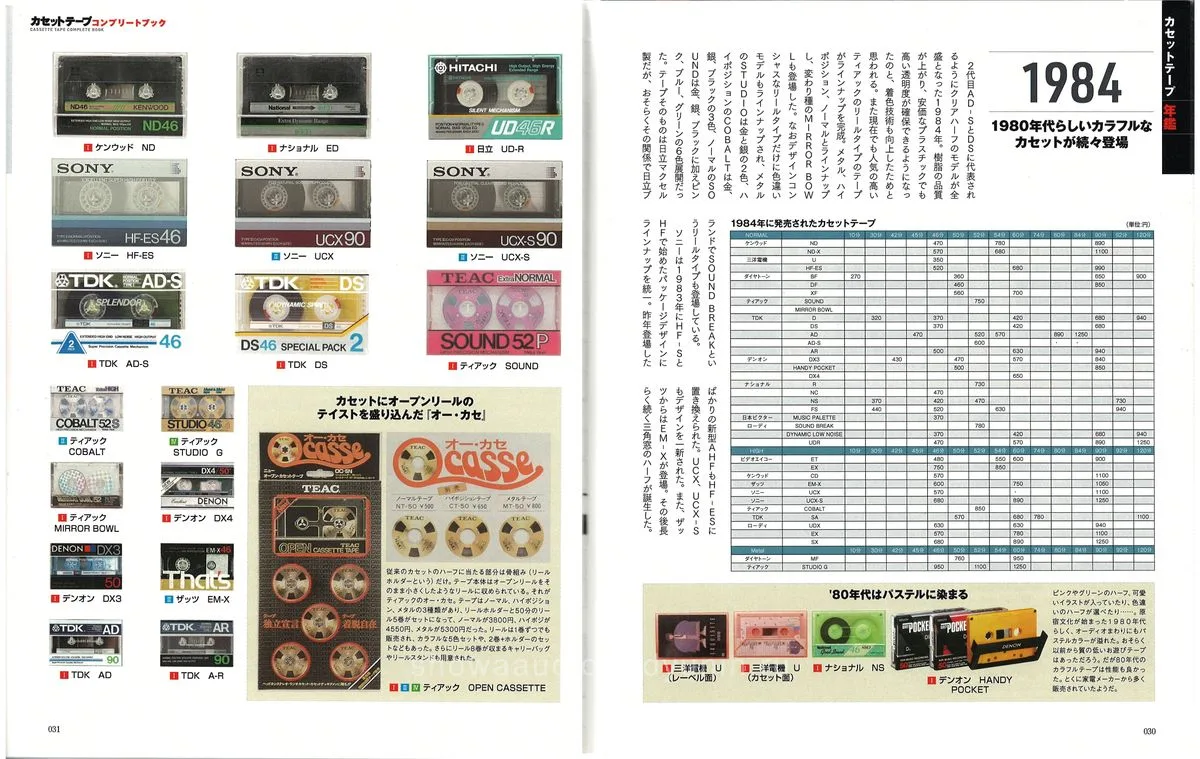
Notes from photo captions: Sanyo U (label side); Sanyo U (cassette side).
Cassettes released in 1984 (prices in yen)
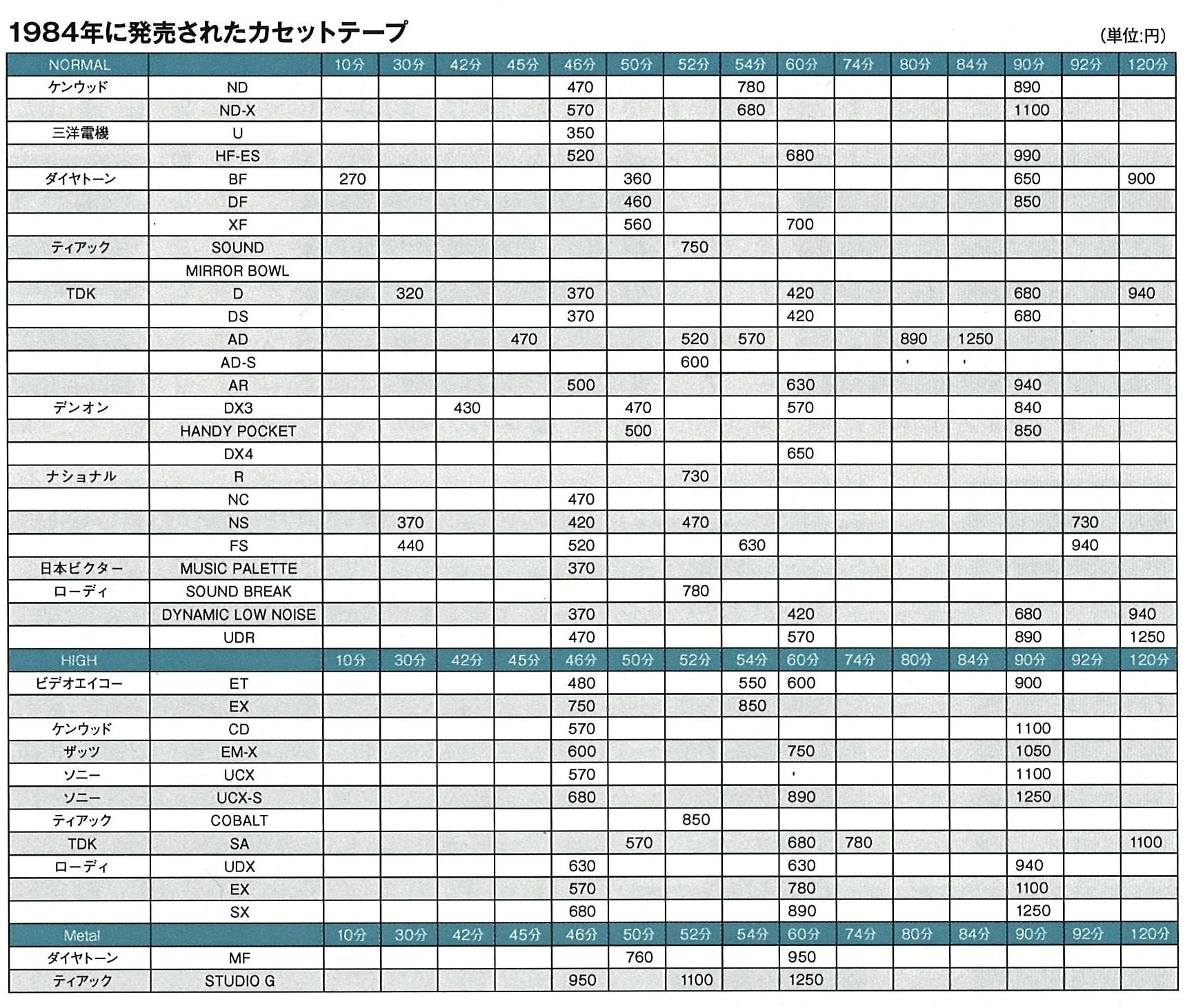
NORMAL
| Brand | Model | 10 | 30 | 42 | 45 | 46 | 50 | 52 | 54 | 60 | 80 | 84 | 90 | 92 | 120 |
|---|---|---|---|---|---|---|---|---|---|---|---|---|---|---|---|
| Kenwood | ND | 470 | 780 | 890 | |||||||||||
| ND-X | 570 | 680 | 1100 | ||||||||||||
| Sanyo | U | 350 | |||||||||||||
| HF-ES | 520 | 680 | 990 | ||||||||||||
| Diatone | BF | 270 | 360 | 650 | 900 | ||||||||||
| DF | 460 | 850 | |||||||||||||
| XF | 560 | 700 | |||||||||||||
| TEAC | SOUND | 750 | |||||||||||||
| MIRROR BOWL | |||||||||||||||
| TDK | D | 320 | 370 | 420 | 680 | 940 | |||||||||
| DS | 370 | 420 | 680 | ||||||||||||
| AD | 470 | 520 | 570 | 890 | 1250 | ||||||||||
| AD-S | 600 | ・ | ・ | ||||||||||||
| AR | 500 | 630 | 940 | ||||||||||||
| Denon | DX3 | 430 | 470 | 570 | 840 | ||||||||||
| HANDY POCKET | 500 | 850 | |||||||||||||
| DX4 | 650 | ||||||||||||||
| National | R | 730 | |||||||||||||
| NC | 470 | ||||||||||||||
| NS | 370 | 420 | 470 | 730 | |||||||||||
| FS | 440 | 520 | 630 | 940 | |||||||||||
| Victor | MUSIC PALETTE | 370 | |||||||||||||
| Lo-D | SOUND BREAK | 780 | |||||||||||||
| DYNAMIC LOW NOISE | 370 | 420 | 680 | 940 | |||||||||||
| UDR | 470 | 570 | 890 | 1250 |
HIGH
| Brand | Model | 46 | 50 | 52 | 54 | 60 | 74 | 90 | 120 |
|---|---|---|---|---|---|---|---|---|---|
| Video Eiko (ビデオエイコー) | ET | 480 | 550 | 600 | 900 | ||||
| EX | 750 | 850 | |||||||
| Kenwood | CD | 570 | 1100 | ||||||
| That’s | EM-X | 600 | 750 | 1050 | |||||
| Sony | UCX | 570 | ・ | 1100 | |||||
| UCX-S | 680 | 890 | 1250 | ||||||
| TEAC | COBALT | 850 | |||||||
| TDK | SA | 570 | 680 | 780 | 1100 | ||||
| Lo-D | UDX | 630 | 630 | 940 | |||||
| EX | 570 | 780 | 1100 | ||||||
| SX | 680 | 890 | 1250 |
Metal
| Brand | Model | 46 | 50 | 52 | 60 |
|---|---|---|---|---|---|
| Diatone | MF | 760 | 950 | ||
| TEAC | STUDIO G | 950 | 1100 | 1250 |