





That’s (Taiyo Yuden), which entered the cassette market in 1983 and played an important role in making metal-powder tapes more affordable, left the cassette business this year. The company had released CD-R in 1988 and now decided to focus on disc-based recording media. Scotch, which had disappeared from the Japanese market, returned with the 996X series, but left again a few years later.
In the years that followed, Sony, having focused on MiniDisc, clearly devoted less effort to cassettes, but continued releasing new models until around 2002, perhaps feeling a responsibility as the maker of the cassette Walkman. In 1995 TDK reduced its main range to four models: AE, AD1 (successor to AD), AD2 (successor to SR), and MA (later MA-EX). They were produced until 1999-2000, after which only AE remained. In 2007 TDK left the market and transferred the business to the American company Imation. AXIA continued releasing new PS, J’z and A models until around 2002, but officially announced its withdrawal in 2006. Thus all the major manufacturers except Hitachi Maxell left the cassette market.
The last expensive cassette in history
In 1993 Sony, having begun to work seriously on MiniDisc, released the finest and last ultra-expensive cassette in history: スーパー・メタルマスター (Super Metal Master). Even Metal Master was exceptionally expensive and high-quality, but the new model surpassed it in every respect.
The tape had five layers: a base, an adhesive layer, a magnetic layer for middle and low frequencies, a magnetic layer for high frequencies, and a coating on the back. The shell was moulded from two layers of ceramic composite, one hard and one soft. The case with its aluminium lid looked luxurious, and the price of 2,300 yen for 60 minutes showed that the model was not designed for large profits from mass sales.
It can be called a kind of monument to Sony, the company that supported cassette-tape culture.
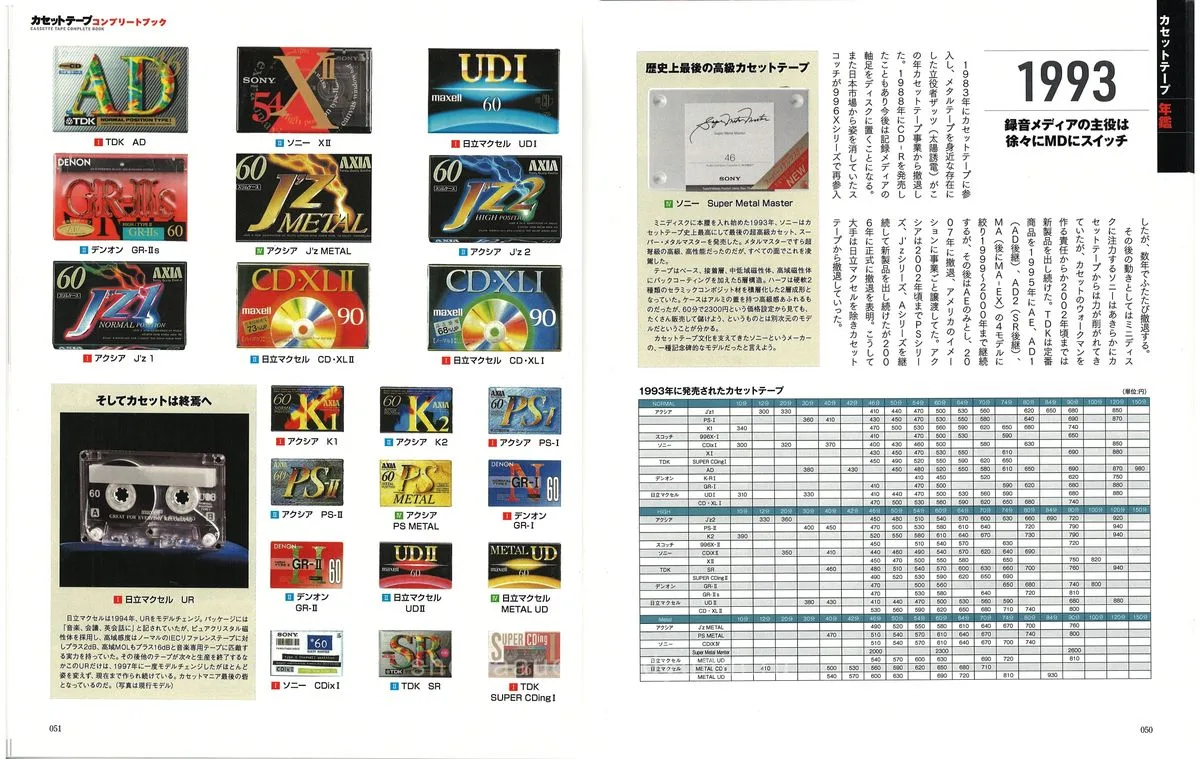
And the cassette approaches its end
In 1994 Hitachi Maxell updated UR. The package said “For music, meetings and studying English”, but the cassette used Pure Crystal magnetic material and its capabilities were comparable to tapes made specifically for music: high-frequency sensitivity exceeded the normal-position IEC reference tape by 2 dB, while the maximum recording level, MOL, at high frequencies was 16 dB. Other tapes were subsequently discontinued one after another, but UR, updated in 1997, changed little and is still produced today (as of the book’s publication in 2017). It became the last stronghold for cassette enthusiasts. The photograph shows the current model.
Cassettes released in 1993 (prices in yen)
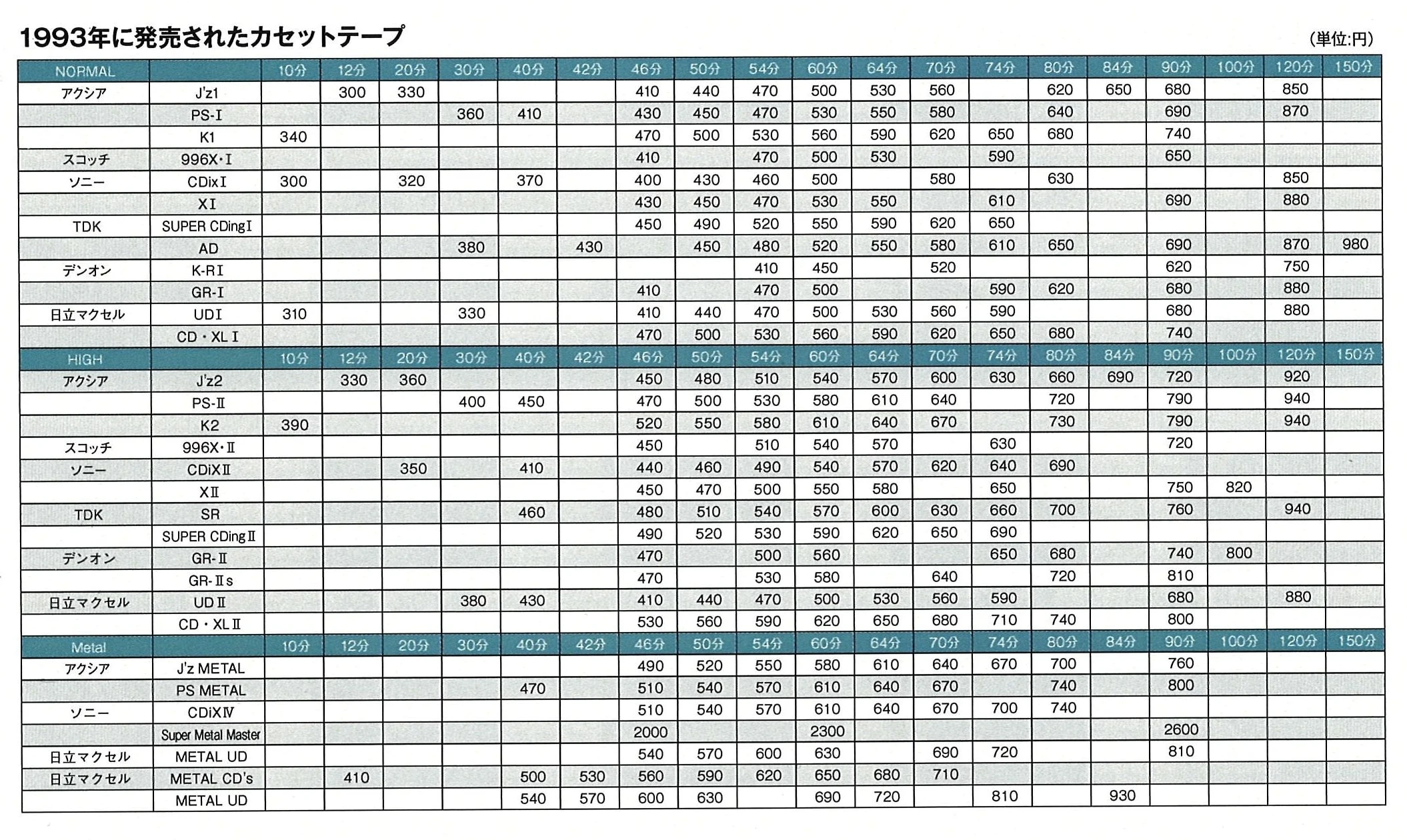
NORMAL
| Brand | Model | 10 | 12 | 20 | 30 | 40 | 42 | 46 | 50 | 54 | 60 | 64 | 70 | 74 | 80 | 84 | 90 | 120 | 150 |
|---|---|---|---|---|---|---|---|---|---|---|---|---|---|---|---|---|---|---|---|
| AXIA | J’z1 | 300 | 330 | 410 | 440 | 470 | 500 | 530 | 560 | 620 | 650 | 680 | 850 | ||||||
| PS-I | 360 | 410 | 430 | 450 | 470 | 530 | 550 | 580 | 640 | 690 | 870 | ||||||||
| K1 | 340 | 470 | 500 | 530 | 560 | 590 | 620 | 650 | 680 | 740 | |||||||||
| Scotch | 996X・I | 410 | 470 | 500 | 530 | 590 | 650 | ||||||||||||
| Sony | CDix I | 300 | 320 | 370 | 400 | 430 | 460 | 500 | 580 | 630 | 850 | ||||||||
| X I | 430 | 450 | 470 | 530 | 550 | 610 | 690 | 880 | |||||||||||
| TDK | SUPER CDing I | 450 | 490 | 520 | 550 | 590 | 620 | 650 | |||||||||||
| AD | 380 | 430 | 450 | 480 | 520 | 550 | 580 | 610 | 650 | 690 | 870 | 980 | |||||||
| Denon | K-R I | 410 | 450 | 520 | 620 | 750 | |||||||||||||
| GR-I | 410 | 470 | 500 | 590 | 620 | 680 | 880 | ||||||||||||
| Hitachi Maxell | UD I | 310 | 330 | 410 | 440 | 470 | 500 | 530 | 560 | 590 | 680 | 880 | |||||||
| CD・XL I | 470 | 500 | 530 | 560 | 590 | 620 | 650 | 680 | 740 |
HIGH
| Brand | Model | 10 | 12 | 20 | 30 | 40 | 46 | 50 | 54 | 60 | 64 | 70 | 74 | 80 | 84 | 90 | 100 | 120 |
|---|---|---|---|---|---|---|---|---|---|---|---|---|---|---|---|---|---|---|
| AXIA | J’z2 | 330 | 360 | 450 | 480 | 510 | 540 | 570 | 600 | 630 | 660 | 690 | 720 | 920 | ||||
| PS-II | 400 | 450 | 470 | 500 | 530 | 580 | 610 | 640 | 720 | 790 | 940 | |||||||
| K2 | 390 | 520 | 550 | 580 | 610 | 640 | 670 | 730 | 790 | 940 | ||||||||
| Scotch | 996X・II | 450 | 510 | 540 | 570 | 630 | 720 | |||||||||||
| Sony | CDiX II | 350 | 410 | 440 | 460 | 490 | 540 | 570 | 620 | 640 | 690 | |||||||
| X II | 450 | 470 | 500 | 550 | 580 | 650 | 750 | 820 | ||||||||||
| TDK | SR | 460 | 480 | 510 | 540 | 570 | 600 | 630 | 660 | 700 | 760 | 940 | ||||||
| SUPER CDing II | 490 | 520 | 530 | 590 | 620 | 650 | 690 | |||||||||||
| Denon | GR-II | 470 | 500 | 560 | 650 | 680 | 740 | 800 | ||||||||||
| GR-IIs | 470 | 530 | 580 | 640 | 720 | 810 | ||||||||||||
| Hitachi Maxell | UD II | 380 | 430 | 410 | 440 | 470 | 500 | 530 | 560 | 590 | 680 | 880 | ||||||
| CD・XL II | 530 | 560 | 590 | 620 | 650 | 680 | 710 | 740 | 800 |
Metal
Brand | Model | 12 | 40 | 42 | 46 | 50 | 54 | 60 | 64 | 70 | 74 | 80 | 84 | 90 --- | --- | ---: | ---: | ---: | ---: | ---: | ---: | ---: | ---: | ---: | ---: | ---: | ---: AXIA | J’z METAL | | | | 490 | 520 | 550 | 580 | 610 | 640 | 670 | 700 | | 760 | | PS METAL | | 470 | | 510 | 540 | 570 | 610 | 640 | 670 | | 740 | | 800 Sony | CDiX IV | | | | 510 | 540 | 570 | 610 | 640 | 670 | 700 | 740 | | | | Super Metal Master | | | | 2000 | | | 2300 | | | | | | 2600 Hitachi Maxell | METAL UD | | | | 540 | 570 | 600 | 630 | | 690 | 720 | | | 810 | | METAL CD’s | 410 | 500 | 530 | 560 | 590 | 620 | 650 | 680 | 710 | | | | | | METAL UD | | 540 | 570 | 600 | 630 | | 690 | 720 | | 810 | | 930 |
The original table lists METAL UD twice with different values; both rows are retained here.