


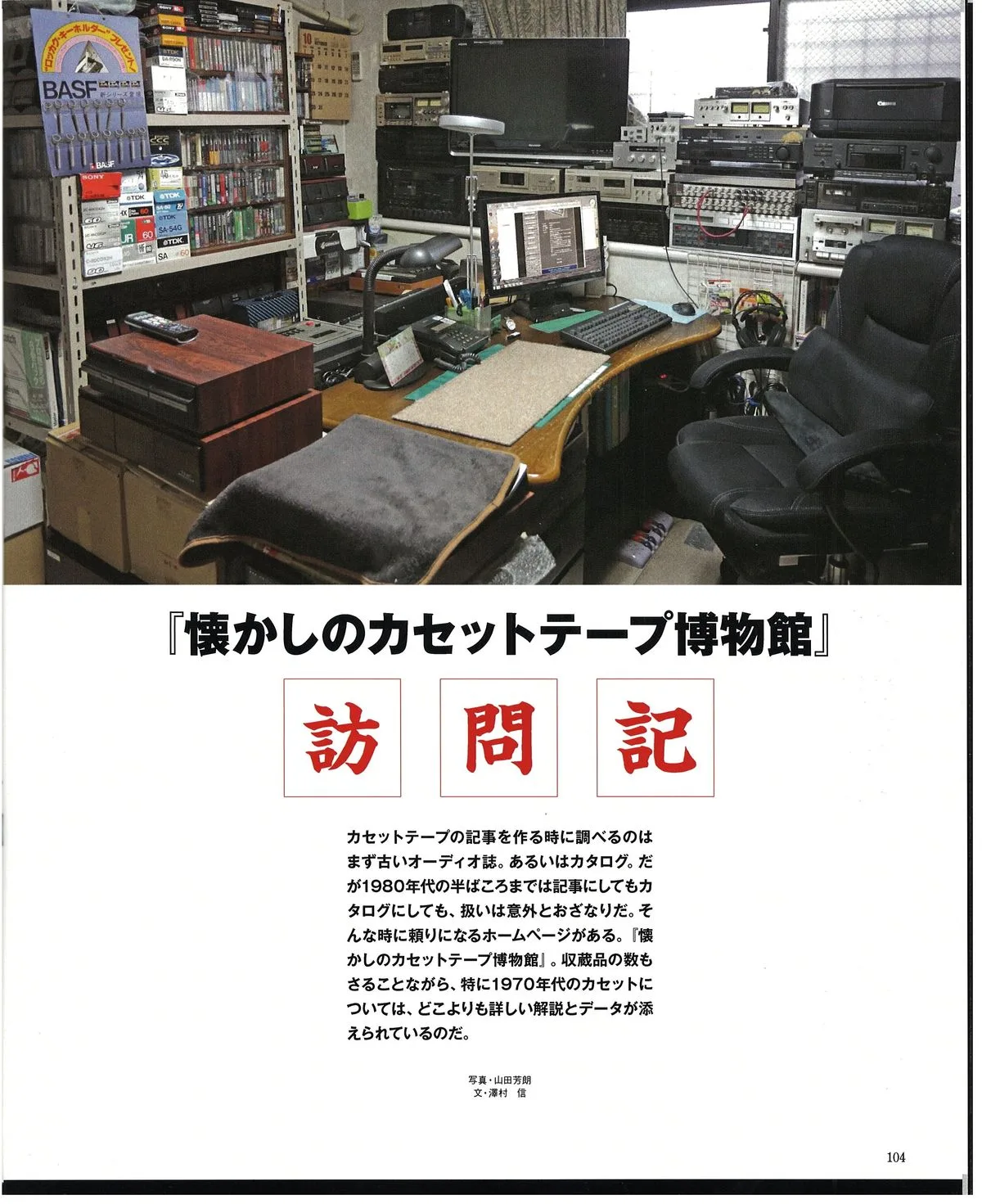
When preparing a cassette article, one normally turns first to old audio magazines or catalogues. Until the mid-1980s, however, cassettes received surprisingly little attention. The Nostalgic Cassette Museum is different: its 1970s exhibits have unusually detailed descriptions, prices, dates and packaging research.
Photo: Yoshiro Yamada (山田芳朗). Text: Makoto Sawamura (澤村信).
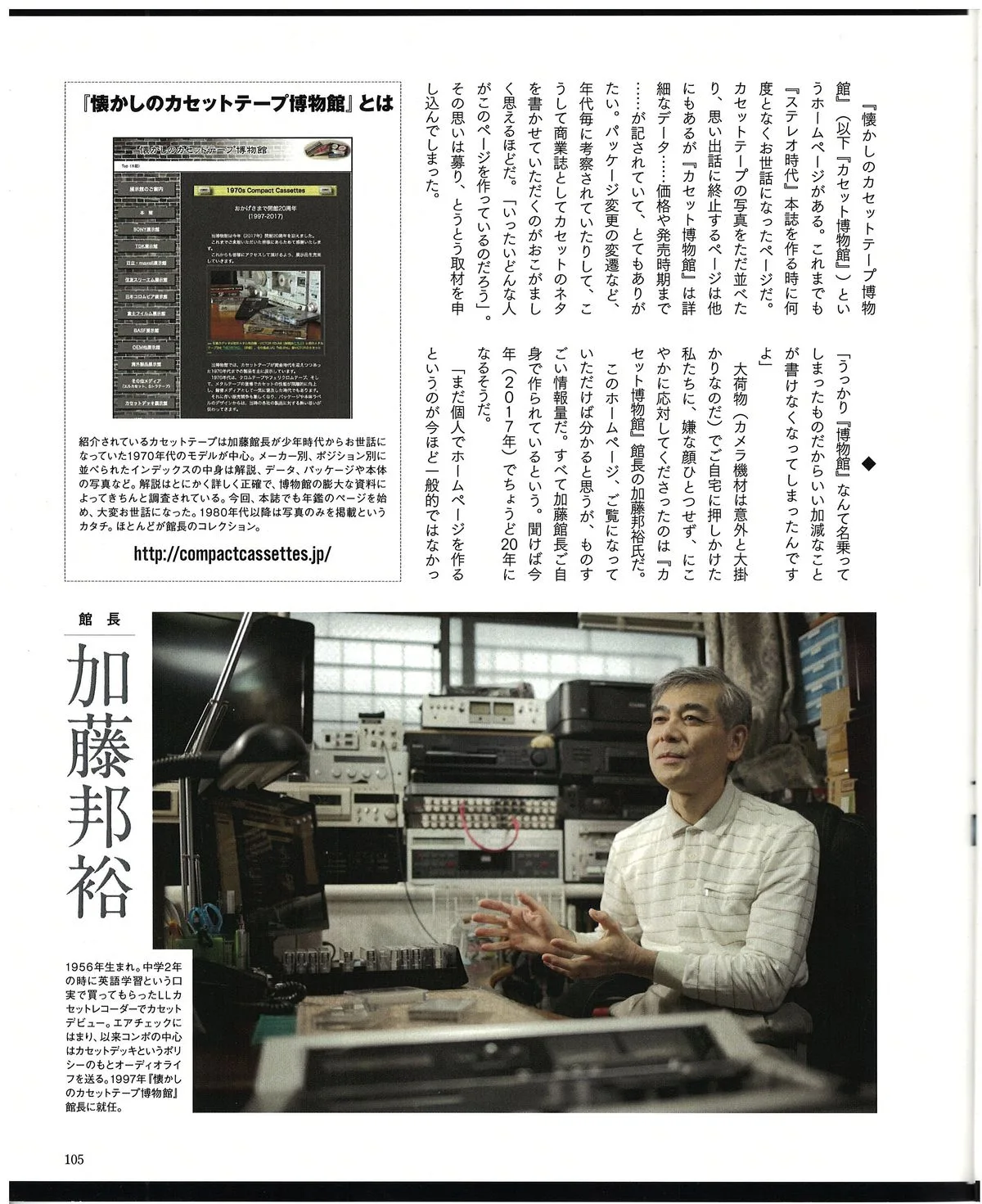
The museum website had repeatedly helped the editors of Stereo Generation. Its director, Kunihiro Kato (加藤邦裕), welcomed the interview team at home in 2017, when the site reached its twentieth year.
What is the Nostalgic Cassette Museum?
The site mainly presents 1970s models that Kato used as a child. An index by maker and tape type gives descriptions, data and photographs of packaging and cassettes. The research is based on a large archive. For 1980s and later cassettes the site usually provides photographs only. Most exhibits belong to Kato.
Director Kato
Born in 1956, Kato first encountered cassettes in the second year of middle school, when his parents bought him a Sony cassette recorder on the pretext of studying English. He began recording radio broadcasts and has built his audio system around cassette decks ever since. He became director of the museum in 1997.
He created the website because he wanted to try making a personal site about the cassettes he had collected. In 1971 he used a Sony recorder and inexpensive TDK D, since Sony cassettes were not discounted. He remembers Japanese cassettes as more consistent than Scotch and rarely saw BASF or AGFA in shops.
As a high-school student he bought a component system, beginning with a cassette deck. He chose Sony TC-4300SD over Aiwa AD-7600 and spent most of his budget on the deck and tuner. A cassette website became a natural continuation of his collecting. At first it received only a few visits a day, but a news story about the end of cassette Walkman sales brought a large increase in traffic. Kato continues expanding it at his own pace.
The museum’s “research department” is his home. Alongside Nakamichi 1000ZXL and Dragon are Revox, Tandberg and Philips DCC equipment. Rising auction prices have made collecting harder, but the work continues.
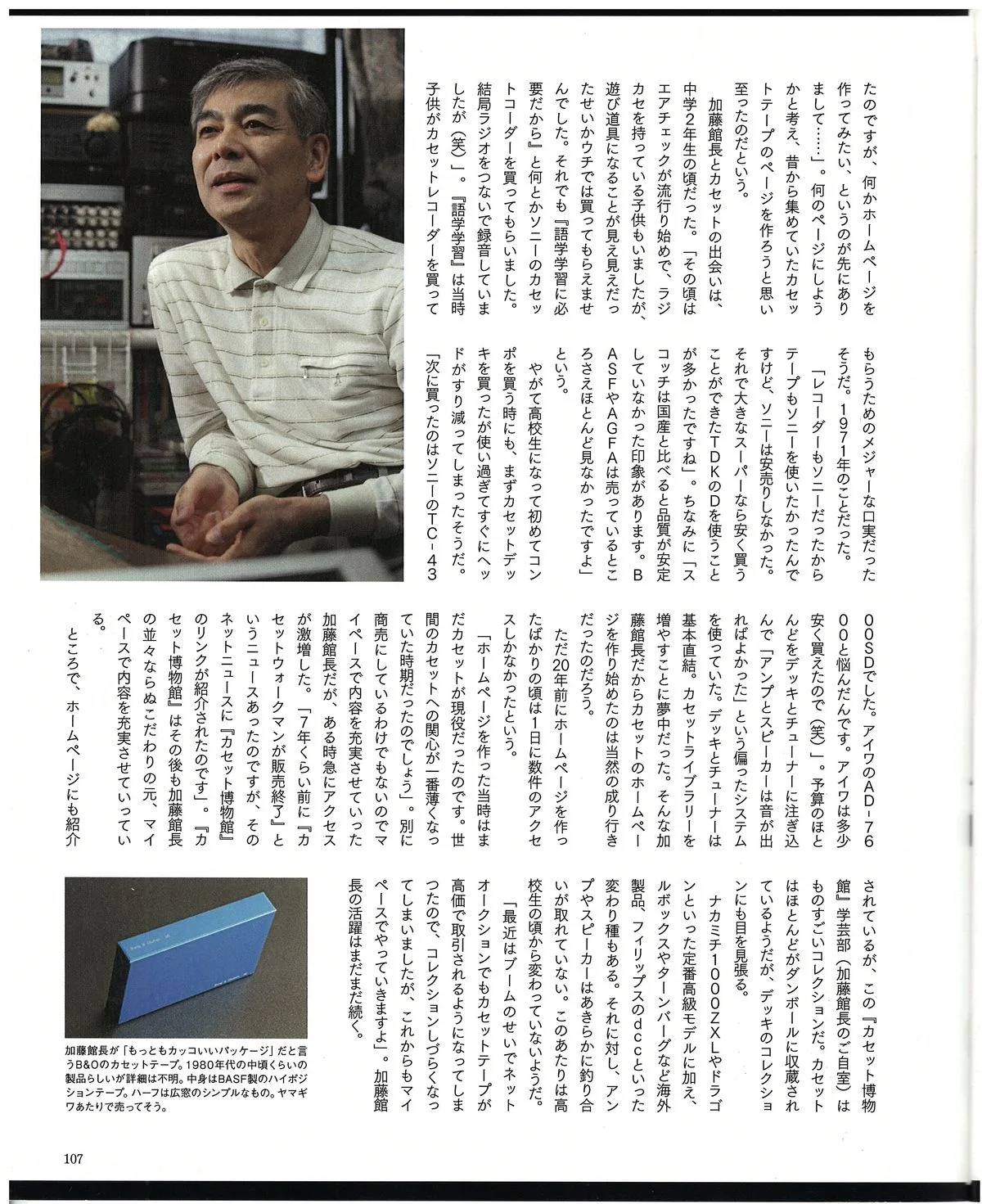
The B&O cassette is the package Kato calls the most beautiful. It appears to date from the mid-1980s and contains BASF high-position tape.
Attractive exhibits
Most of the collection is on the website, but the article shows a few items that are not. The TEAC cassette cabinet contains Nakamichi Dragon and 1000ZXL, Philips EL3312A, TEAC C-1, Tandberg 3014A, Philips DCC-900, Revox B215 and other memorable equipment.
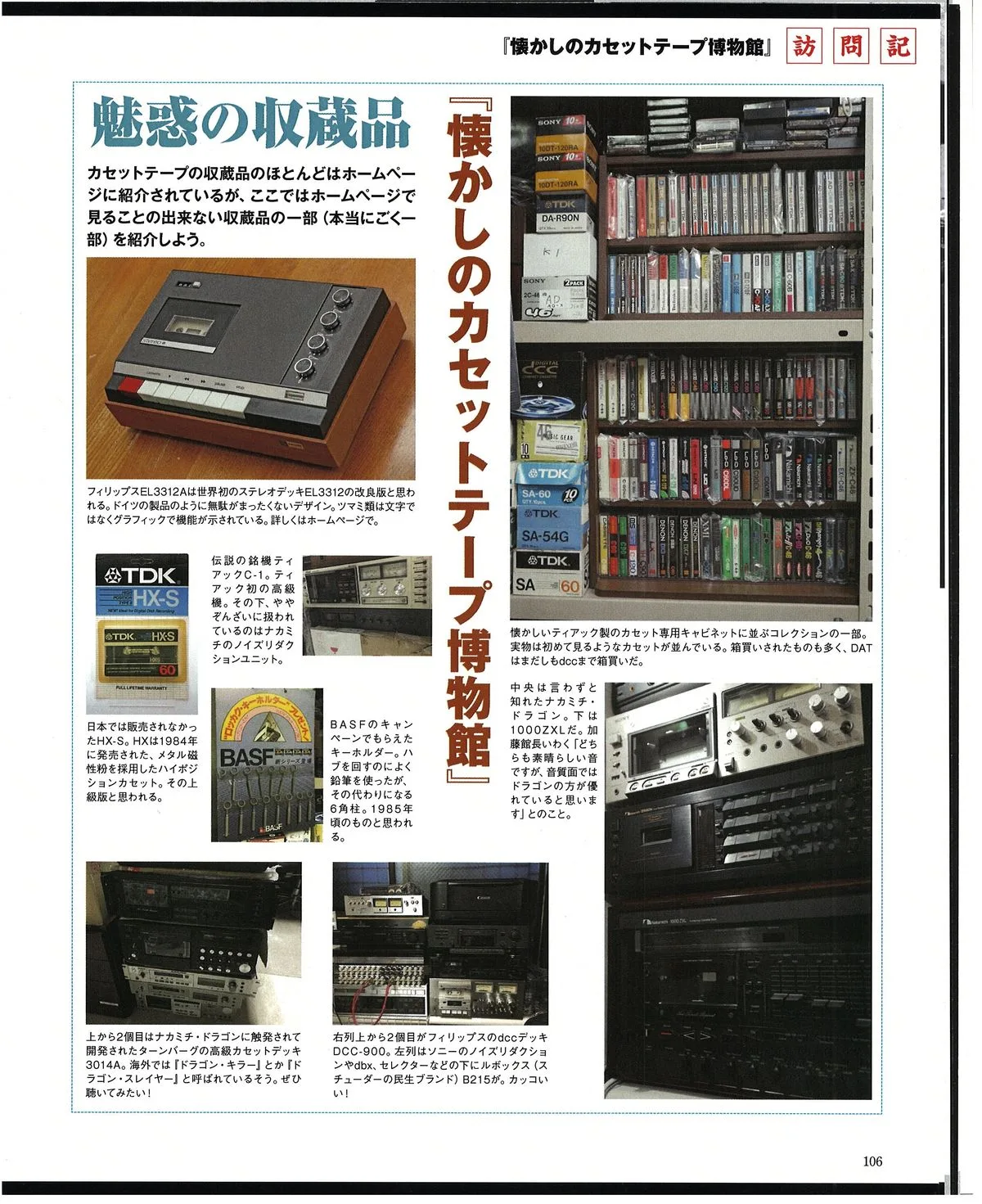
Kato says both Dragon and 1000ZXL sound excellent, but Dragon is better. The collection also includes a BASF promotional reel keyring, a Nakamichi noise-reduction unit and many complete boxes of DAT and DCC.