

The cassette’s possibilities still impress
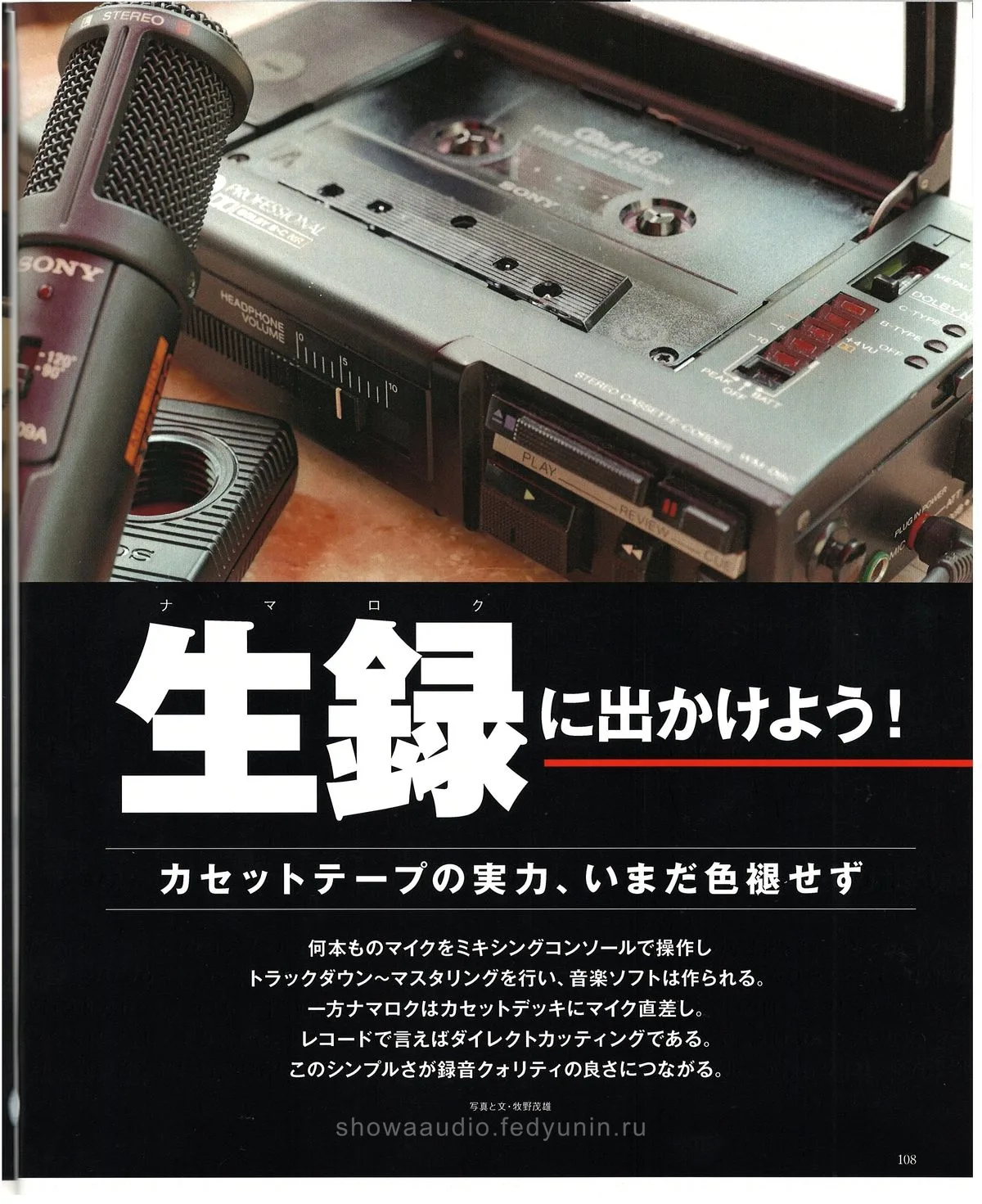
Studio music uses many microphones, a mixer, mixing and mastering. In a live recording the microphone connects directly to the cassette deck, like a direct-to-disc recording. That simplicity can produce excellent sound.
Photo and text: Shigeo Makino (牧野茂雄).
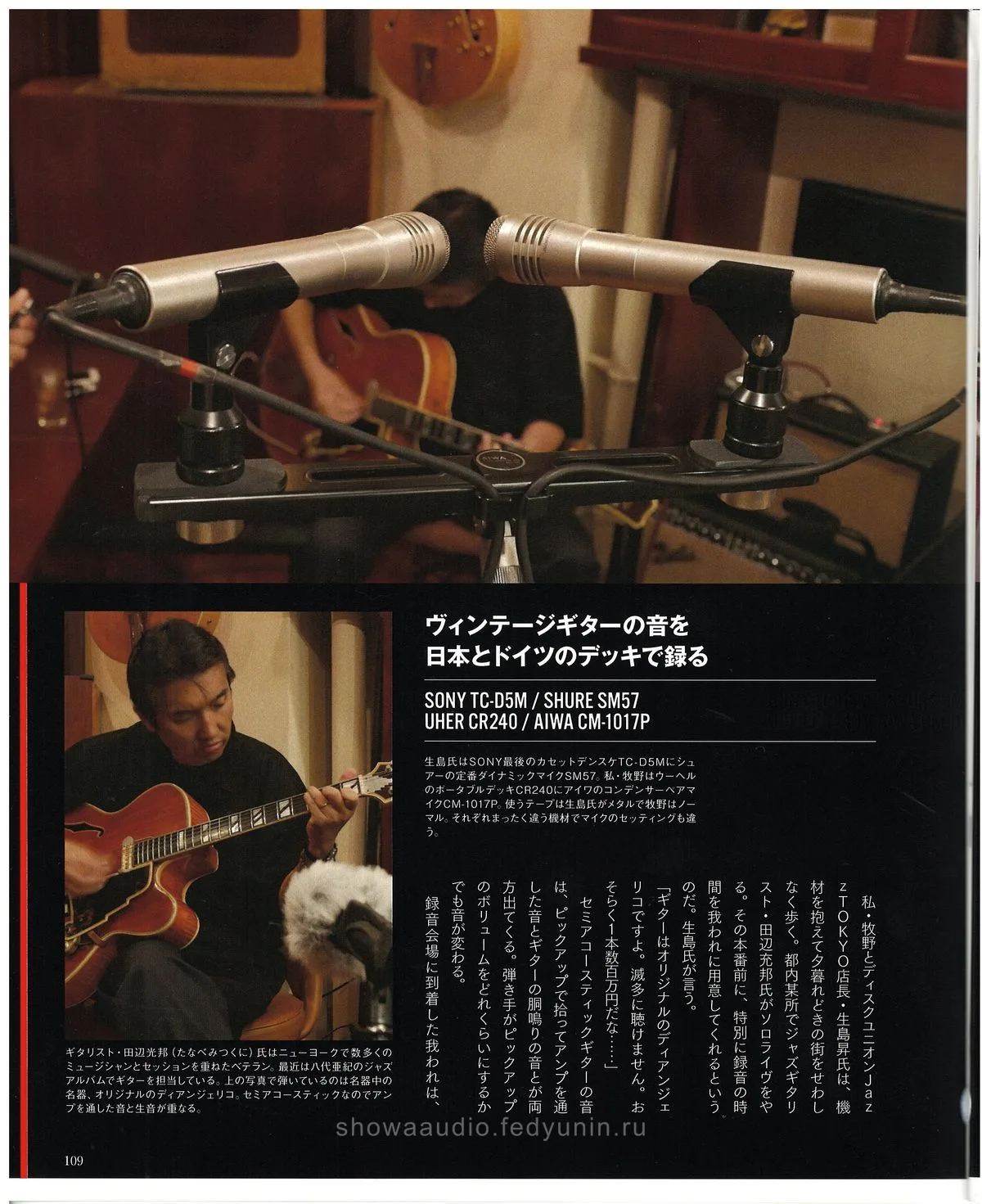
Guitarist Mitsukuni Tanabe (田辺充邦) played an original D’Angelico semi-acoustic guitar. Ikushima used the last cassette “Densuke”, Sony TC-D5M with Shure SM57 dynamic microphones and Metal tape. Makino used a Uher CR240, Aiwa CM-1017P condensers and Normal tape.
Recording a vintage guitar on Japanese and German decks
At the concert, the microphones went directly to battery-powered recorders, without a mixer. Ikushima placed a left-right pair about 60 cm from the guitar, slightly above and angled inward. Makino placed an X-Y pair about 1.6 m high to capture room reflections and the amplifier. Small changes in placement produced strikingly different sound.
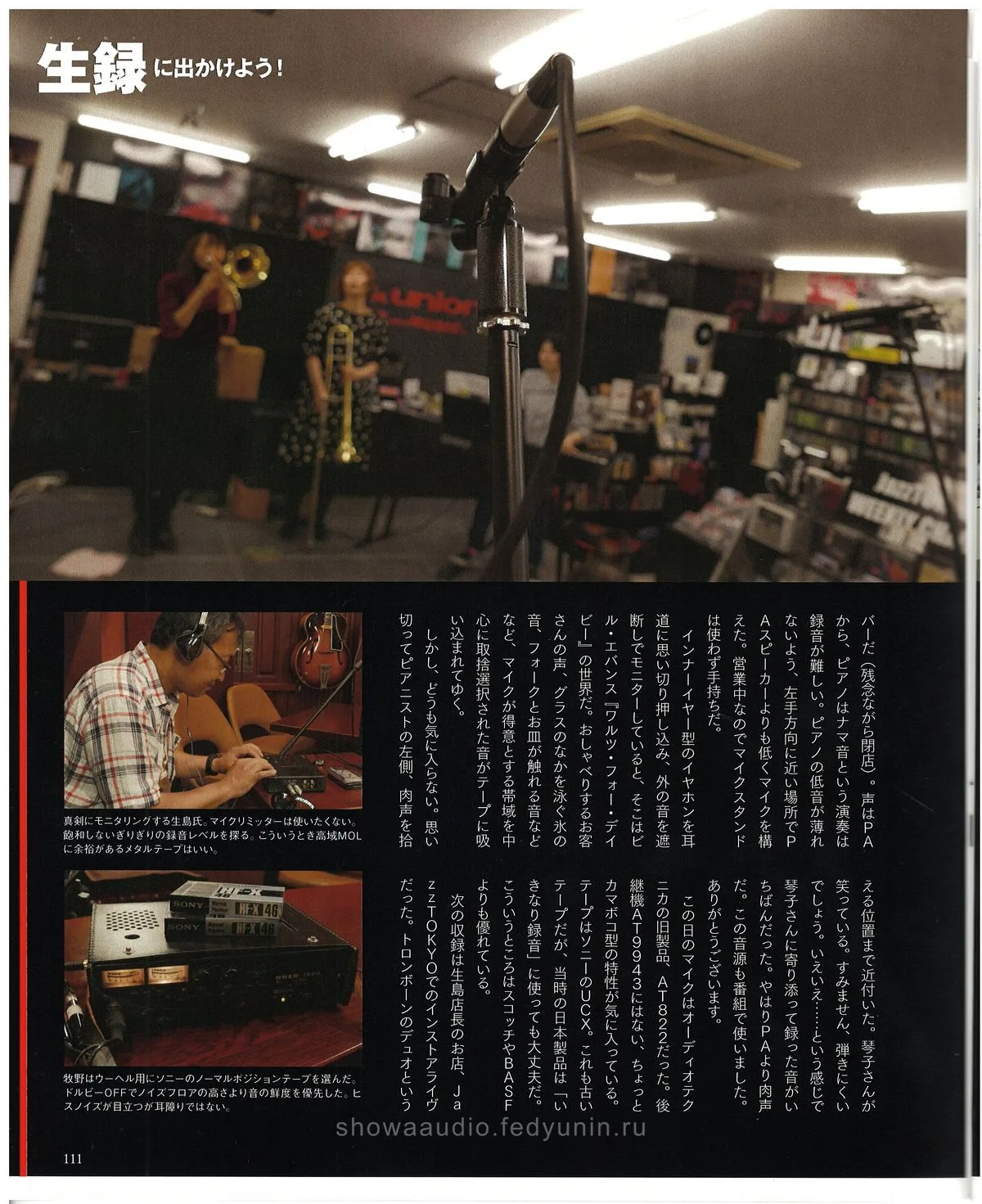
Ikushima avoided a microphone limiter and set the highest level below saturation, where Metal tape’s high-frequency MOL reserve helped. Makino switched Dolby off on the Uher, preferring freshness to lower noise.
Recording voice and piano with a minimal setup
SONY WM-D6C / audio-technica AT822
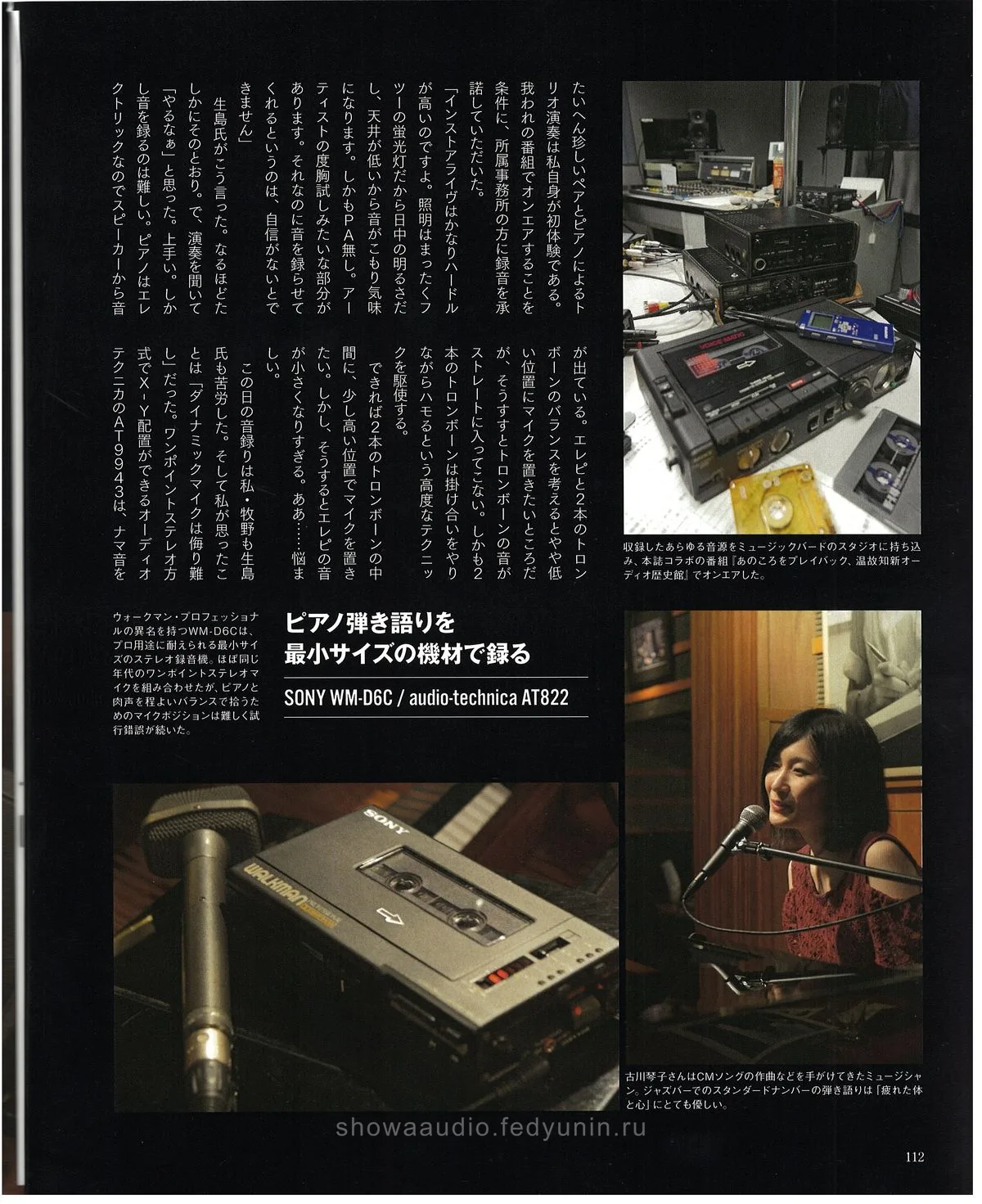
The Walkman Professional WM-D6C and a contemporary one-body stereo microphone recorded singer Kotoko Furukawa (古川琴子) accompanying herself on piano in a Shinjuku jazz bar. Finding a balance between the PA-fed voice and acoustic piano required experimentation. The final recording was best when the microphone was moved close to her voice. The old AT822’s shaped response and Sony UCX tape gave the result a character the author preferred to linear PCM.
Recording an unusual jazz trio with two trombones
SONY TC-D5M / SHURE SM57; UHER CR210 / audio-technica AT9943
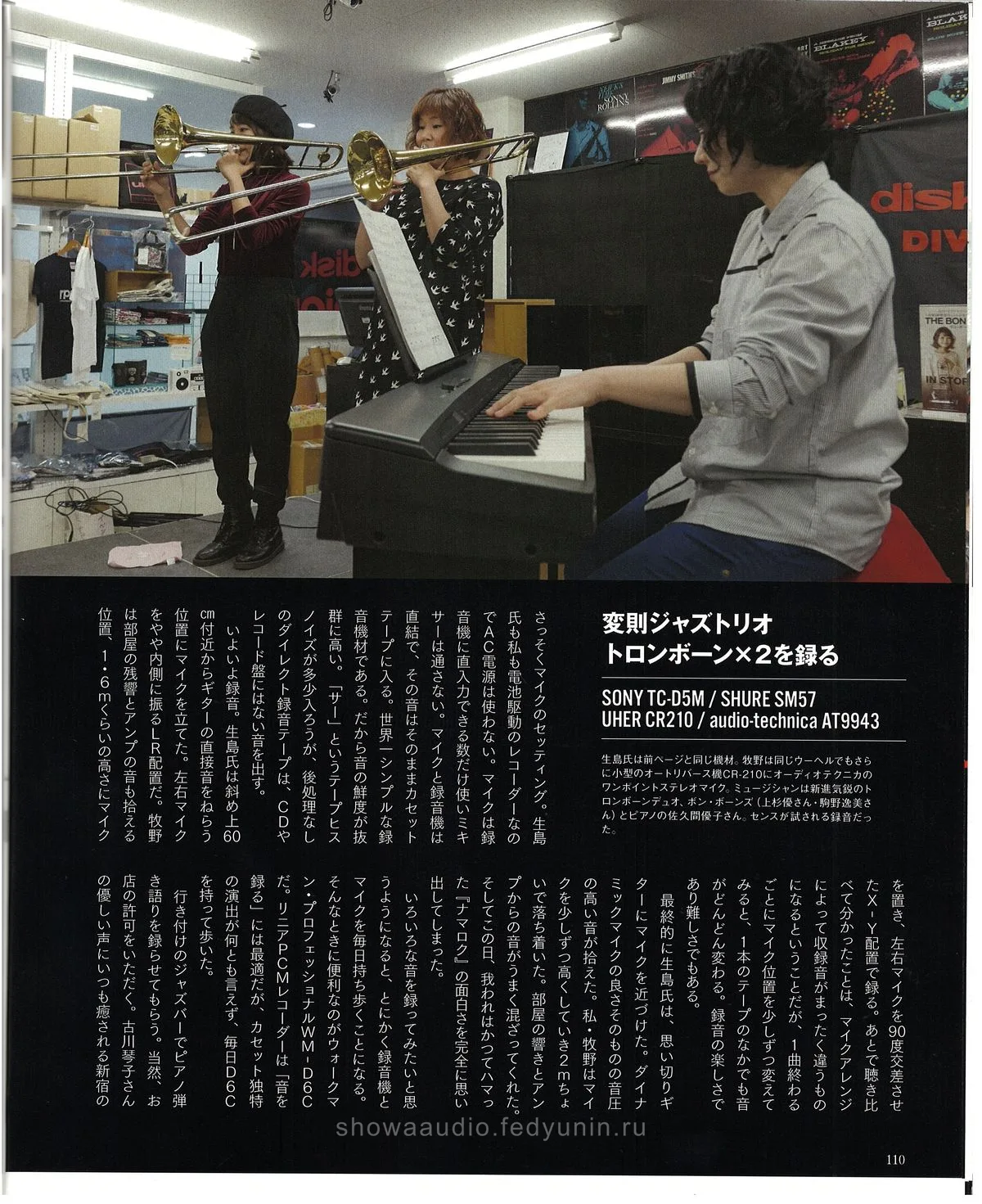
The Bon Bones trombonists Yū Uesugi (上杉優) and Itsumi Komano (駒野逸美), with pianist Yūko Sakuma (佐久間優子), played at JazzTOKYO. The low ceiling, fluorescent lighting and lack of PA made placement difficult. The dynamic Shure SM57 proved able to pick out the essential sound, while the AT9943 offered a complete X-Y image.
The recordings were broadcast by Music Bird. Playback on another deck changed the timbre: the clean, compact Sony TC-D5/D5M suited the programme, while Uher added weight to the lower midrange and bass. A digital recorder’s SRS processing captured birdsong convincingly, but the author still preferred cassette when recording with a purpose.
Everyday sounds in two-track mono
SONY TCM-5000EV / audio-technica AT9943
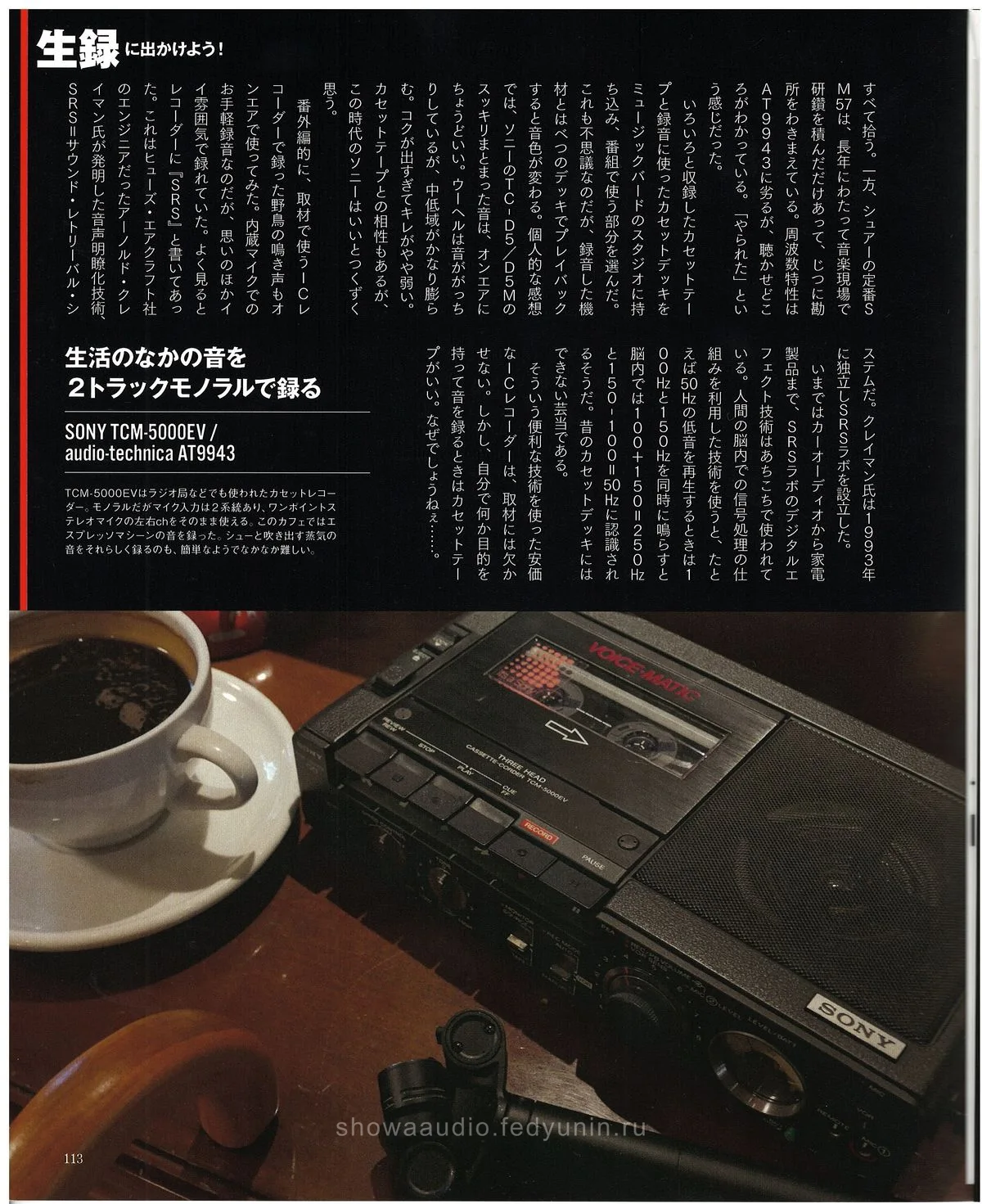
The broadcast-style TCM-5000EV is mono but has two microphone inputs, so the left and right channels of a one-body stereo microphone can be connected directly. In the café the team recorded an espresso machine; making steam sound realistic was harder than expected.