
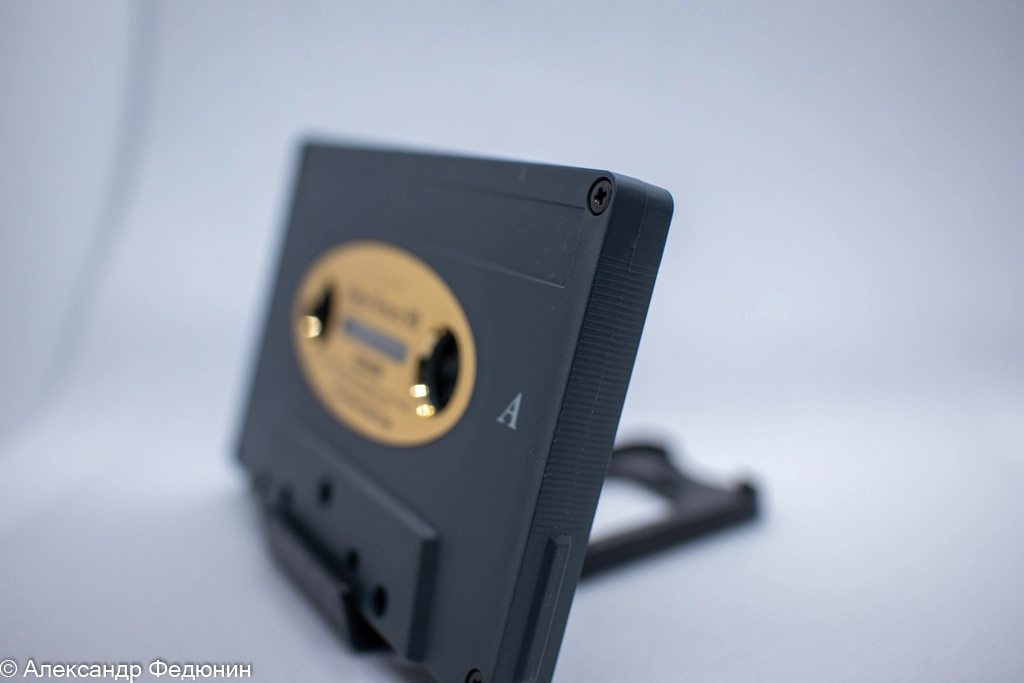
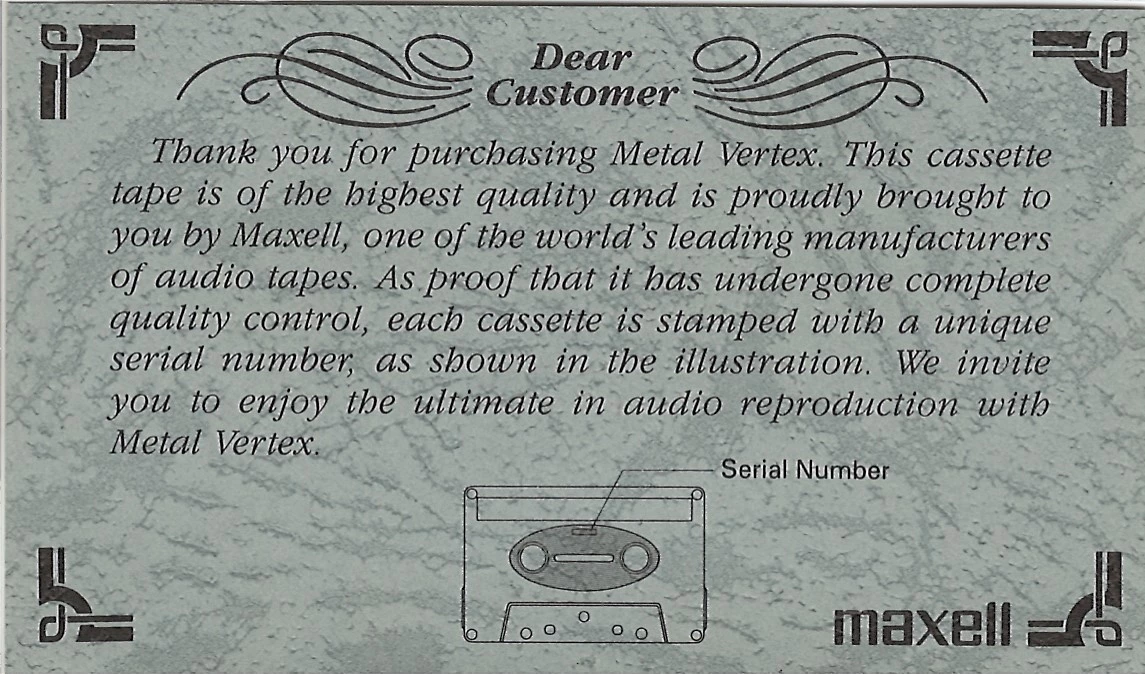
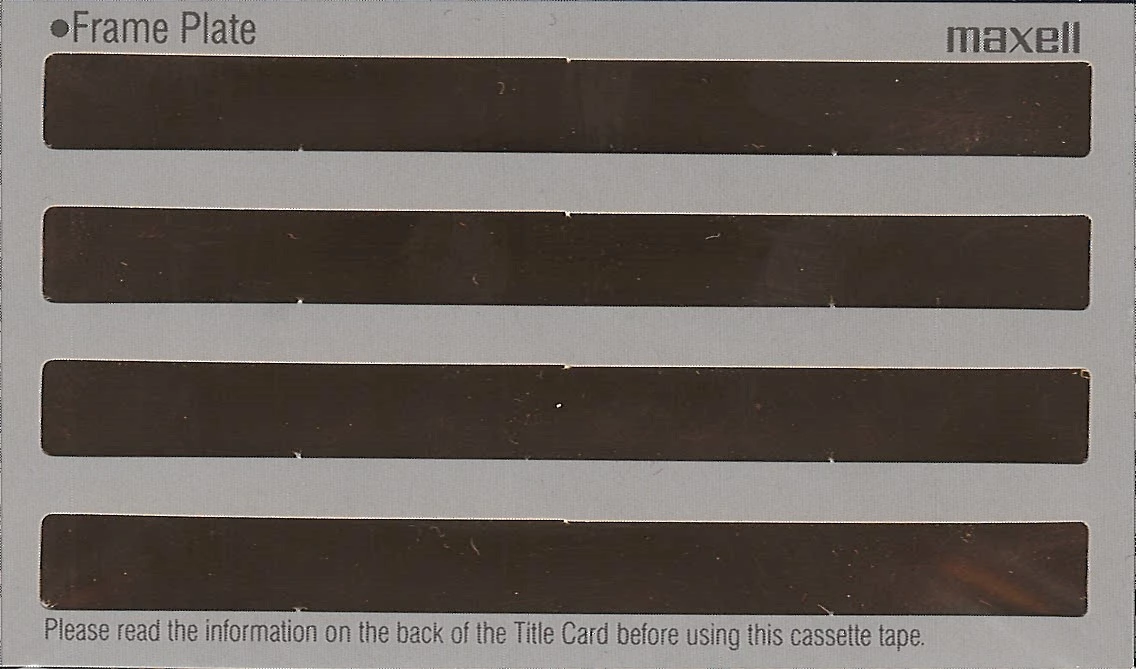
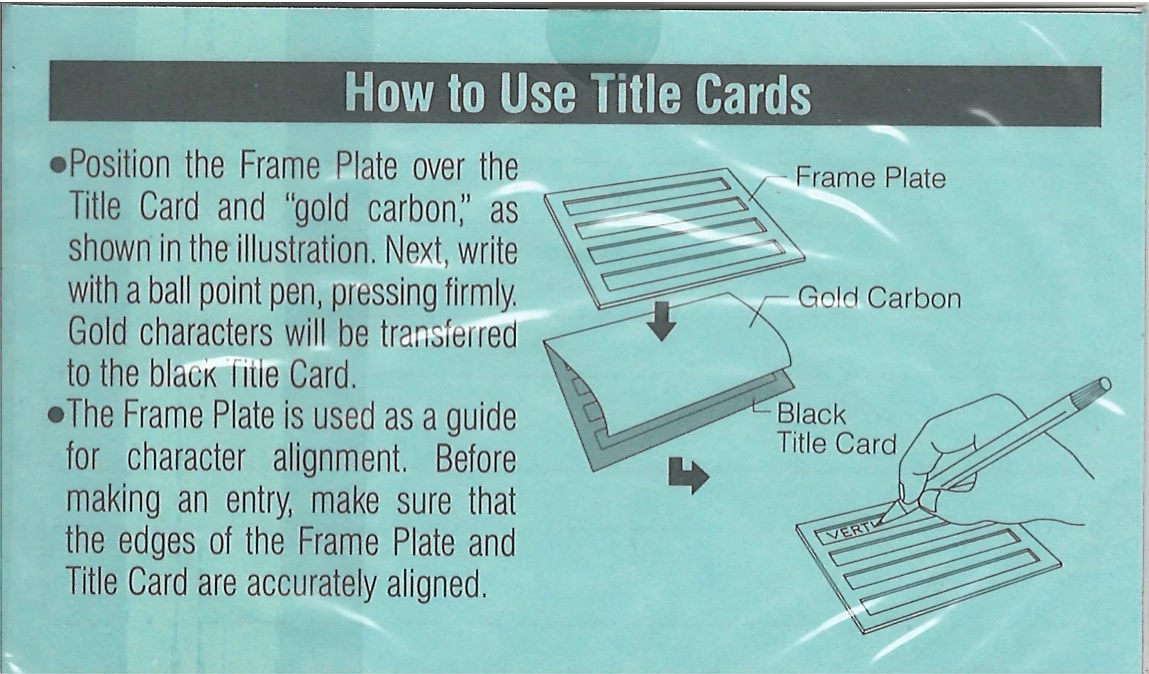
A confident representative of the peak of the cassette industry - the Maxell Metal Vertex. Maxell went their own way: a composite shell with a heavy metal insert for vibration damping. As they write on the packaging themselves - 音、頂点 (The Summit of Sound). That “ellipsoid” shape was later borrowed by many others, not just Maxell, so the cassette also earned lasting recognition as a kind of quality badge for years to come. Each cassette has a serial number stamped into the metal - 7 digits, room for 10 million copies. Need to Google whether anyone’s found a photo where the first digit isn’t zero - haven’t seen one yet. They also advertise the tape coating with industrial silver blacking - total overengineering - Techno-Silver Black Coat. Bought this one from a reseller in Moscow. Noticed a foil label and handwritten inscription on the back (see the photos below, there’s even an instruction sheet for how to use it), and read it as something like “Vasi whatever.” Figured someone had been messing around - stuck on crooked, handwriting was rough. Put it on to listen - Shazam says Bach symphony, and that’s when it hit me: it wasn’t “Vasi,” it was Latin :) Turns out the original overseas buyer stuck it on crooked. Well recorded, clean sound - here’s what’s on it: J.S. Bach: Mass In B Minor, BWV 232-Kyrie-Kyrie Eleison - Sir Georg Solti & Chicago Symphony Orchestra & Chicago Symphony Chorus
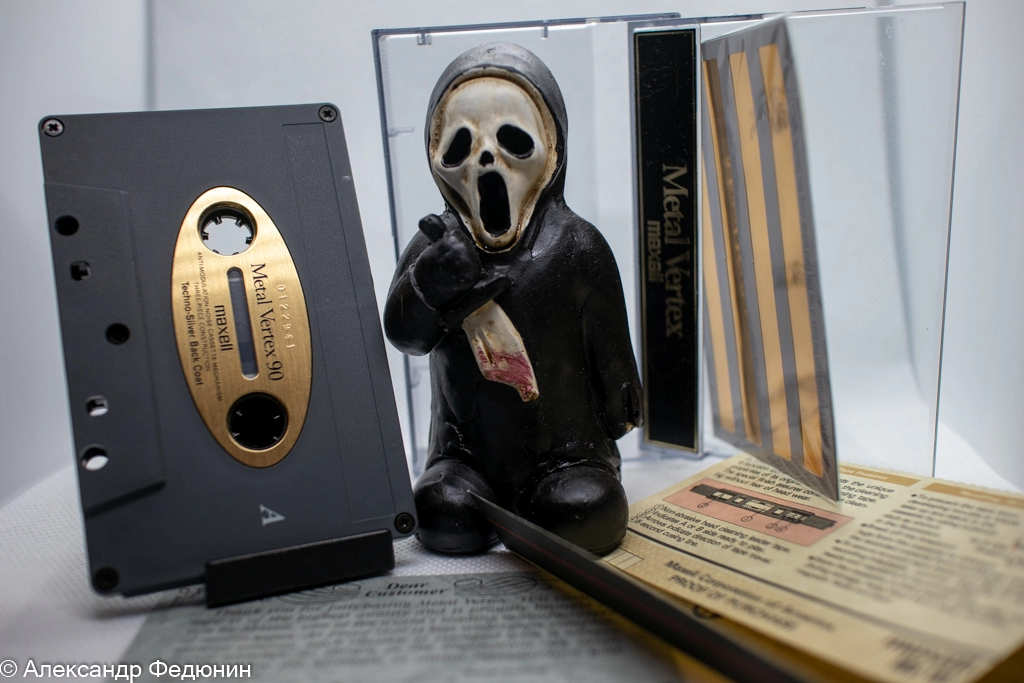
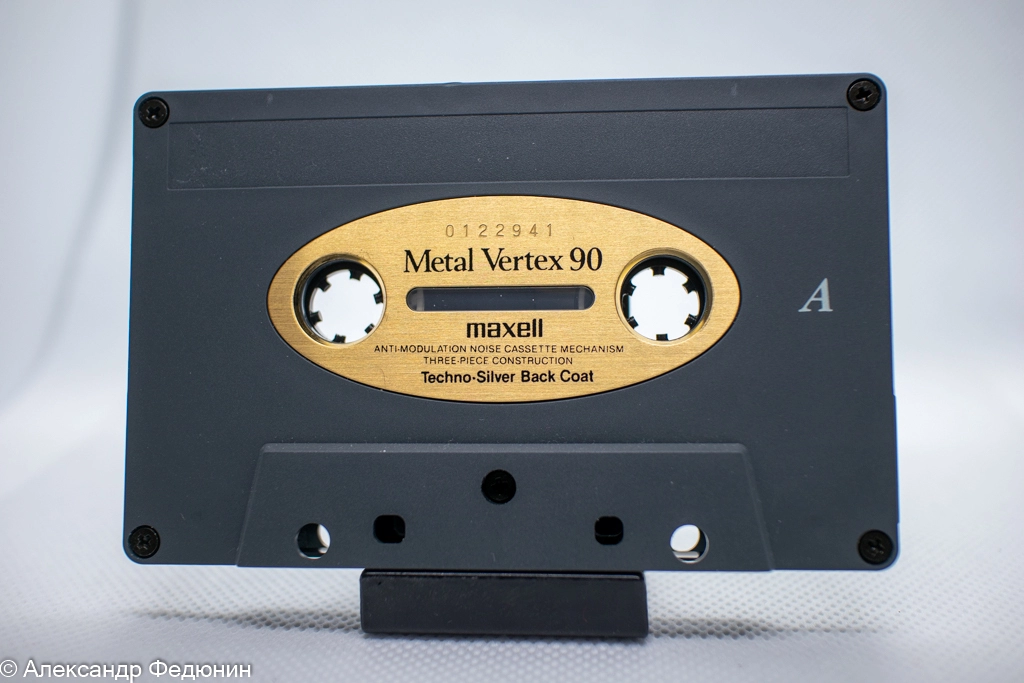
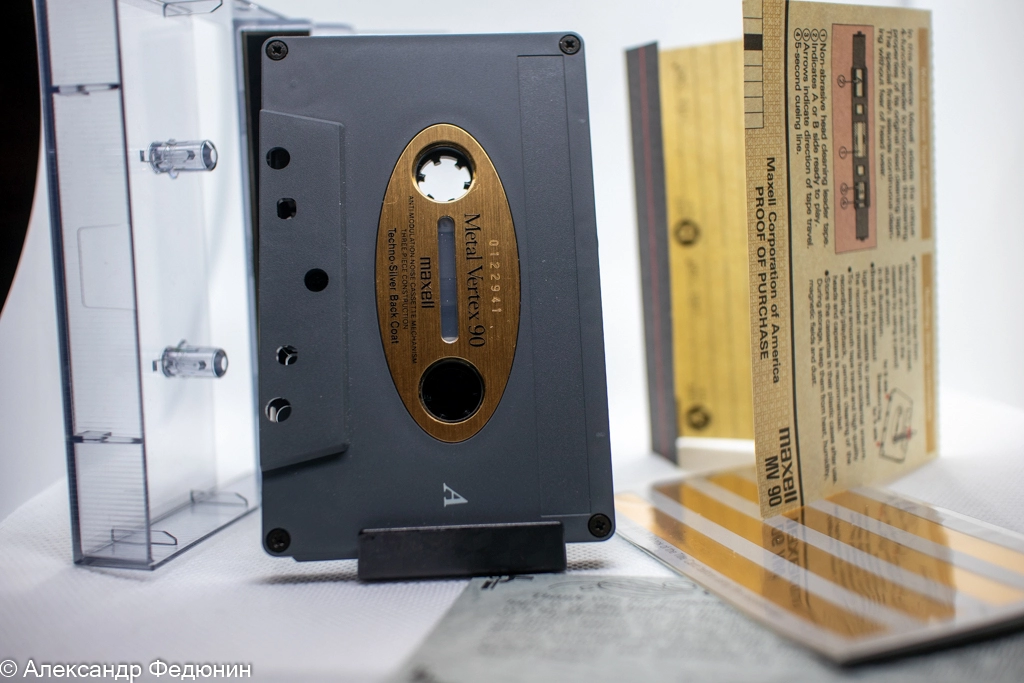
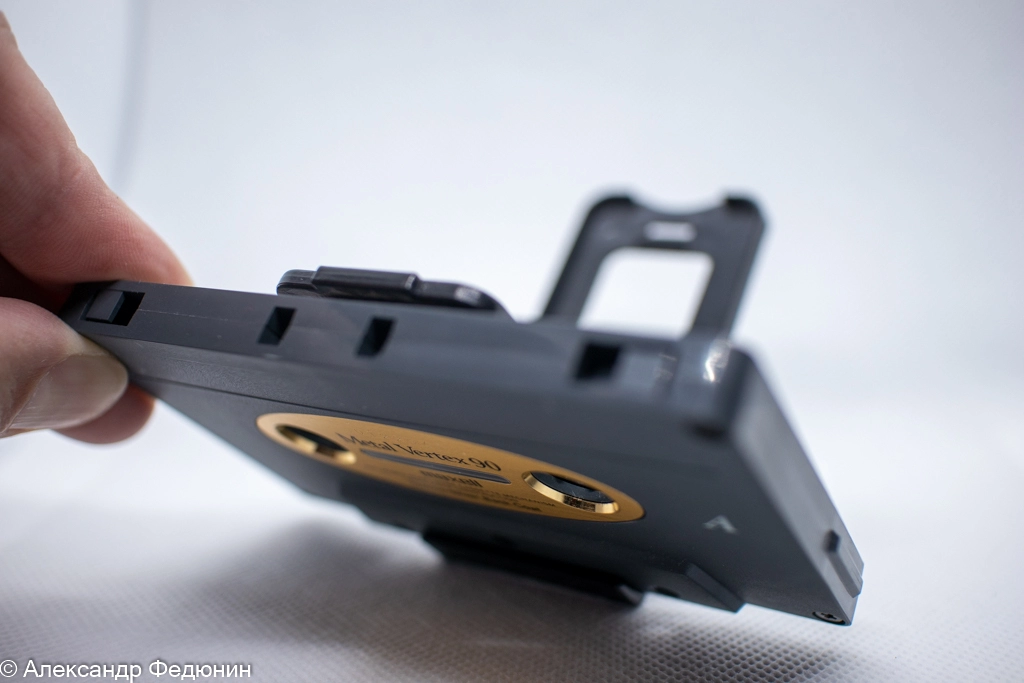
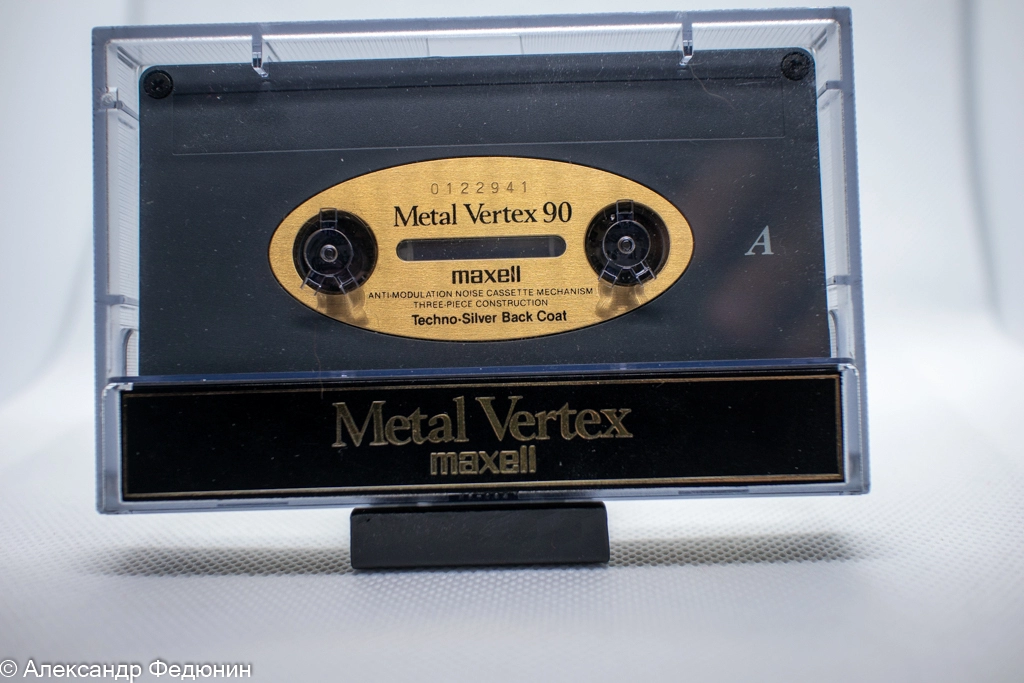
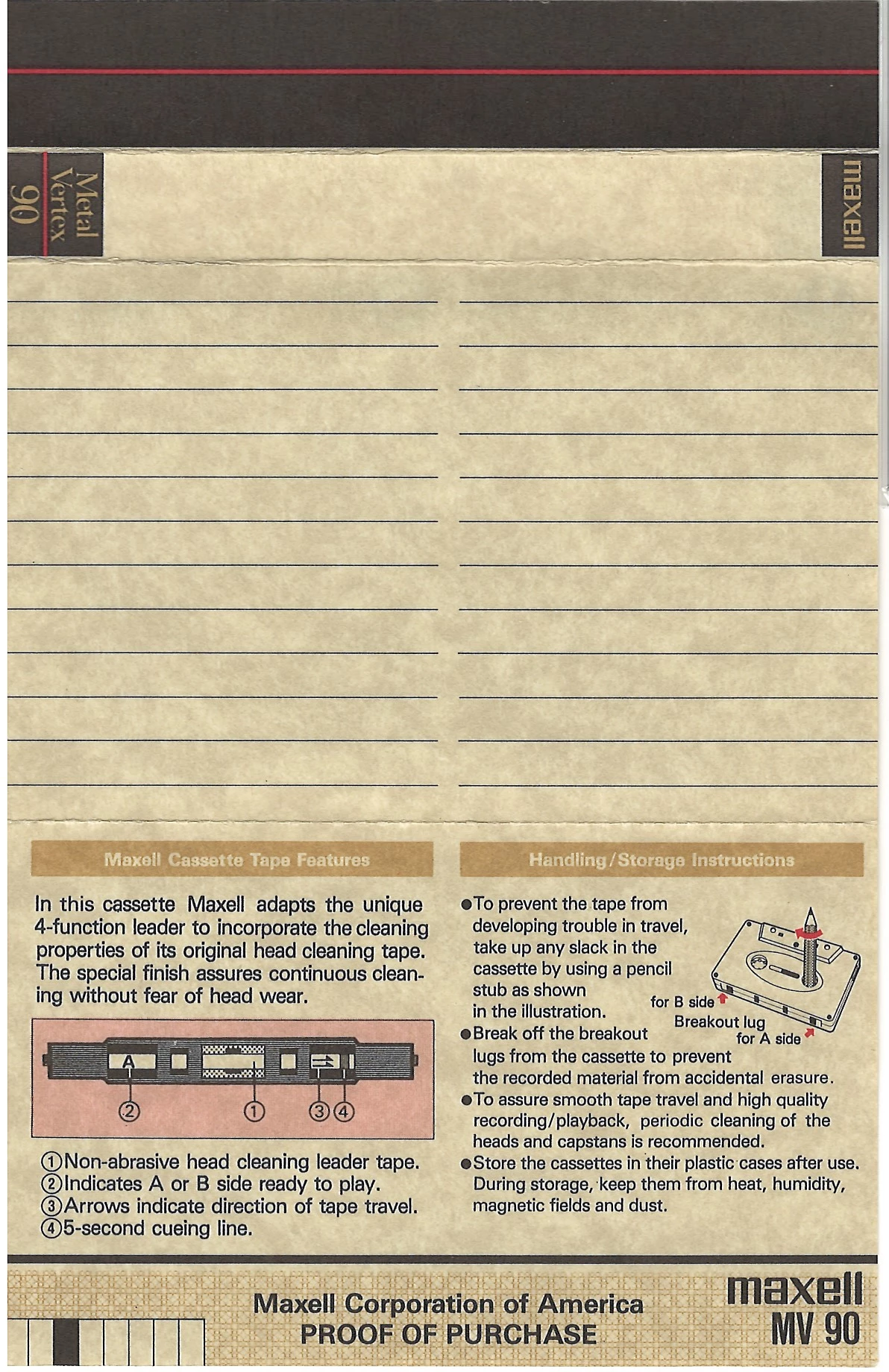
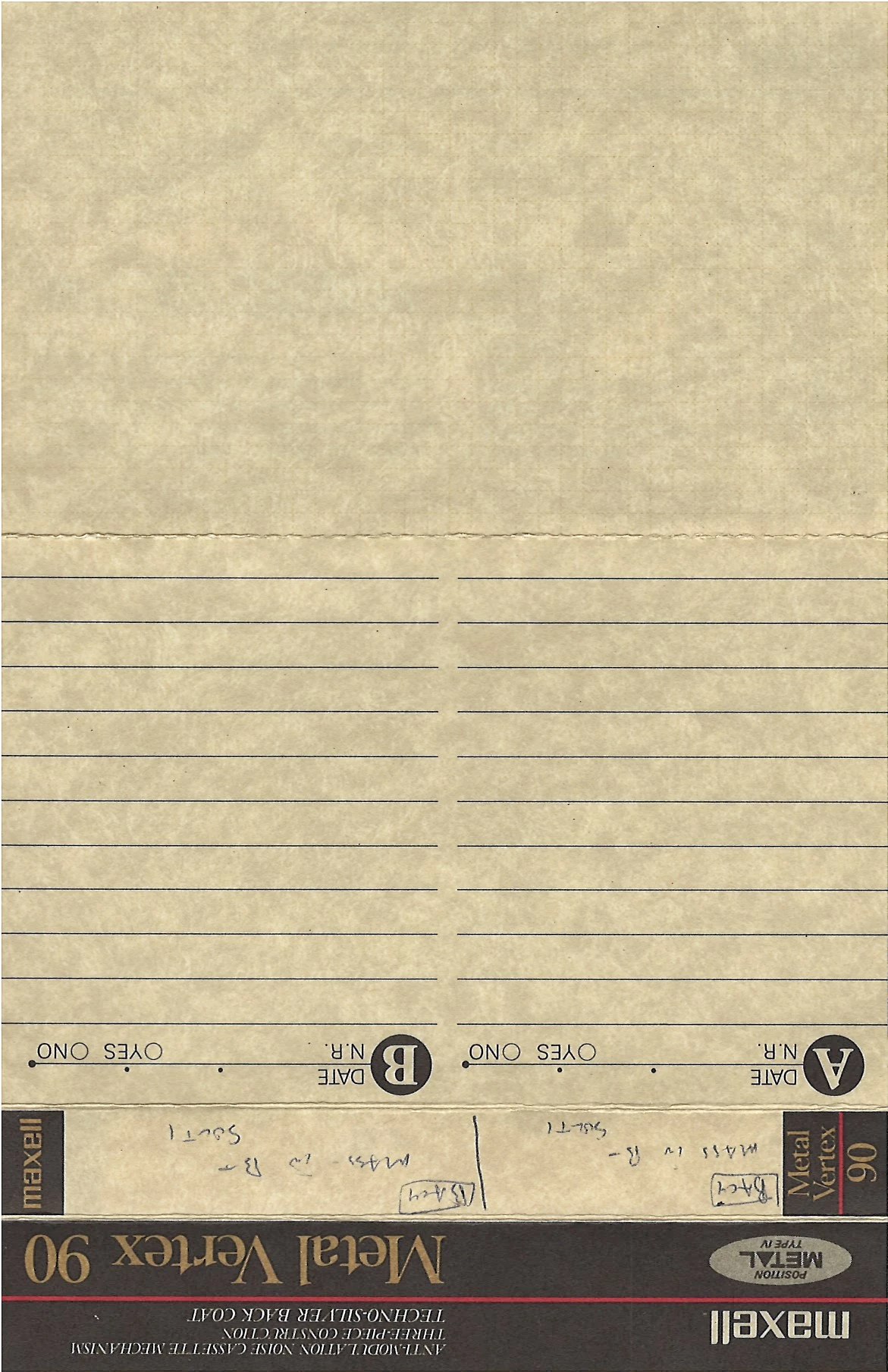
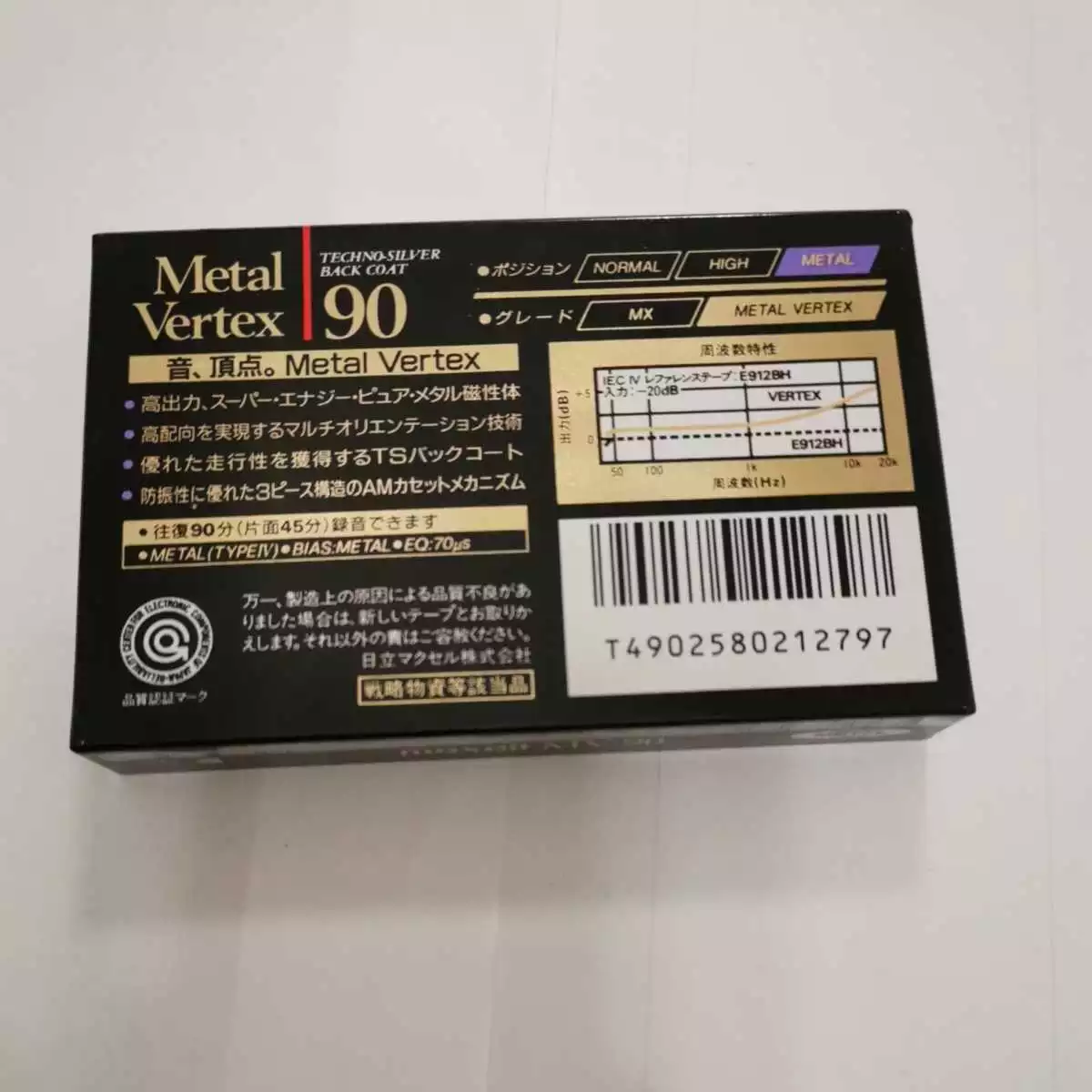
What the packaging says about the cassette: • High-output metal formulation with ultra-high energy • Multi-orientation technology for superior alignment • TS back coat for excellent durability characteristics • AM cassette mechanism with triangular structure and outstanding vibration isolation
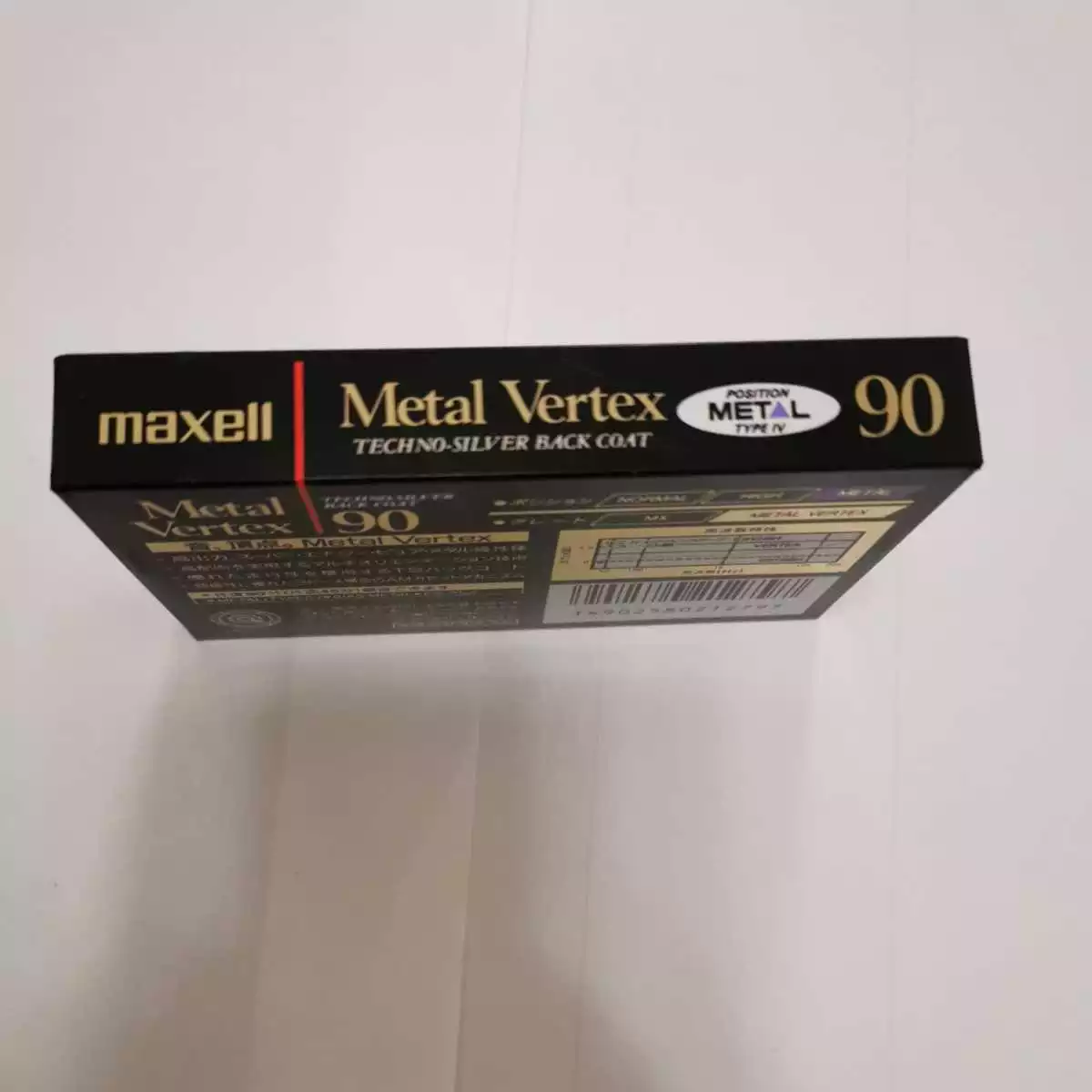
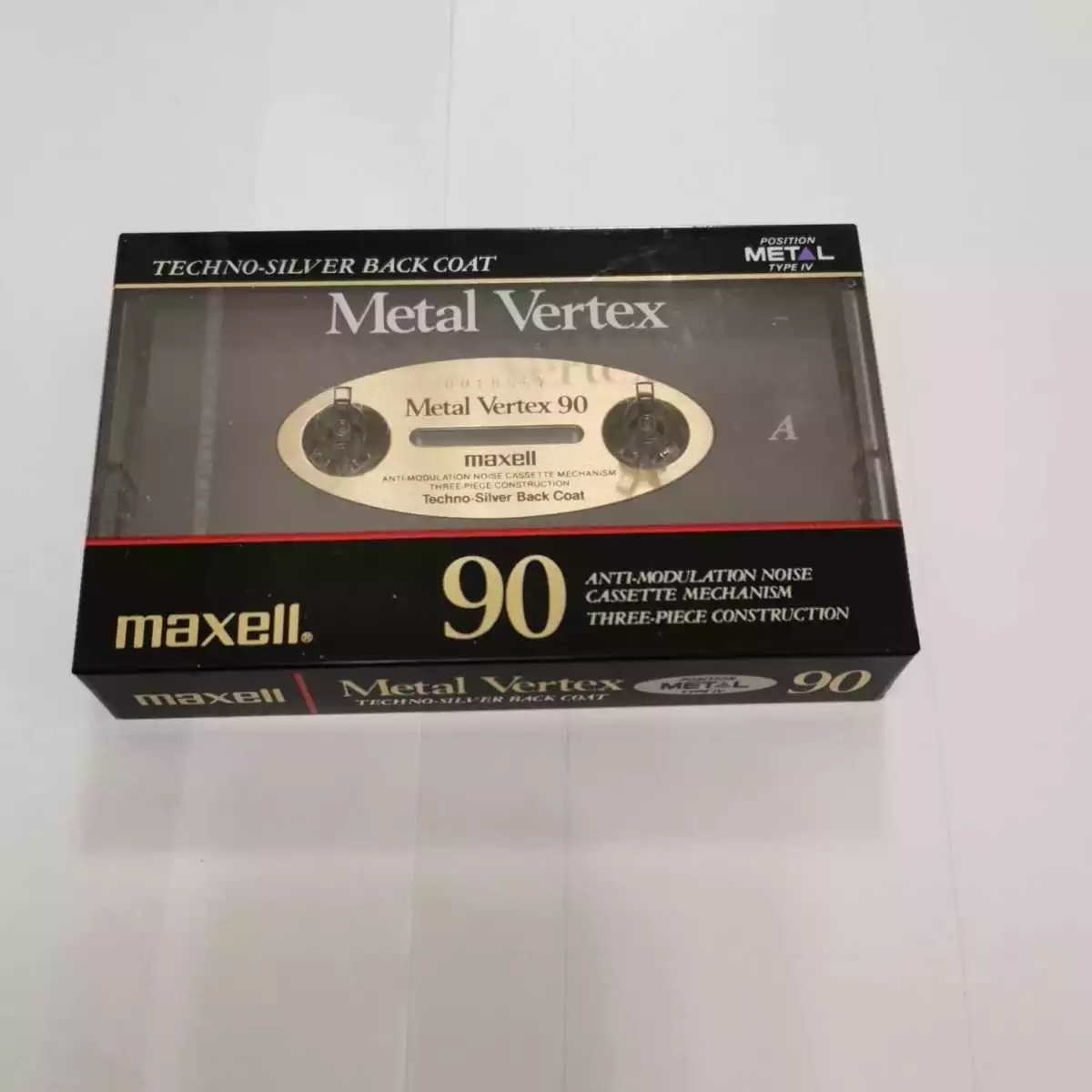
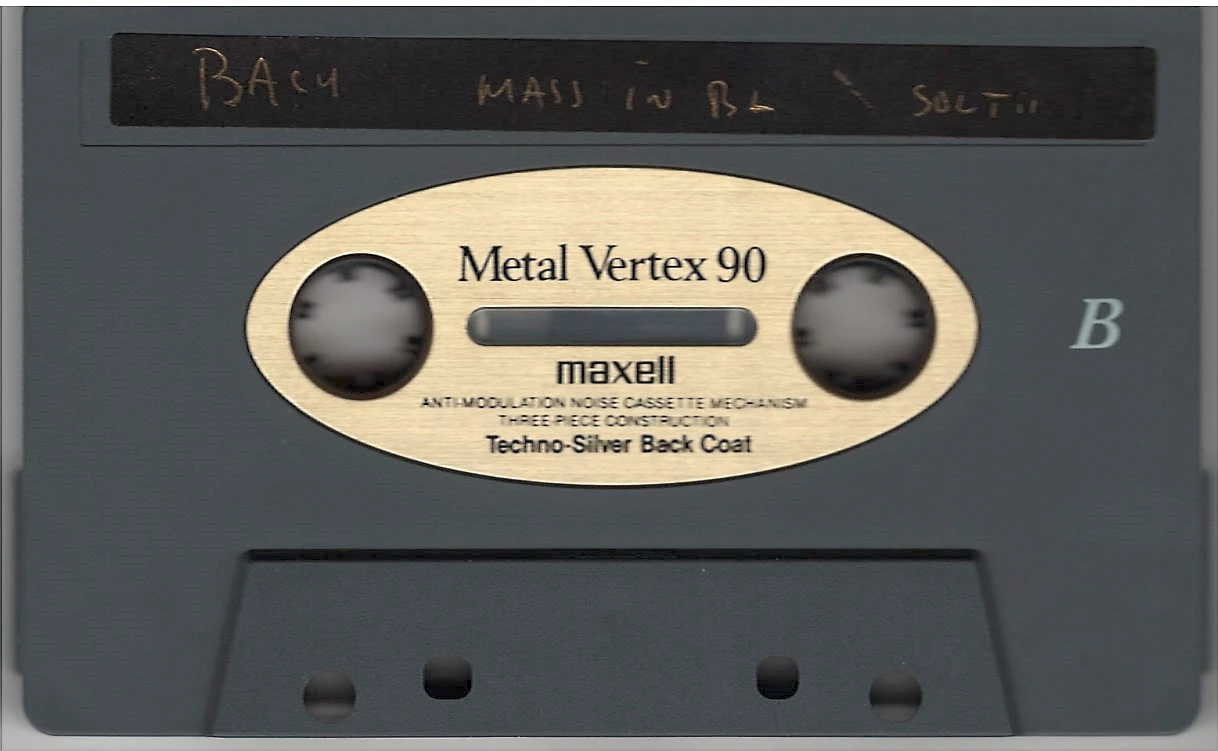
It really does look like “Vasi something,” doesn’t it? :) As befits a top-tier model, it’s still being discussed on forums nearly 35 years after release, and catalogues dedicated several pages to it - it really was a unique thing. The Maxell section of one Japanese catalogue wraps up with the story of this very cassette.
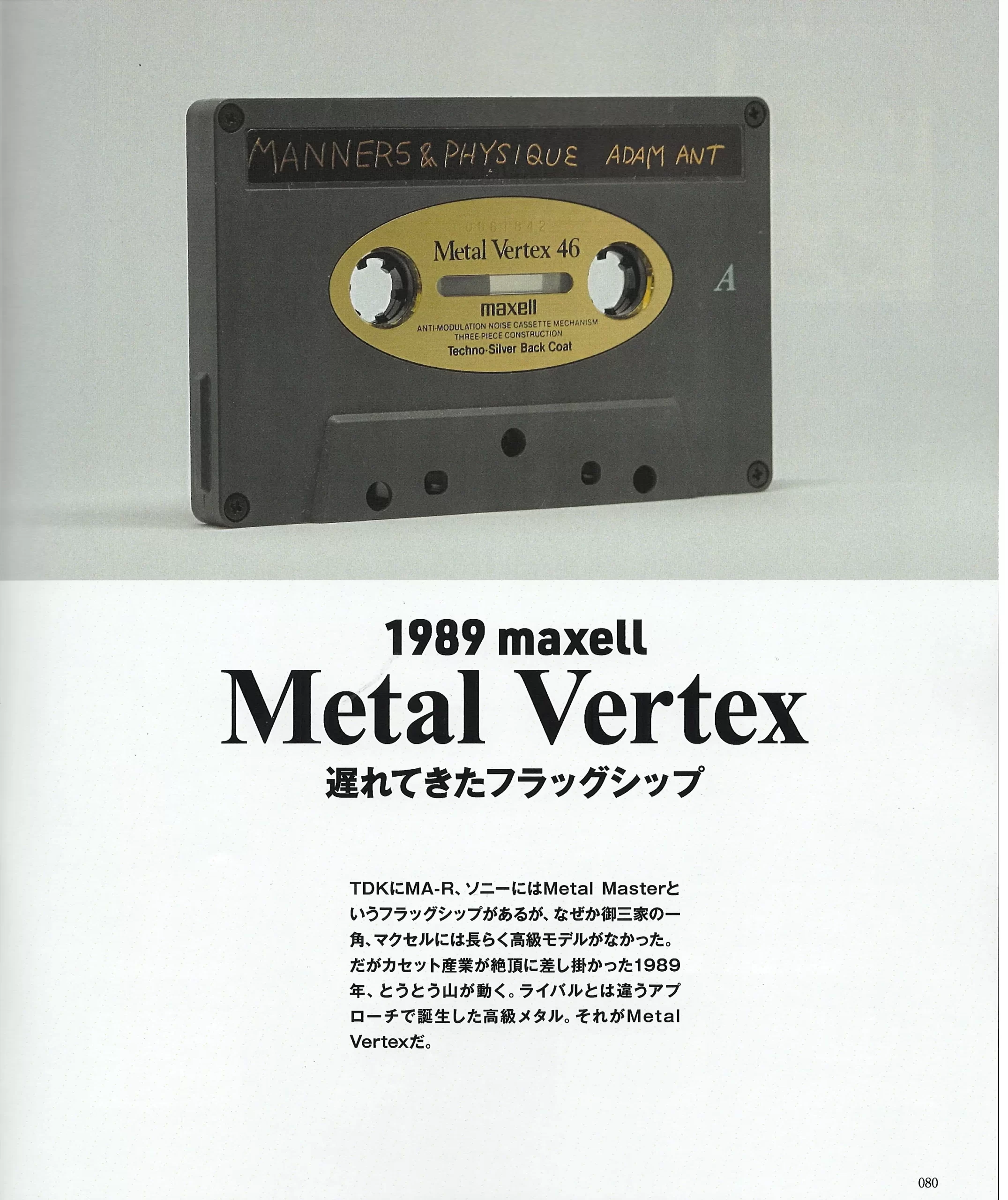
That’s literally what the subheading says - the flagship that arrived late. And incidentally, the handwriting in the photo is a lot neater than my “Vasi” :) TDK had the MA-R as their flagship. Sony had the Metal Master. But Maxell somehow didn’t have a high-end model for a long time. Then in 1989, when the cassette industry reached its peak, the mountains finally moved. High-class metal, born from an approach different from the competition. This is Metal Vertex.
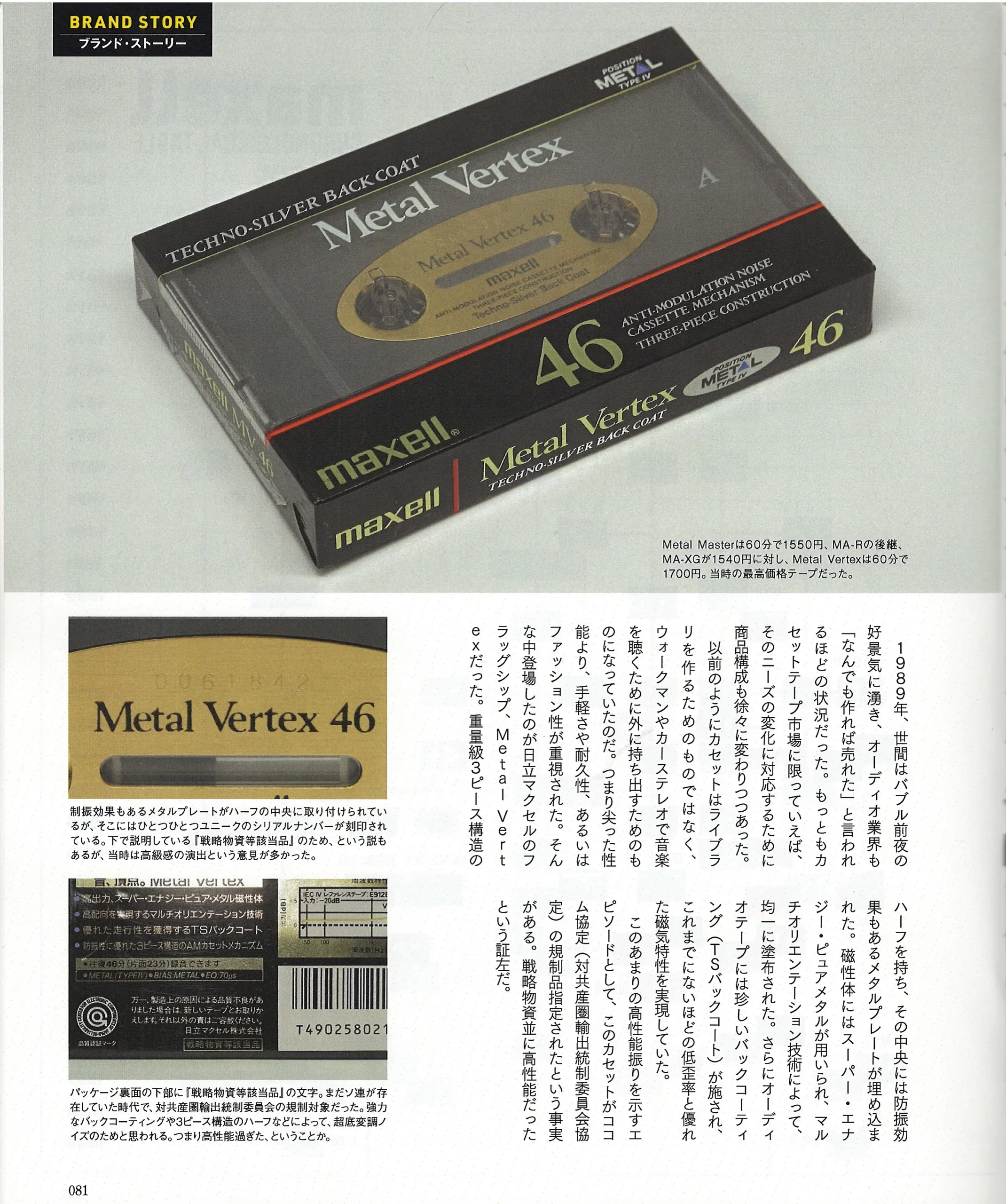
Translation of the history: In 1989, the world was riding a pre-bubble boom, and the audio industry was in a mood where people said “everything’s been done and sold.” But the cassette market was gradually shifting to meet changing demands. Cassettes were no longer about building a personal library - they were about listening to music on a Walkman or a car stereo. In other words, the emphasis moved to convenience, durability and style rather than razor-sharp specifications. Among the products of that era was Metal Vertex, the flagship of Hitachi Maxell. A heavy three-part construction - two standard composite halves with a metal plate inserted at the centre for vibration damping. The magnetic material was Super Energy Pure Metal, applied evenly using multi-orientation technology. The tape also received an unusual back coating (TS backcoat) to achieve unprecedentedly low distortion and excellent magnetic properties. One episode that speaks to the cassette’s high performance: it was classified as a controlled product under the Cocom Agreement (the Coordinating Committee for Multilateral Export Controls). This shows the cassette was as unique as strategic materials. Caption under the small pictures at bottom right: The metal plate, which also has a damping effect, is attached at the centre of each half-shell, and a unique serial number is engraved on each one. There’s a theory this is connected to its status as a “controlled strategic item” described below - but at the time, many simply regarded it as a mark of premium product. At the bottom of the back panel there is a note: “Applicable items, such as strategic supplies.” This was a time when the Soviet Union still existed and COCOM export controls were in force. The combination of a strong back coating and the three-part half-shell construction apparently related to ultra-low modulation noise performance. In other words, the performance was simply too good. P.S. As more publications about cassettes have appeared, a translated article from the creators of this cassette for the Japanese release of MAXELL Cassette Tape Maniacs 1966-2024 has also come out. You can read the full translation there and compare the authors’ perspective with my take (my text is about 3 years older than the translation).