
Sharp VZ-V2 is one of the most unusual and memorable audio all-in-one units of the early 1980s, made by the Japanese company Sharp. The model became known thanks to the Auto Disk system, which allowed vinyl records to be played in a vertical position from either side - a rare and bold engineering solution for mass-market audio equipment of the time.
In addition to the vinyl player, the Sharp VZ-V2 combines a radio receiver, a cassette mechanism with APSS function, and a full-featured acoustic system in a single enclosure. This format made the device a versatile music center aimed at home use and showcasing Sharp’s technological capabilities.
This article covers the history of the Sharp VZ-V2, its design features, the principles behind Auto Disk, and personal observations and details that make this model interesting to collectors and vintage audio enthusiasts.

In general, the Japanese in the early 80s were at the peak of their engineering drive and came up with all sorts of things in various directions - in audio they distinguished themselves especially. From those years you can recall many iconic devices, but the VZ series from Sharp stands apart even among the many legendary models from this company. They had to come up with it - a huge unit with a cassette deck, radio, vinyl player (vertical!), powerful sound and fantastic looks, all in one enclosure weighing 17.5 kg.
At the same time, each of the modules features technically impressive solutions and achievements for the period. I’ll try to describe them all, drawing on their catalog from November 1981 (Showa era 56, as they numbered things back then).
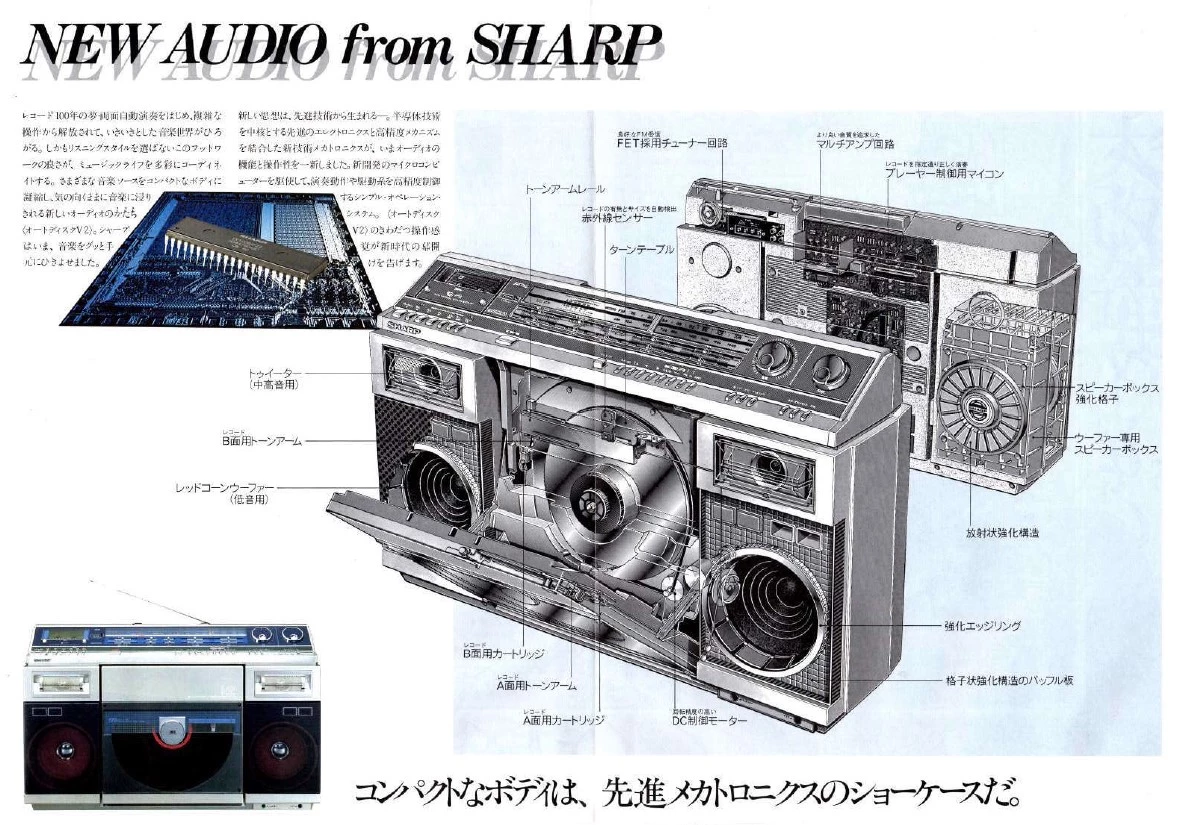
They talk about a new chip (Google translates it as “microcombulator”) for their own audio processing and praise it with lofty words, saying it’s so good you could cry :)
Recording of a hundred-year dream. Freed from complex operations, a hot and deep world of devotion spreads. The perfection of this work, which does not choose a listening style, makes musical life in tune with Tasugi. A new form of sound that lets you cry at the sound stand as you please. (Auto Disk V2) Now Sharp has squeezed the pestle in the hand alone. Mechatronics - technology combining advanced electronics with high-precision mechanism - has finally renewed audio functions and operations. A delicate operation that fully uses a newly developed microcombulator to control performance and the drive system. The distinctive feel of operating Auto Disk V2 heralds the dawn of a new era.
The slogan at the bottom praises the magnificent body: “The splendid body is a show of advanced mechatronics.”
I would point out here that they designed the speakers not only to face forward but also carefully thought through the rear of the enclosure, forming the plastic there in a clever way for proper transmission of low frequencies. In general, it must be said that the sound turned out well - it plays cleanly and clearly at any volume.
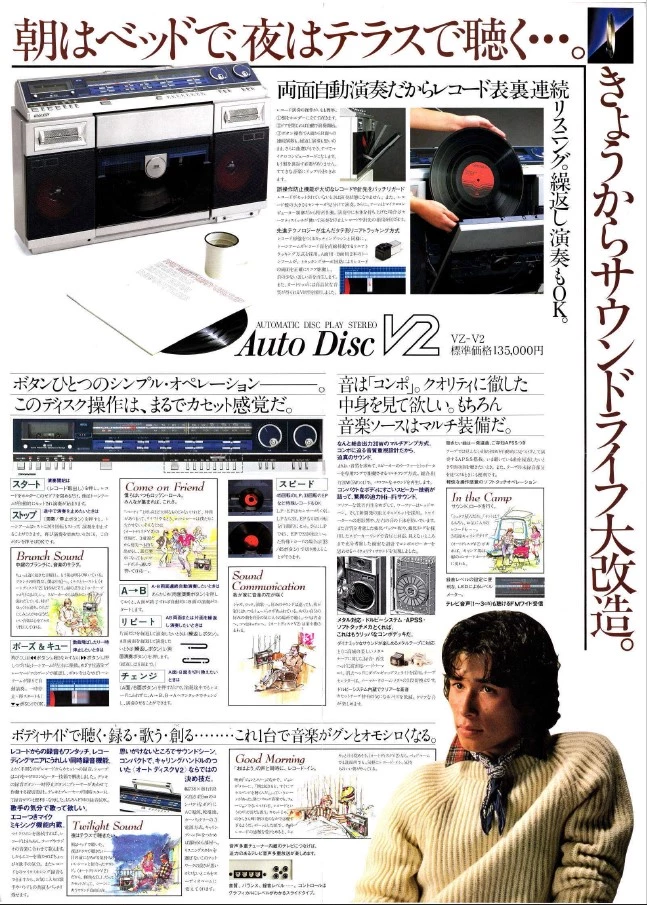
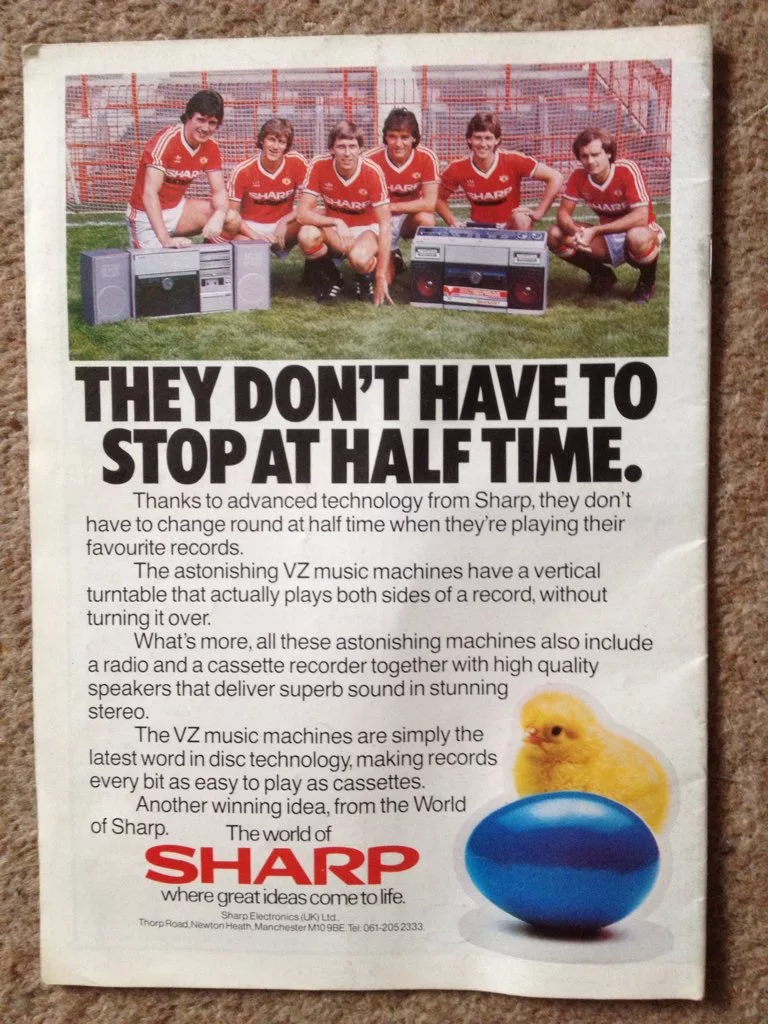
The main point they pushed in advertising and in the description of the entire VZ series was automatic playback of vinyl from both sides without needing to flip the record (they called this the Auto Disk system). They solved this by installing two tonearms, one for each side. When side A reached the end, the record would start rotating in the opposite direction and the second stylus would engage, for side B. You can choose different modes: listen to only one side (you can select either side), listen to both sides automatically, or set both sides on repeat loop (it will switch off automatically after 6 complete plays of the record - handy for the forgetful). In this commercial they clearly show even the buttons you need to press so you don’t have to fiddle with each side:
It must be said, the idea is excellent - the need to flip sides often introduces awkward interruptions to vinyl listening. Not for every album of course, but definitely for some.
But let’s return to the catalog description, where the authors detail all the remarkable functionality and use fun pictures for clarity, while also targeting the widest possible audience - from parties and romantic couples to a serious well-off gentleman with a newspaper:
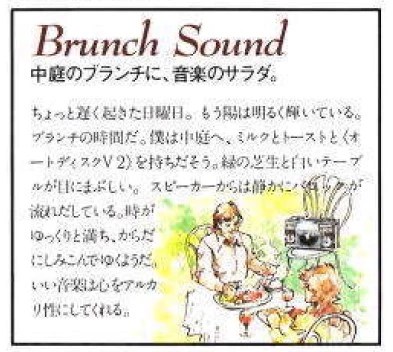
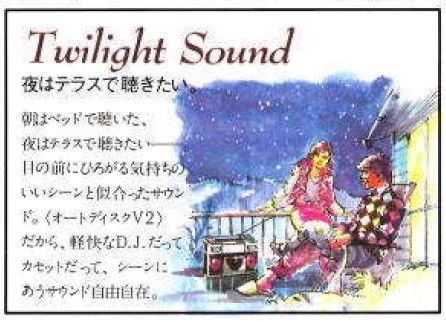
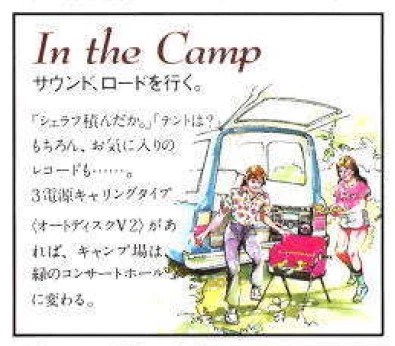
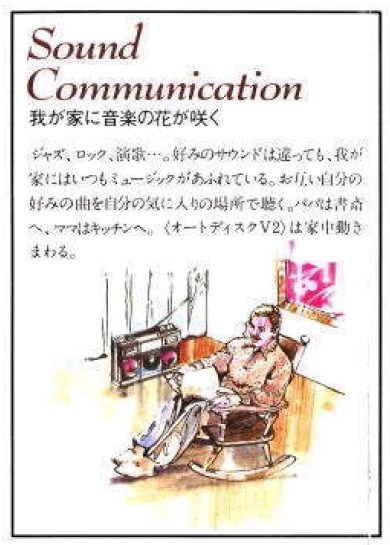
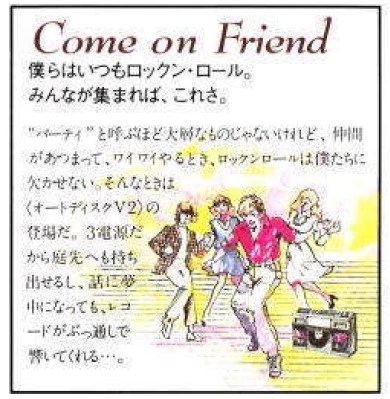
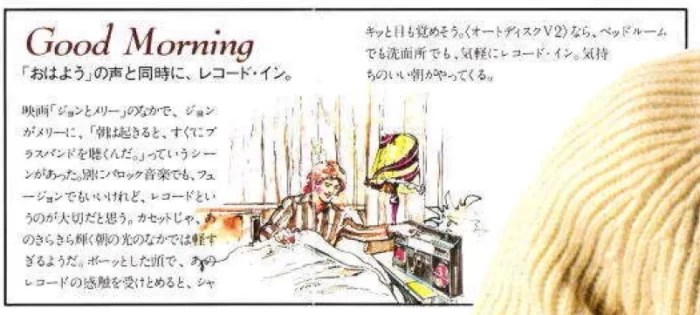
So good for everyone that the Japanese cowboy ended up throwing away his hat.
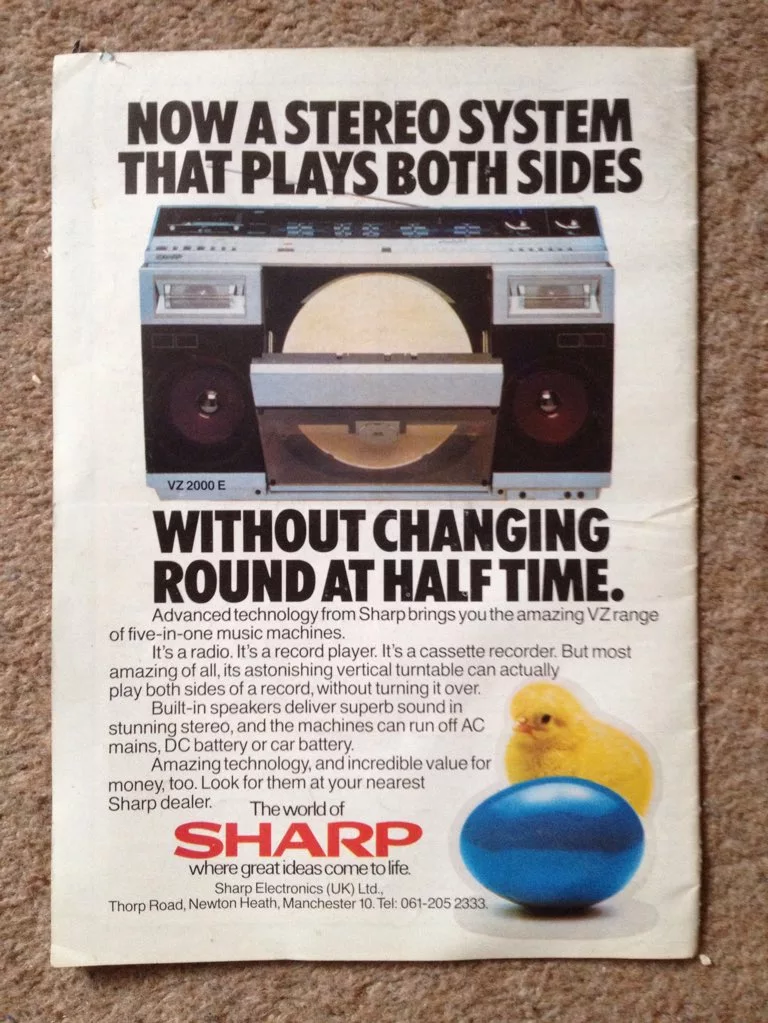
Perhaps also worth mentioning among the vinyl features is automatic detection of record size - if you put in a “small” single format, optical sensors would tell the unit to place the stylus much closer to the center. The speed would automatically switch to 45 rpm (since in those years a 7-inch single was usually cut at that speed). If you got it wrong, you could manually switch back to 33⅓.
The radio is all-wave, with a full FM, MW and LW range - in those days you could in principle listen to anything that was theoretically on air.
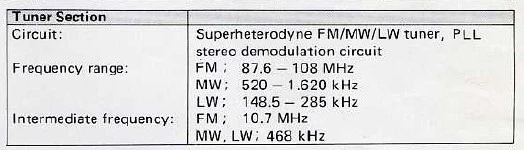
The scale runs almost the entire considerable width of the unit - easy and clear to tune.
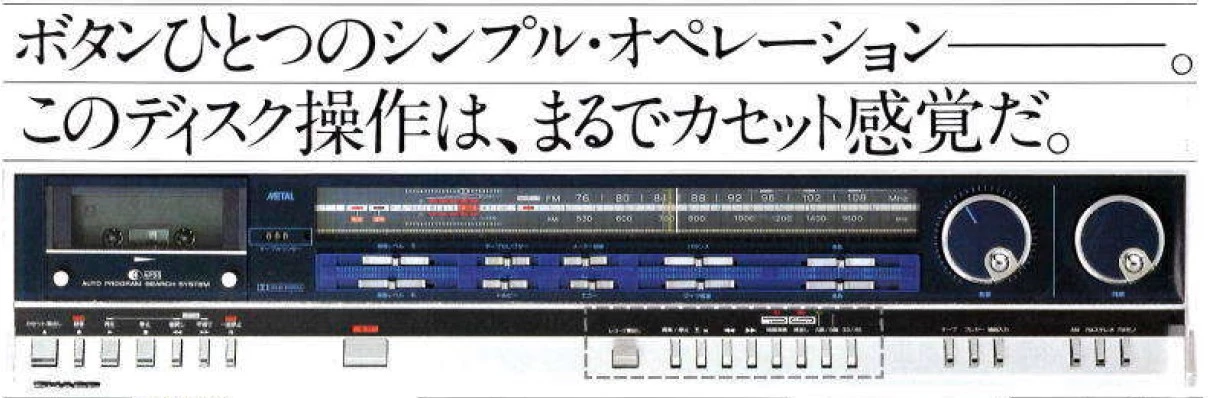
Written at the top of the picture is the APSS (Auto Program Search System) - the cassette section can automatically wind to the next song (by the pause between songs, if recorded correctly) and resume playback. Who would have thought, in 1981? This same system allowed you to rewind the current song and play it again from the beginning - handy. So, since we’ve reached the cassette section, I think it’s time to post some photos of the “live exhibit” and go through the various options in detail.
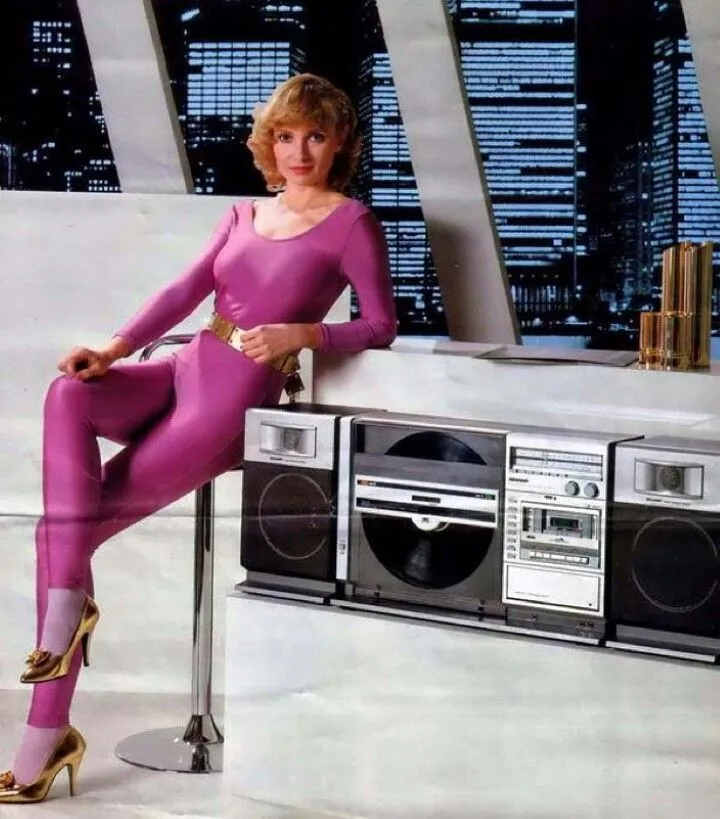
But first a bit more about the overall look and weight, with the brave girl who’s holding it as if it’s nothing - well, I wouldn’t hold up that long, it really does weigh noticeably.
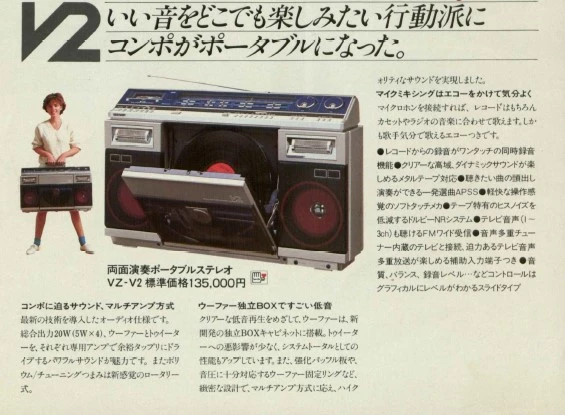
The July 1982 catalog lists all the advantages in detail: one-touch simultaneous recording from vinyl, metal tape support for clear high-frequency and dynamic sound, APSS for selecting tracks at the press of a button, soft-touch mechanism, Dolby NR system to reduce tape hiss, FM radio. Total output 20W (5W × 4), woofer and tweeter in separate enclosures - a construction that approaches the level of a full compo system.
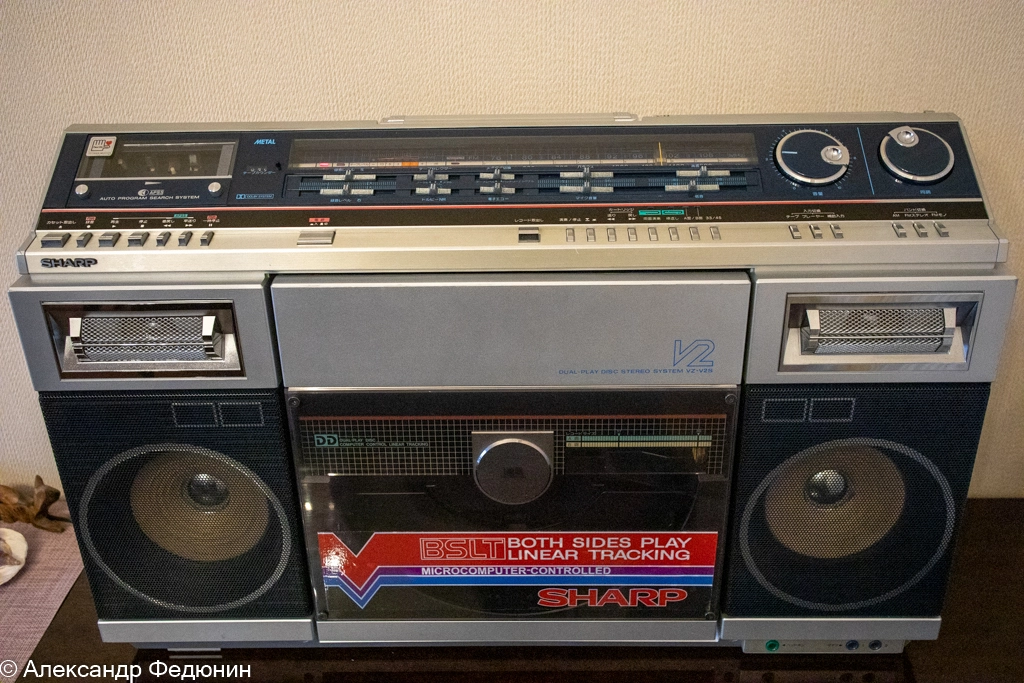
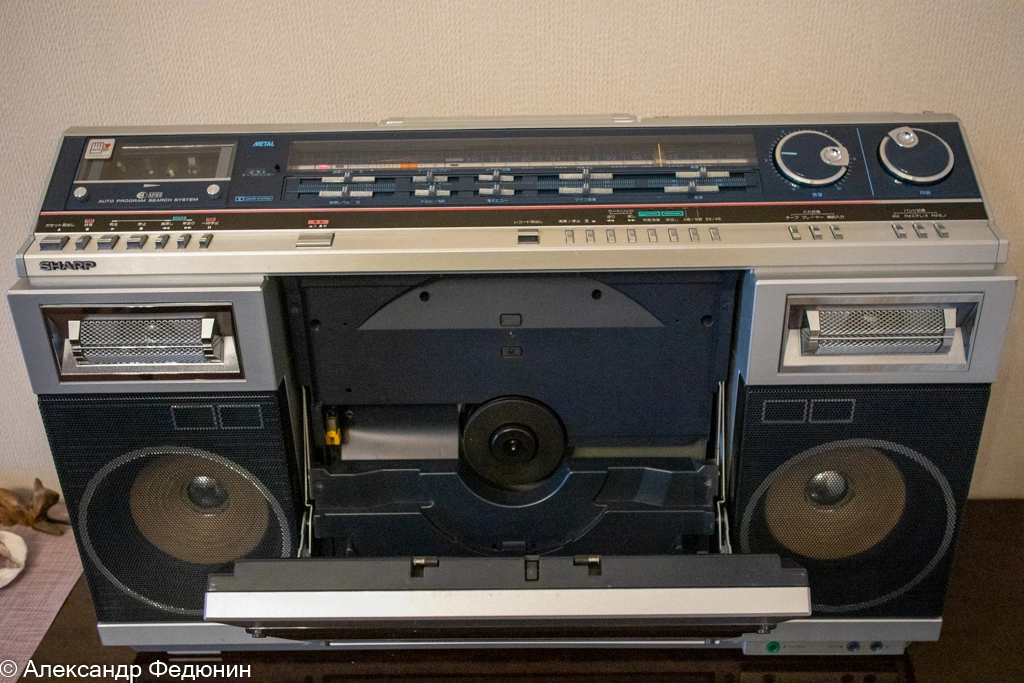
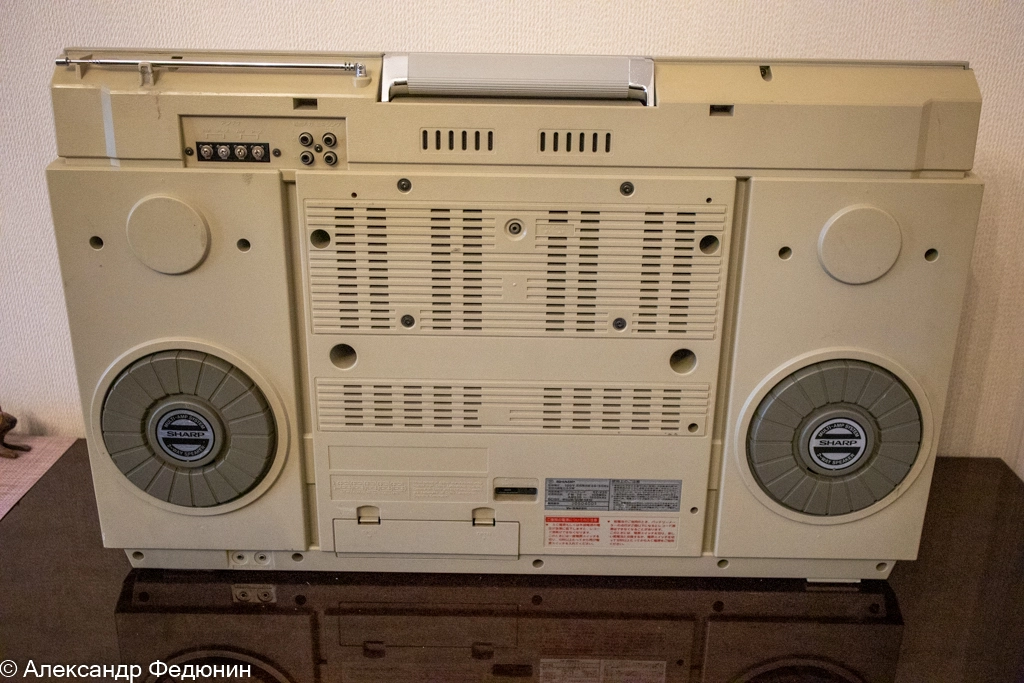
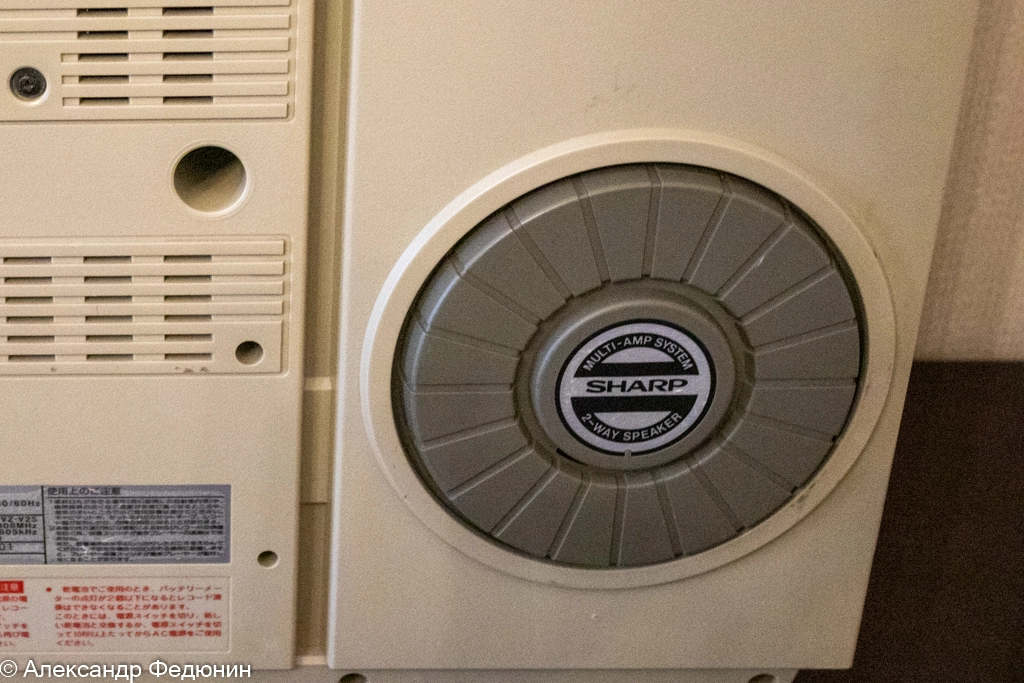
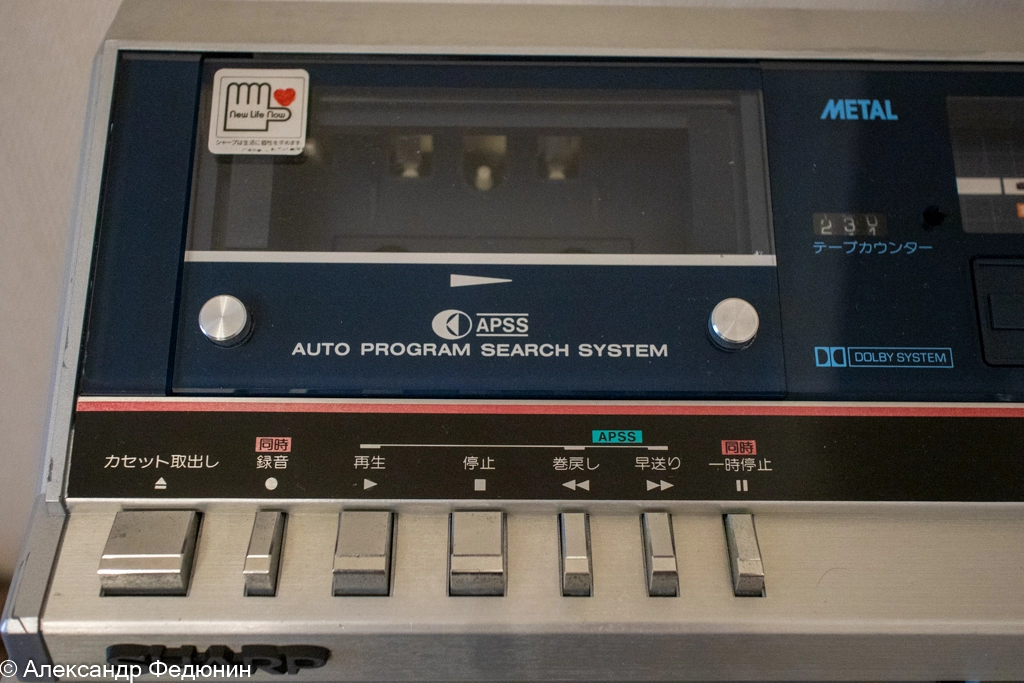
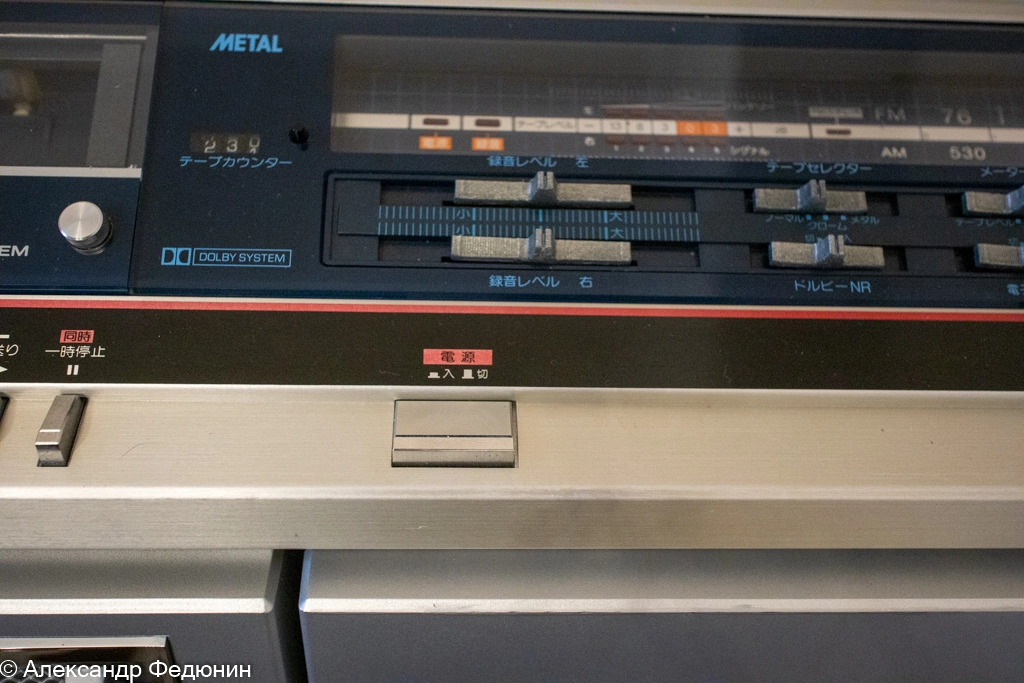
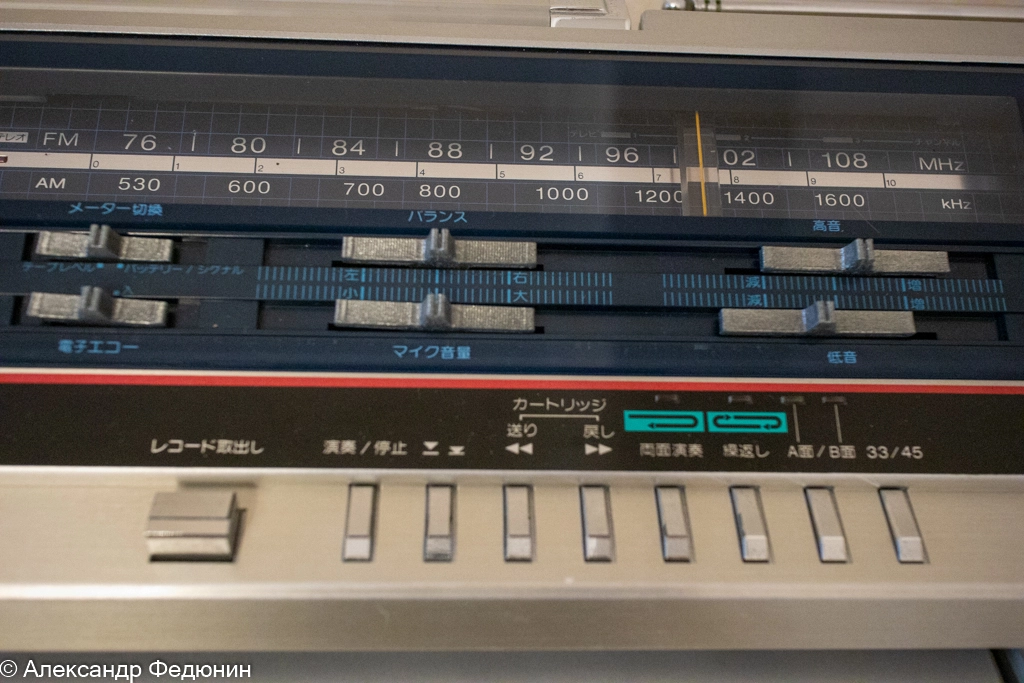
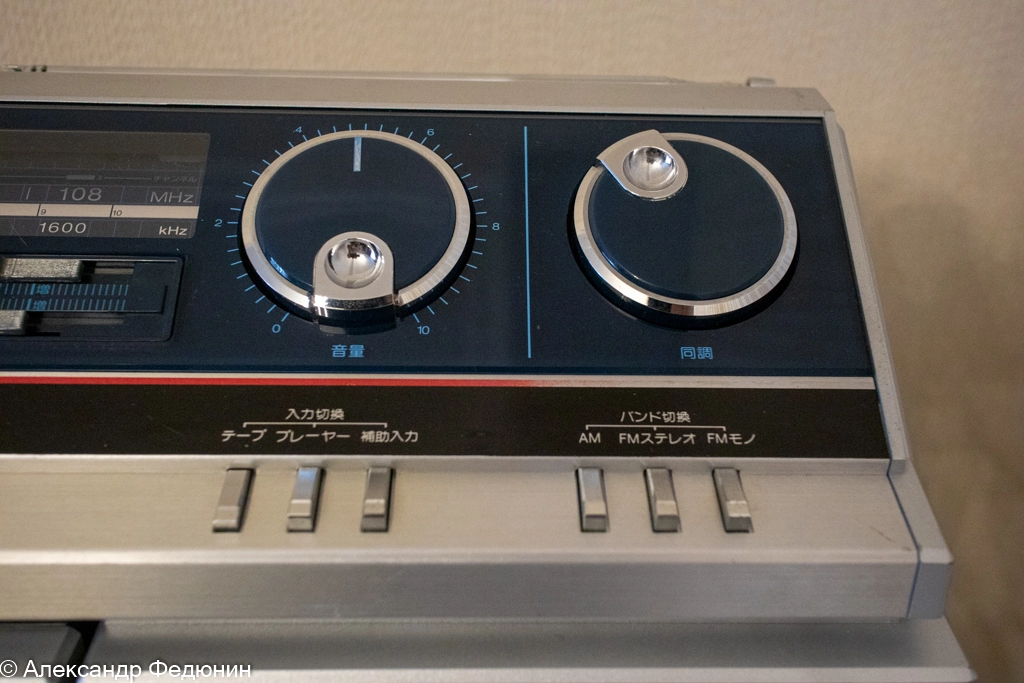
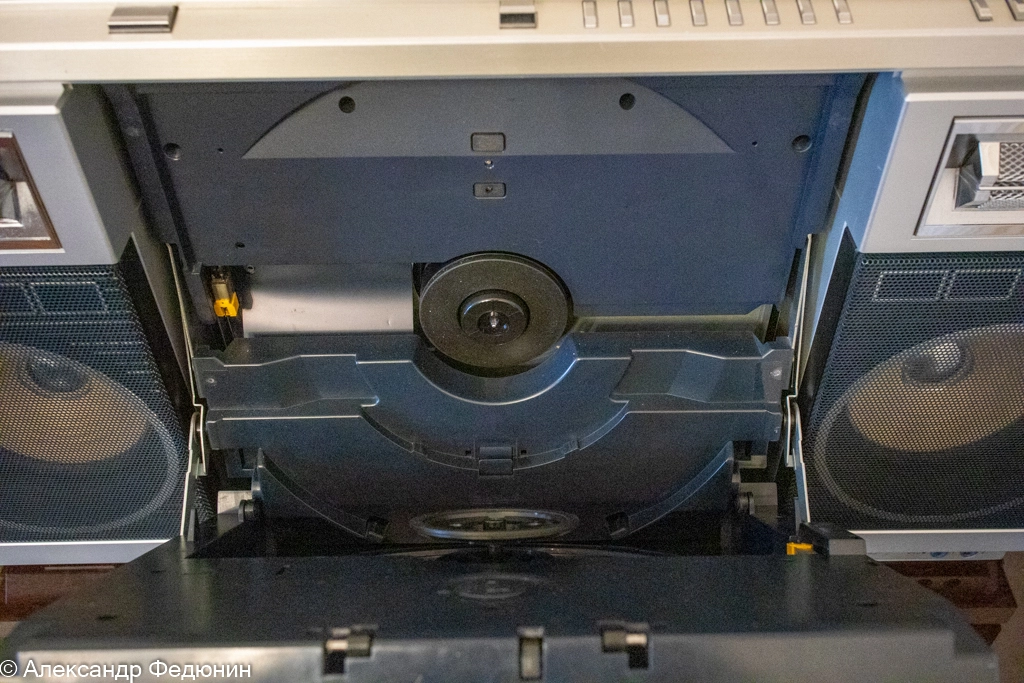
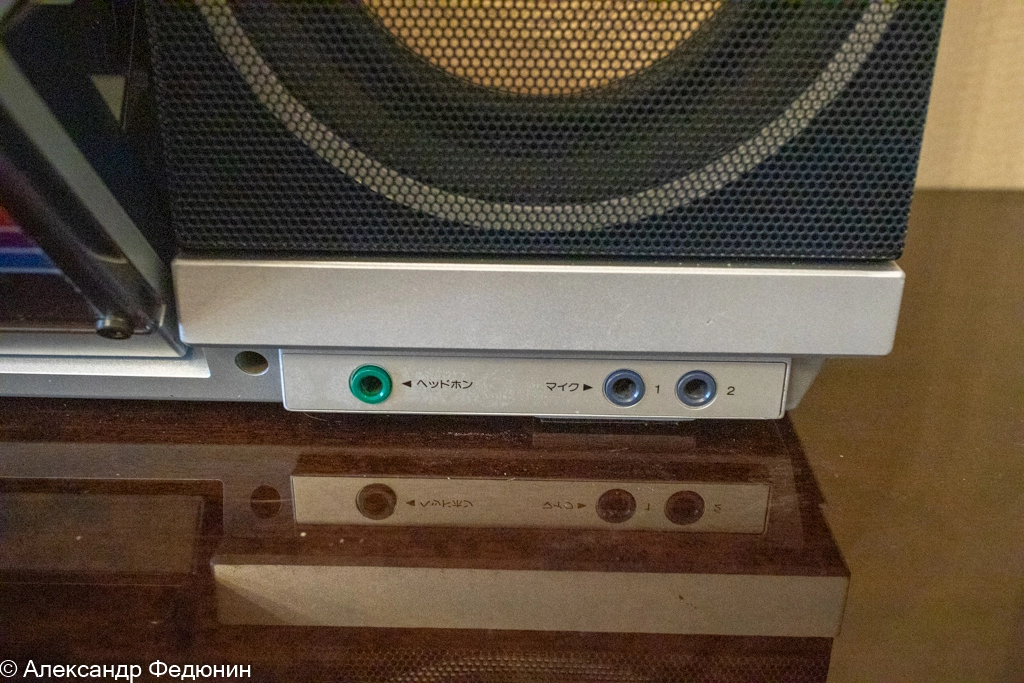
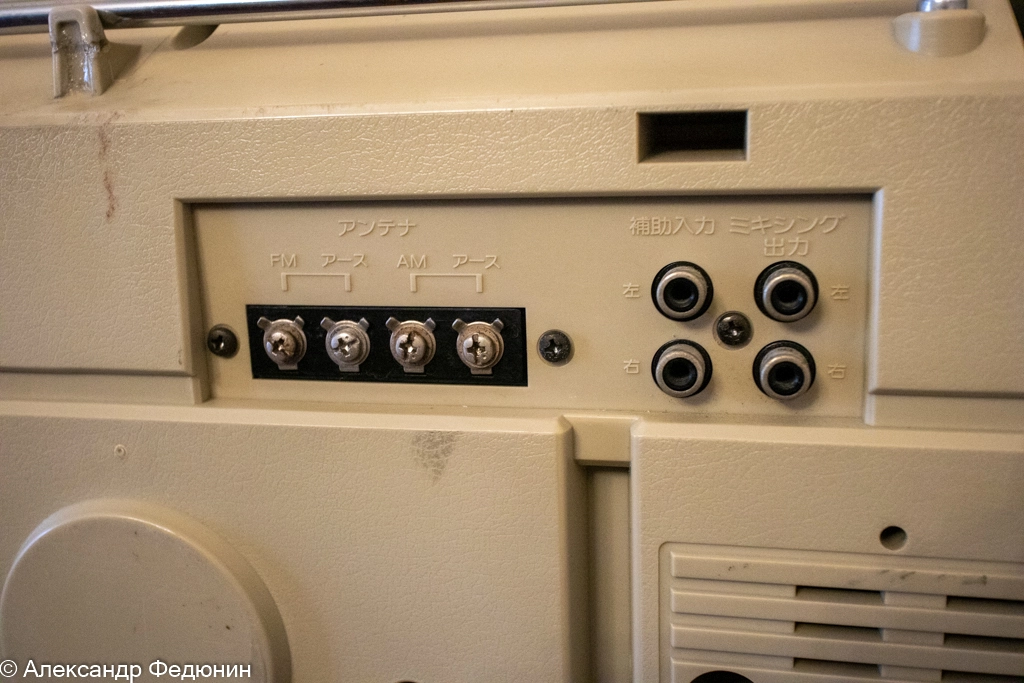
Such a music box. I made video of the main operations, but my camera apparently has “level equalizing,” so even at maximum it doesn’t hit as hard as in reality. But that it all sounds perfectly well - that can be noted even on such a video.
To conclude I think it’s worth adding that this model was released on the Japanese market in 1981, and there were several models at once - VZ-V2 (this one), the more prestigious VZ-V3 with separate speakers, and a little later V4, where the vinyl block was entirely separate while the other components were in the classic “rack” format.
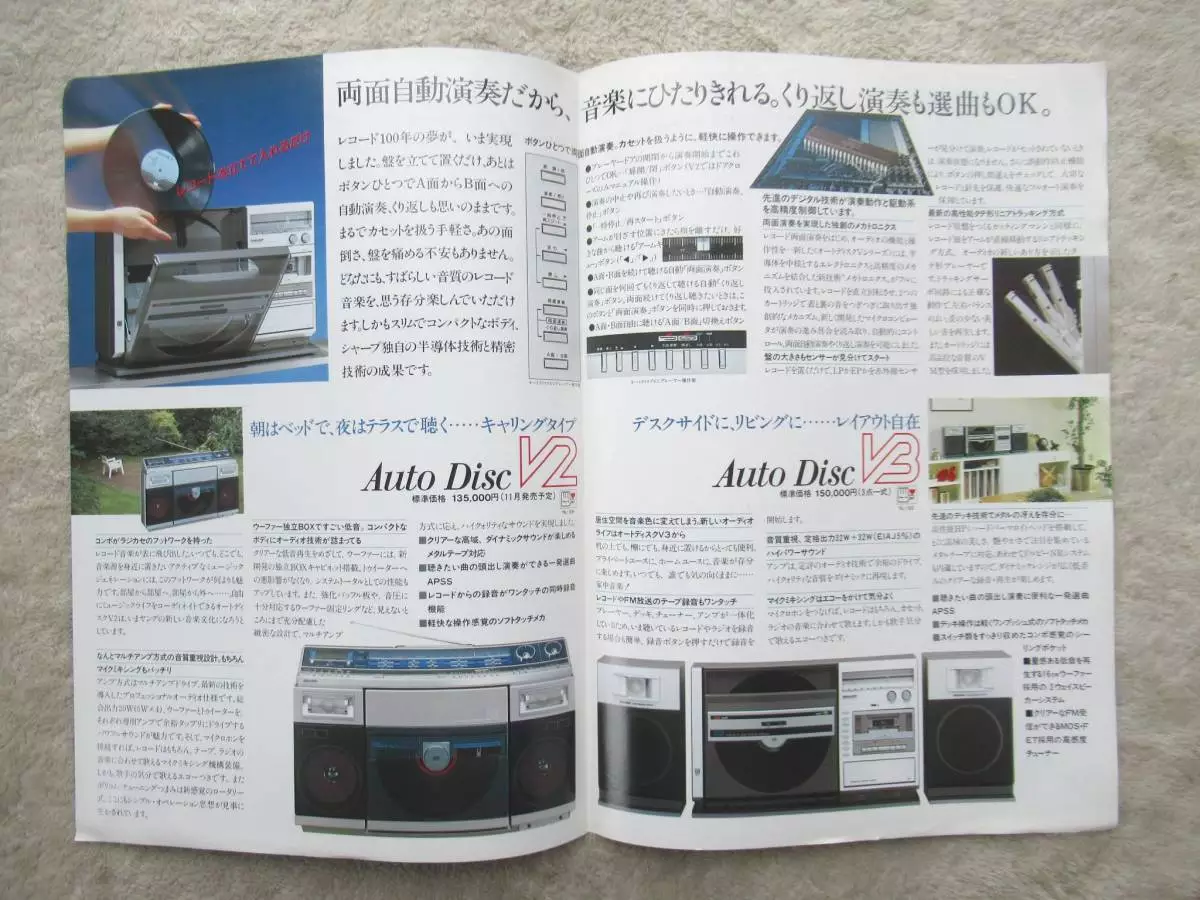
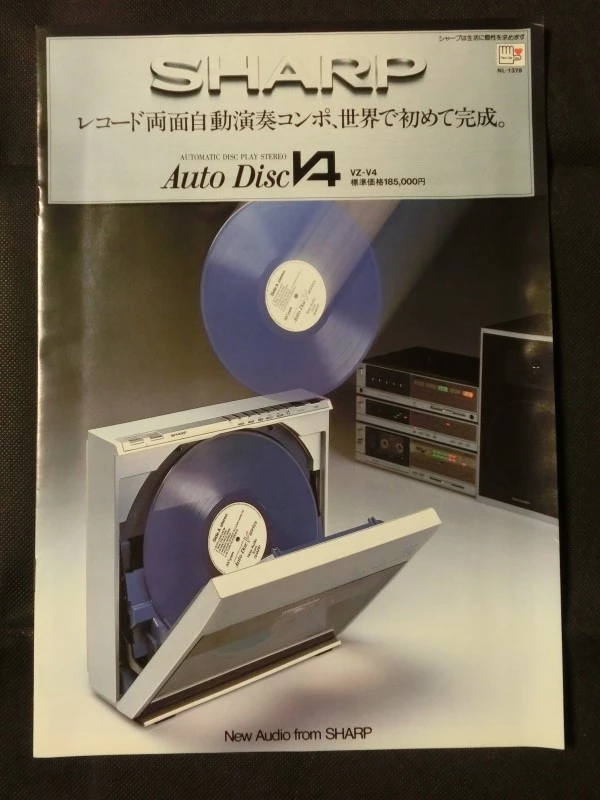
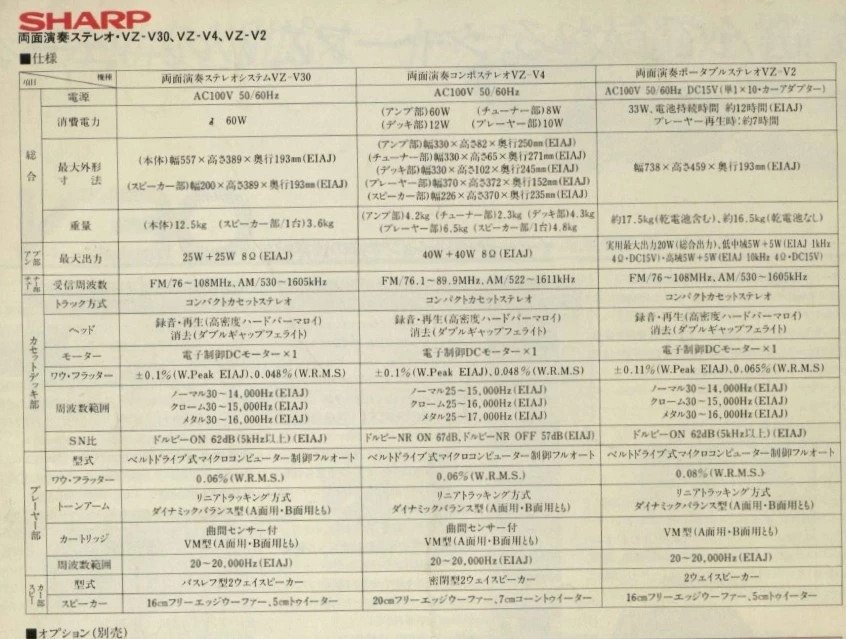
The attentive reader may notice that in the table one model is called V30, not V3 as I wrote above. Yes, in 1982–83 Sharp released an updated lineup and two models became the V30 and V20 respectively. Visually they differ clearly, especially the V20 - it is already simply “square” with the cassette deck on the front panel; on the V30 the deck is the same but positioned to the right of the vinyl section.
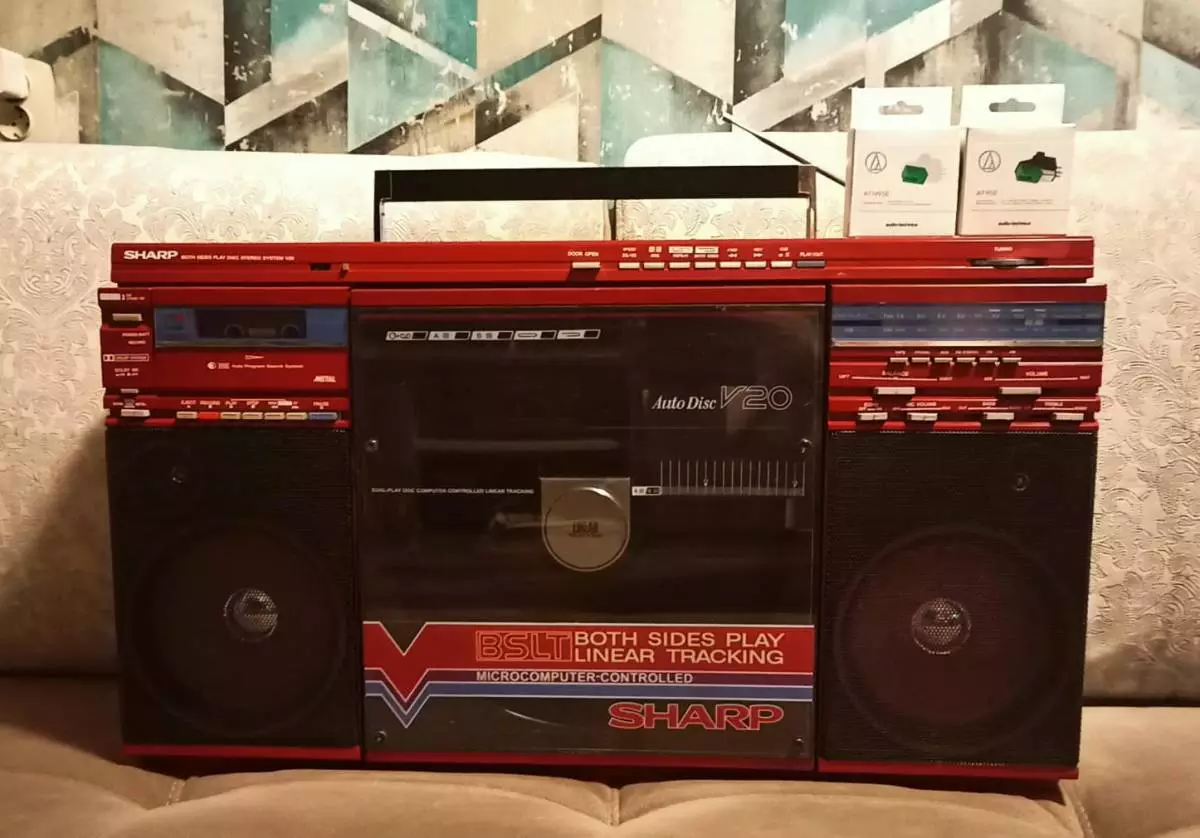
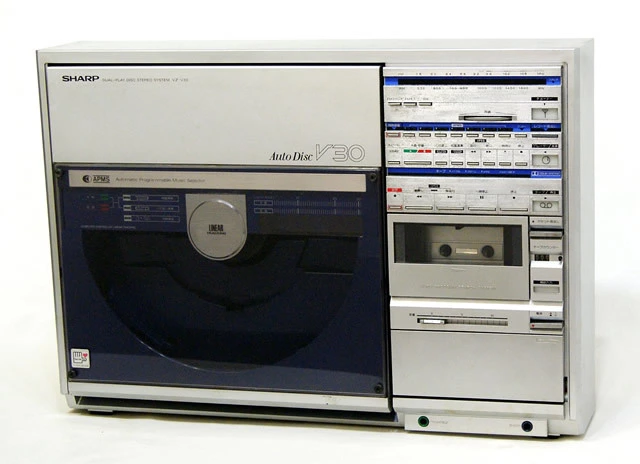
Whether a V1 model ever existed - I could not find one. I do know there was the Sharp 1500, which could play both sides, but there the record was horizontal and a tangential tonearm would simply go “under the record” and continue playback on the reverse side. But that unit is in a completely different design and philosophy, closer in spirit to the V4.