SHARP
シャープ
Sharp Corporation (シャープ株式会社) is a Japanese electronics manufacturer founded on 15 September 1912 in Tokyo by Tokuji Hayakawa (早川徳次, 1893-1980), originally as a small metalworking shop. The Sharp name comes from Hayakawa's first major product, the Ever-Sharp mechanical pencil of 1915. After the Great Kanto Earthquake of 1923 destroyed the Tokyo factory, Hayakawa relocated to Osaka and in 1924 incorporated the firm as Hayakawa Metal Works. The head office moved to the Abeno ward of Osaka in 1949; the modern Sharp head office sits in Sakai, Osaka. The firm took its current Sharp Corporation name in 1970. On 30 March 2016 Taiwan's Hon Hai Precision Industry (Foxconn) bought a 66% controlling stake in Sharp for $3.5 billion - the largest foreign acquisition of a Japanese electronics maker on record. … more
- Japanese name
- シャープ
- Catalogs in the Museum:
- 51
- Catalog years:
- 1968-1990
- Equipment types
- Cassette Decks, DAT, Cassette Tapes, Receivers, Turntables, Speakers, CD Players, Tuners, Boomboxes, Portable Players, Headphones, Stereo Systems, Mini Systems, Full Line, Microphones, AV / Video, Television
About the brand
Sharp Corporation (シャープ株式会社) is a Japanese electronics manufacturer founded on 15 September 1912 in Tokyo by Tokuji Hayakawa (早川徳次, 1893-1980), originally as a small metalworking shop. The Sharp name comes from Hayakawa’s first major product, the Ever-Sharp mechanical pencil of 1915. After the Great Kanto Earthquake of 1923 destroyed the Tokyo factory, Hayakawa relocated to Osaka and in 1924 incorporated the firm as Hayakawa Metal Works. The head office moved to the Abeno ward of Osaka in 1949; the modern Sharp head office sits in Sakai, Osaka. The firm took its current Sharp Corporation name in 1970. On 30 March 2016 Taiwan’s Hon Hai Precision Industry (Foxconn) bought a 66% controlling stake in Sharp for $3.5 billion - the largest foreign acquisition of a Japanese electronics maker on record.
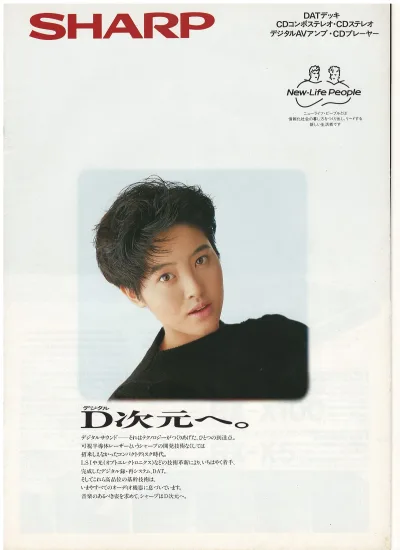
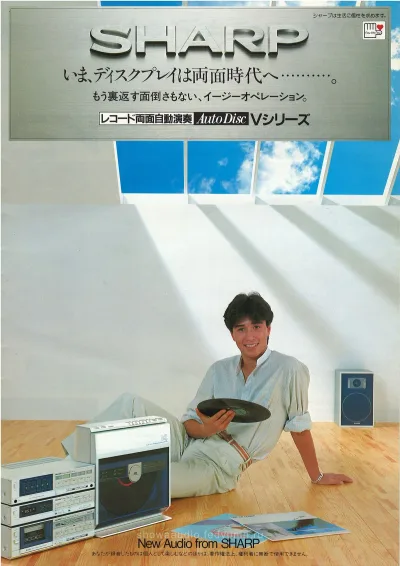
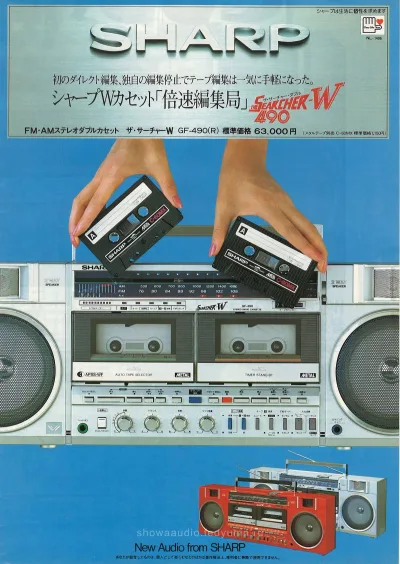
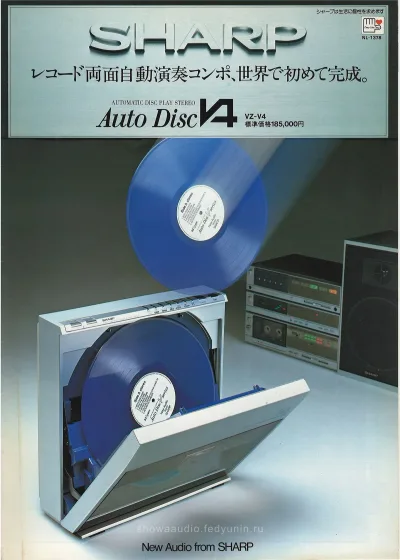
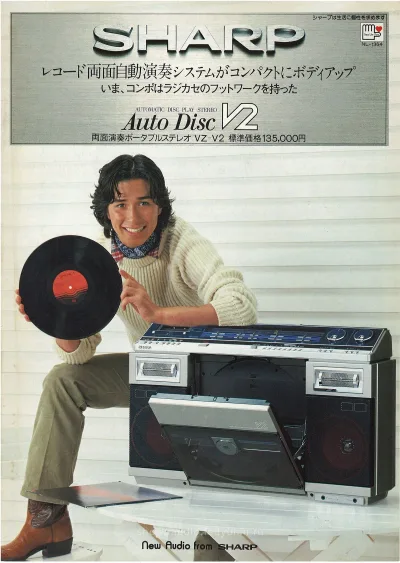
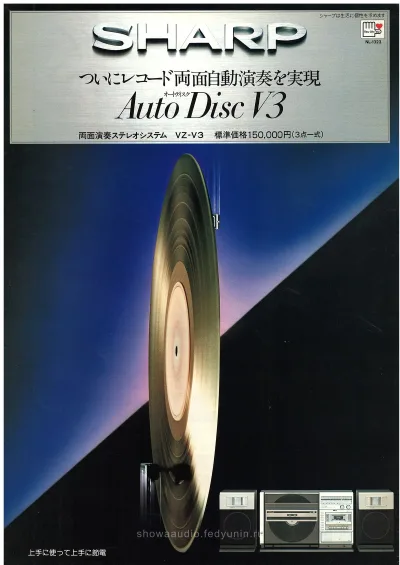
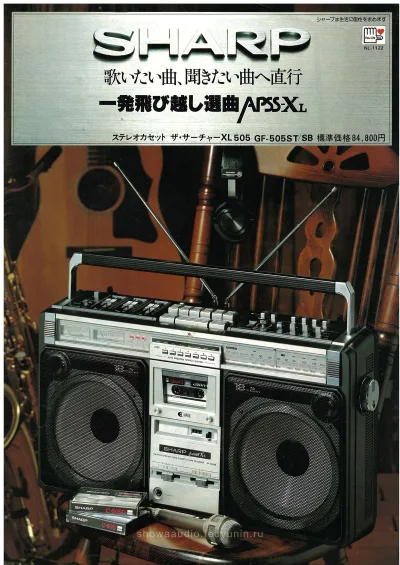
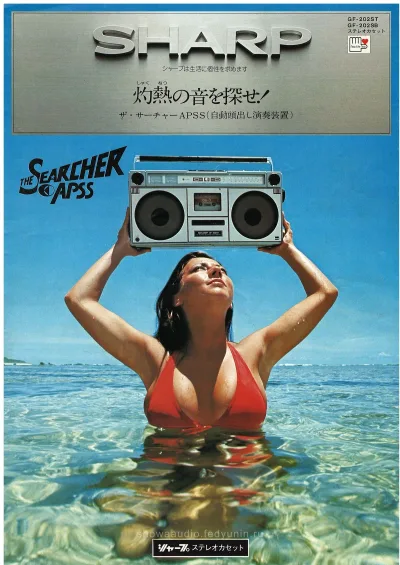
In consumer electronics Sharp is associated with a long list of products it has presented as Japanese and world firsts. The company began selling one of the earliest generations of Japanese crystal radios in 1925. In 1953 Hayakawa Electric released the Sharp TV3-14T, Japan’s first locally built television set. In 1964 it introduced the Sharp CS-10A, claimed as the world’s first all-transistor desktop calculator. By the mid-1970s Sharp had pushed into consumer audio with its own engineering, and the in-house APSS (Auto Program Search System, オートプログラムサーチシステム) - automatic track location by inter-track silence - became the signature of its cassette-based boomboxes through the late 1970s and early 1980s. The 1981-1982 Auto Disc VZ line was an unusual vertical-format turntable with two tonearms that flipped automatically between the A and B sides of a record without user intervention. In 1987 Sharp brought consumer DAT decks to the Japanese market with the RX-X100 and RX-X5 - among the earliest commercial digital-cassette models for home use.
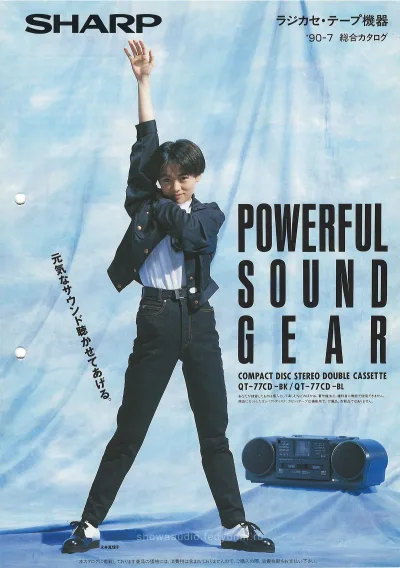
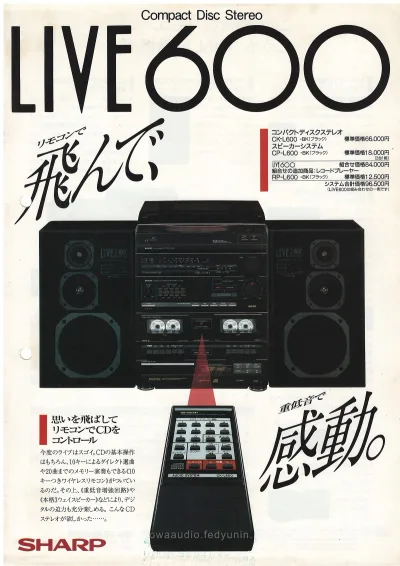
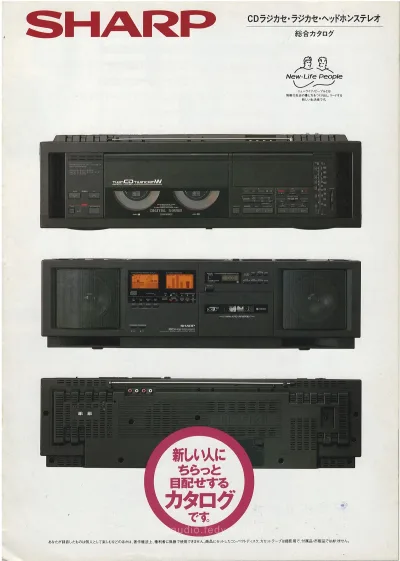
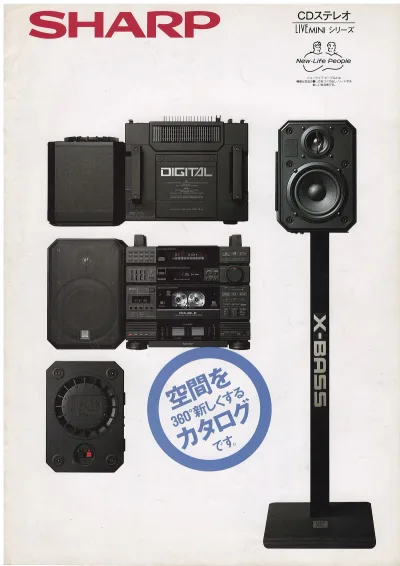
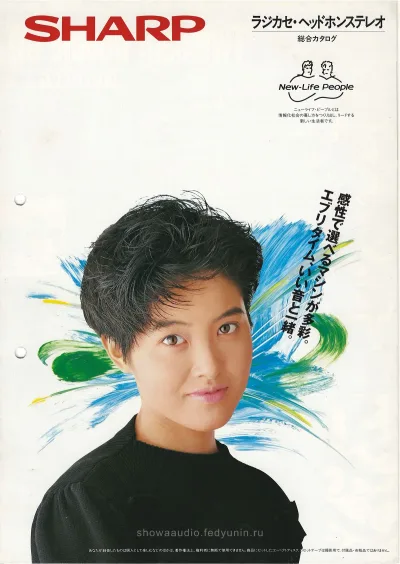
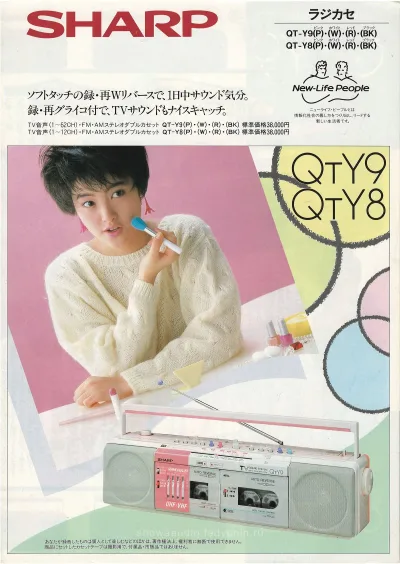
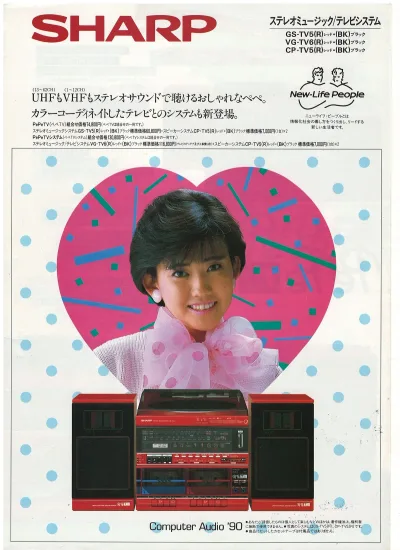
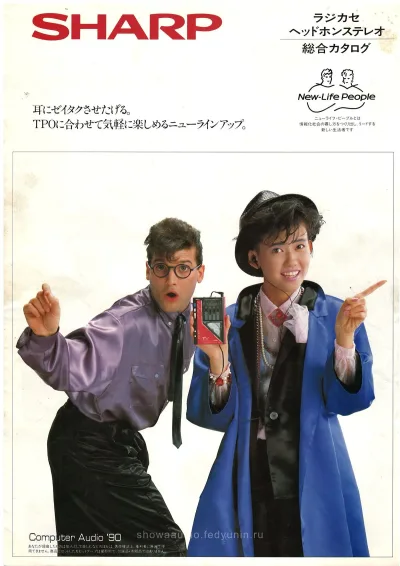
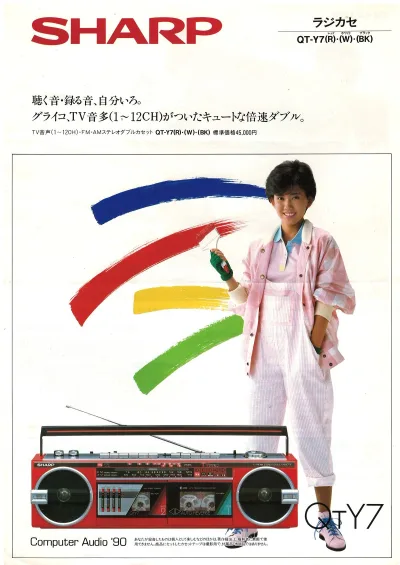
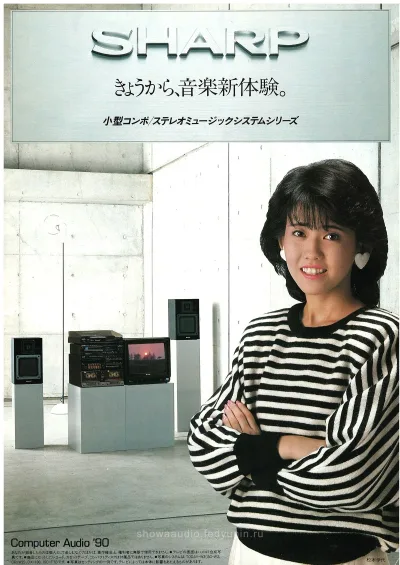
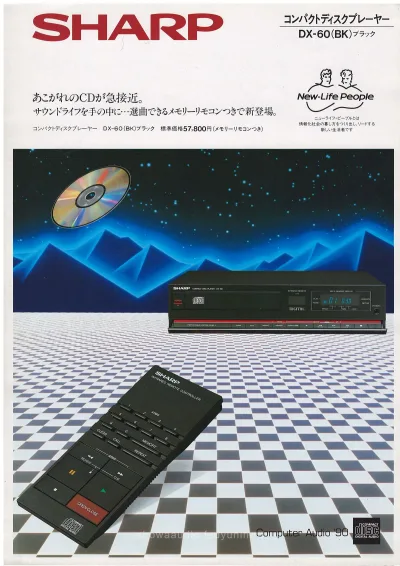
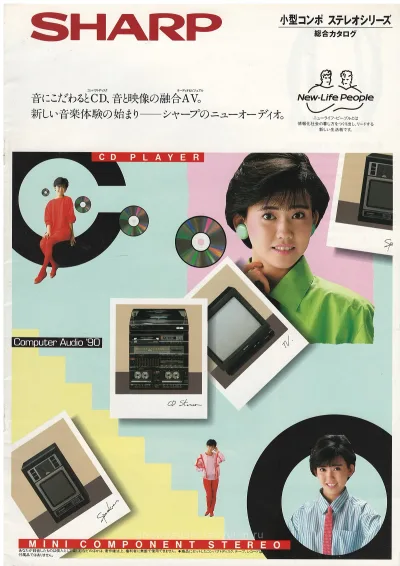
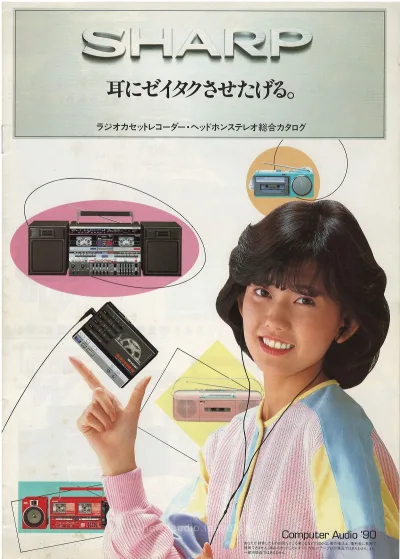
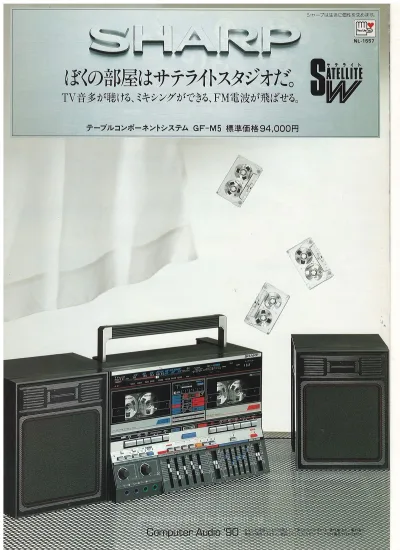
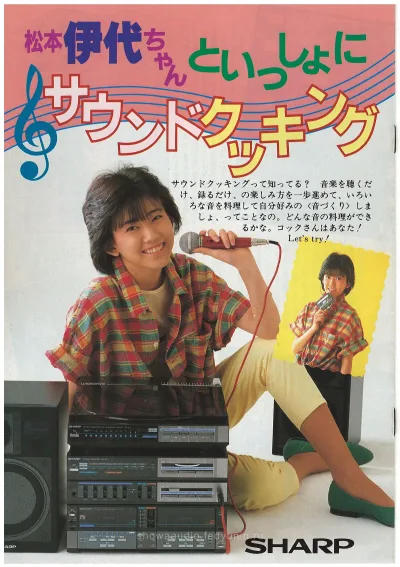
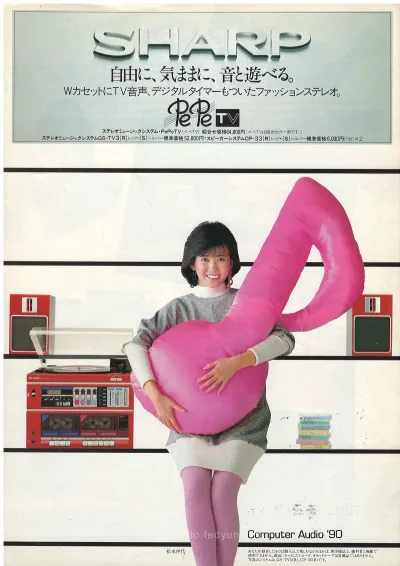
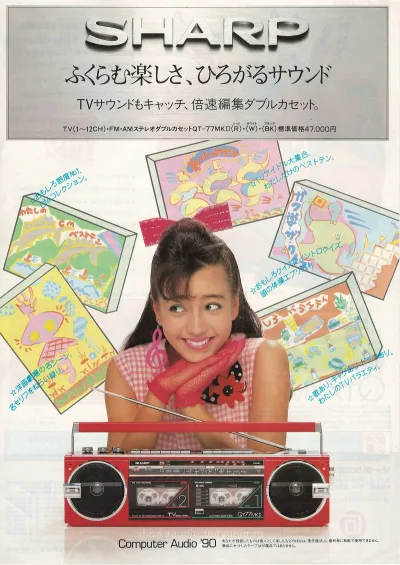
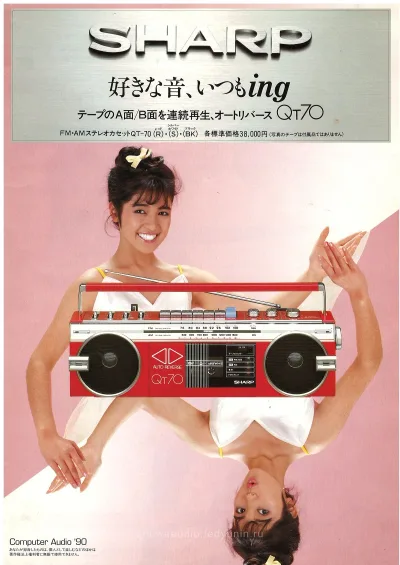
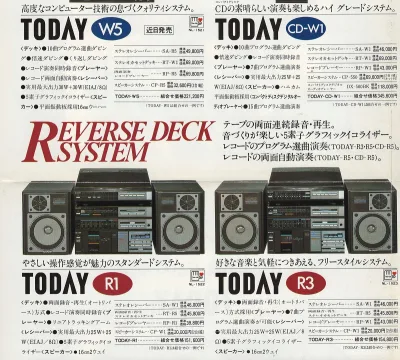
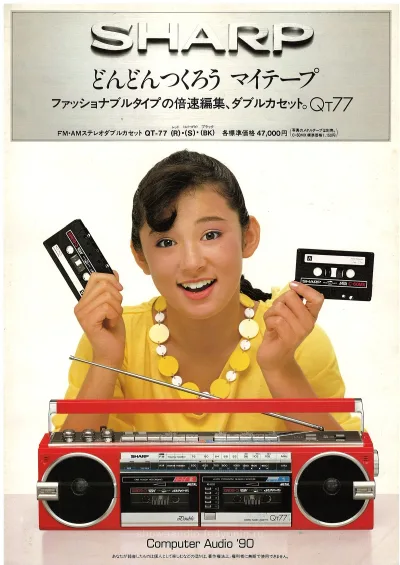
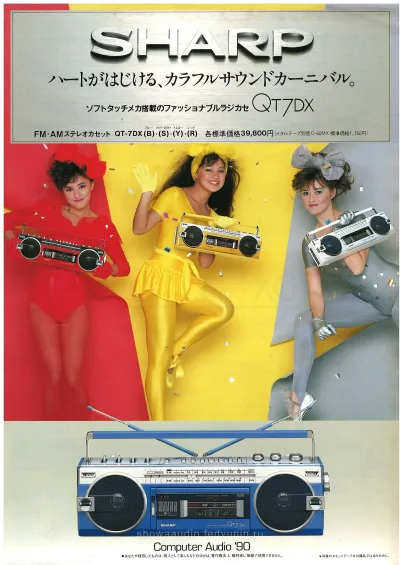
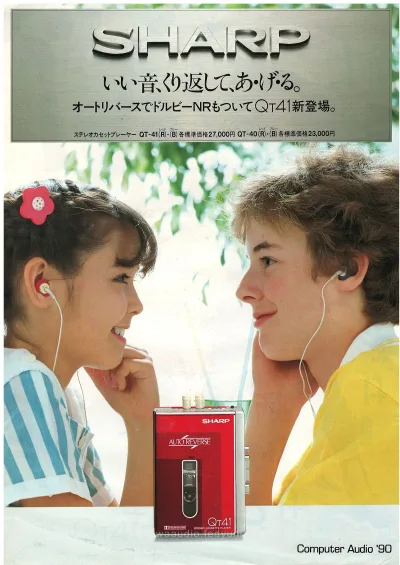
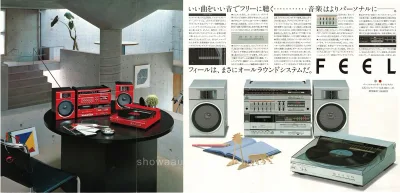
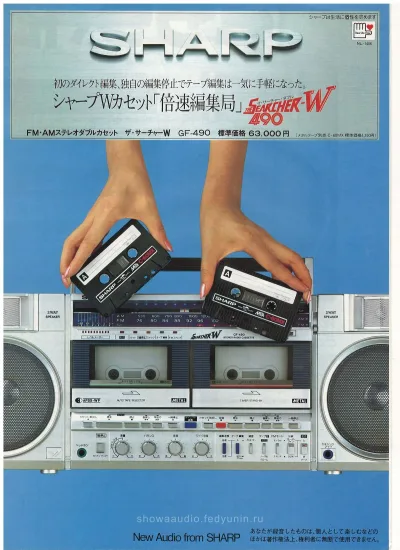
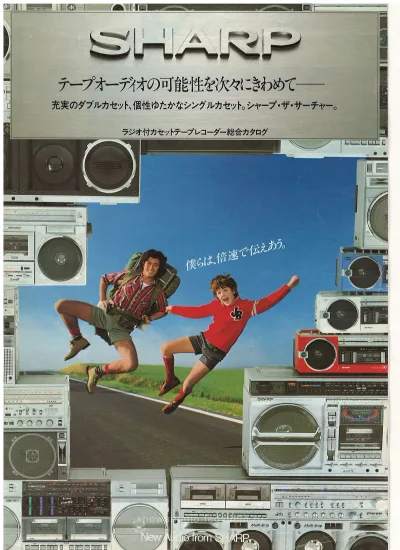
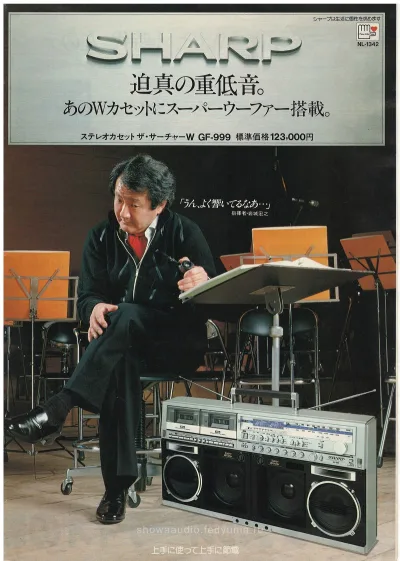
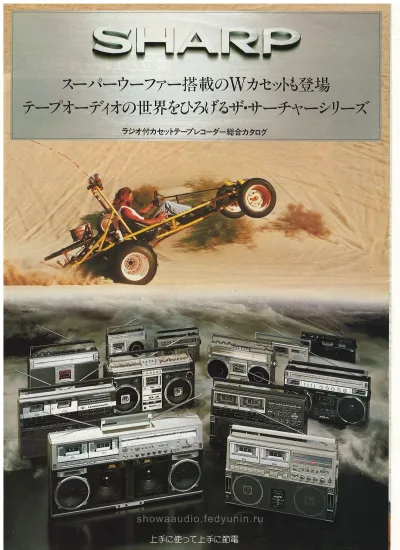
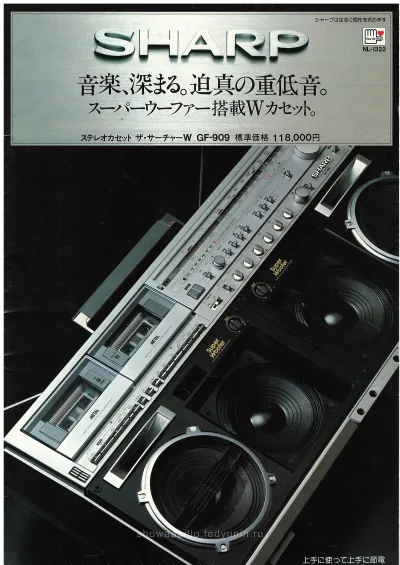
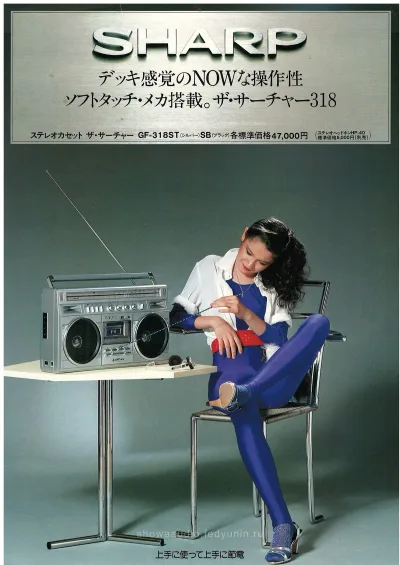
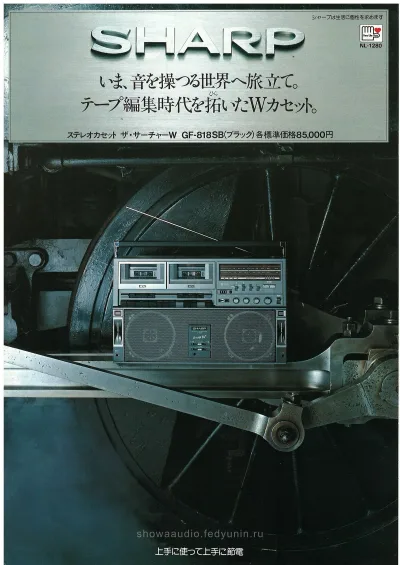
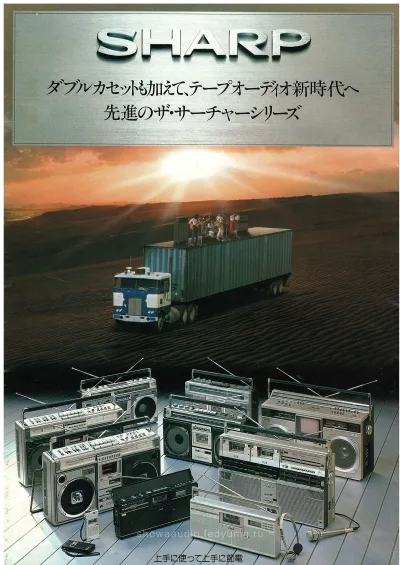
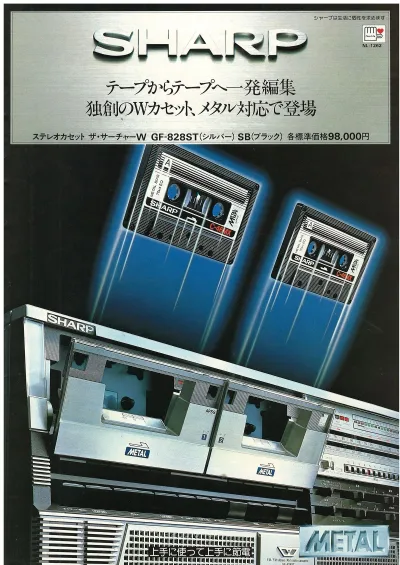
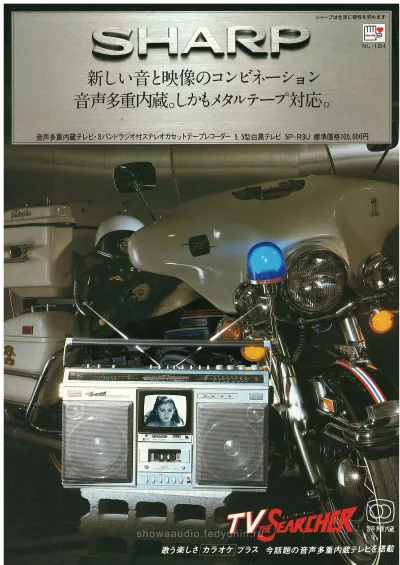
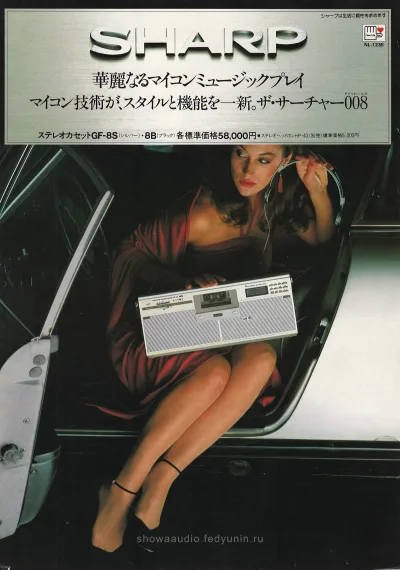
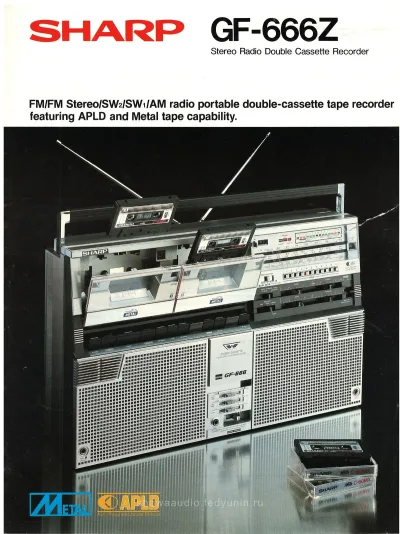
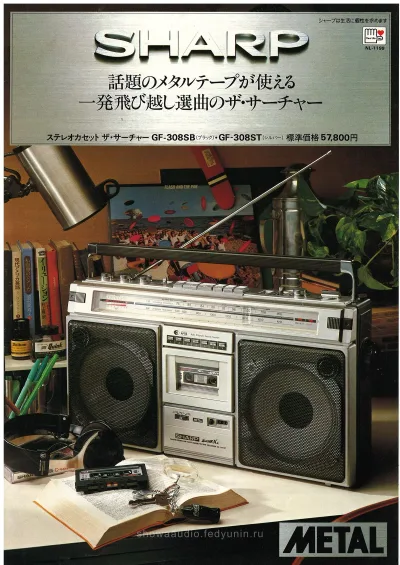
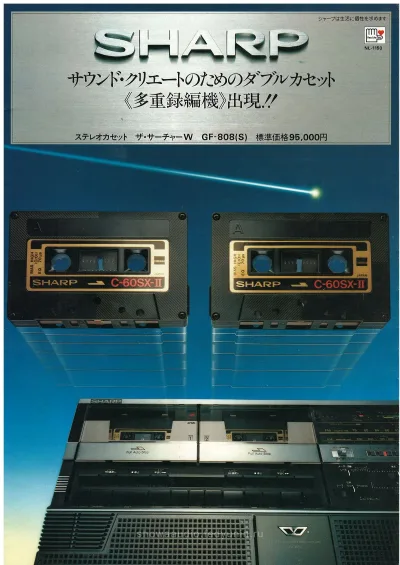
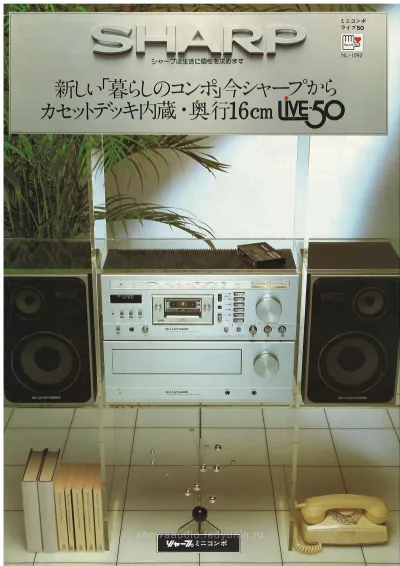
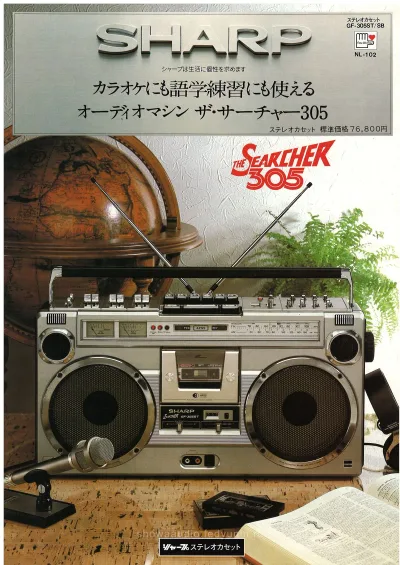
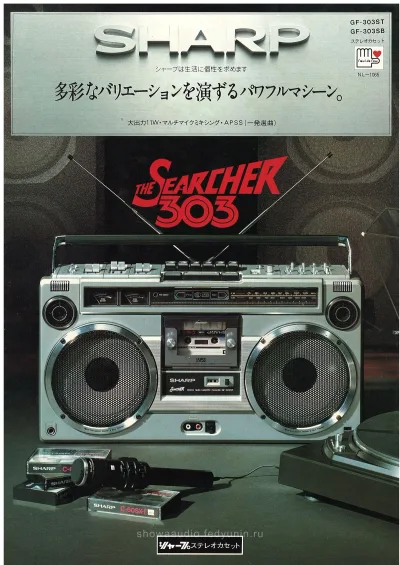
Through the 1970s and 1980s Sharp built its audio catalogue around boombox-format machines and integrated mini systems aimed at younger buyers. The Searcher series, carrying the in-house APSS, ran the GF-505, GF-808, GF-828 and the 1981 flagship W-GF-999 with its detachable subwoofer. Alongside The Searcher came the Auto Disc VZ vertical-turntable line. In 1984 and 1985 Sharp ran the Computer Audio ‘90 marketing campaign behind the QT boombox series and the FEEL, TODAY and PePe mini systems, fronted on the cover artwork by singer and actress Iyo Matsumoto (松本伊代); the Table Compo W line added a TV Sound tuner for stereo audio from television broadcasts. By the end of the 1980s the New-Life People positioning brought CD-capable QT-CD boomboxes, the LIVE 90 and LIVE 80 CD compo systems, the SM-A75B digital AV amplifier with a 16-bit digital delay processor and the RX-X100 / RX-X5 DAT decks, closing Sharp’s Showa-era arc from analogue to digital consumer audio.
- Founded:
- 1912, Sakai, Osaka
- Founder:
- Tokuji Hayakawa (早川徳次)
- Full name:
- Sharp Corporation (シャープ株式会社)
- Links:
- Wikipedia Official site