SONY
ソニー
Sony Group Corporation (ソニーグループ株式会社) was founded on 7 May 1946 in the Nihonbashi district of Tokyo by Masaru Ibuka (井深大, 1908-1997) and Akio Morita (盛田昭夫, 1921-1999) under the name Tokyo Tsushin Kogyo K.K. (東京通信工業, "Tokyo Telecommunications Engineering Corporation"). In January 1958 the firm was renamed Sony Corporation - a coinage that brought together the Latin sonus, the root of "sonic" and "sound", with the 1950s American slang sonny ("young boy"). Operations ran from the Ginza district of Tokyo from 1947, and the head office later moved to Sony City in Minato, Tokyo. On 1 April 2021 Sony Corporation was reorganised into Sony Group Corporation as a holding structure, with the audio-video and consumer-electronics business carved out into a separate operating subsidiary that took back the Sony Corporation name. … more
- Japanese name
- ソニー
- Catalogs in the Museum:
- 42
- Catalog years:
- 1972-2003
- Equipment types
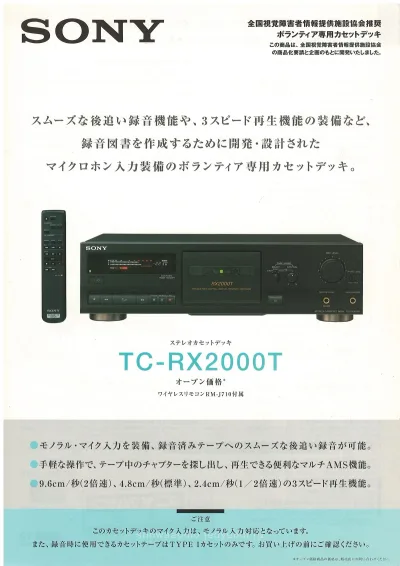
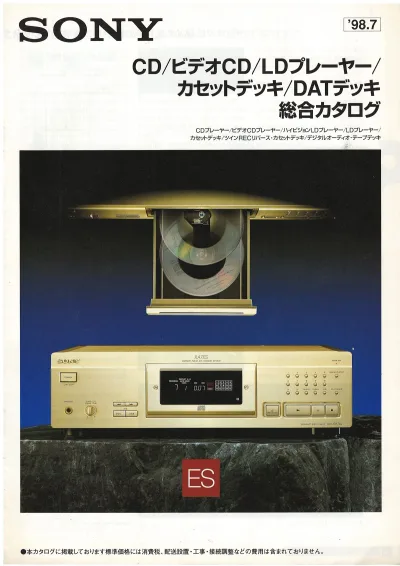
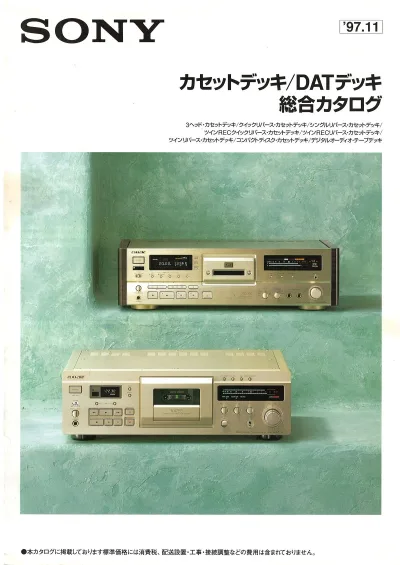
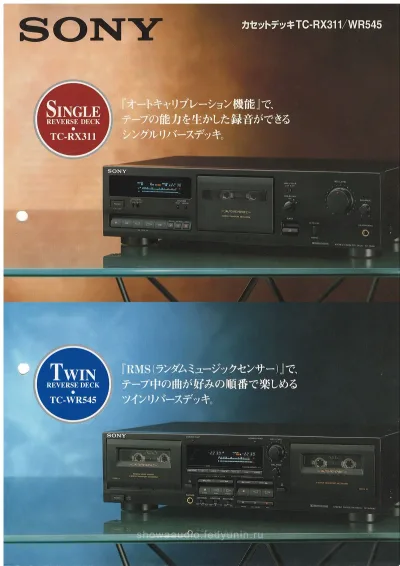
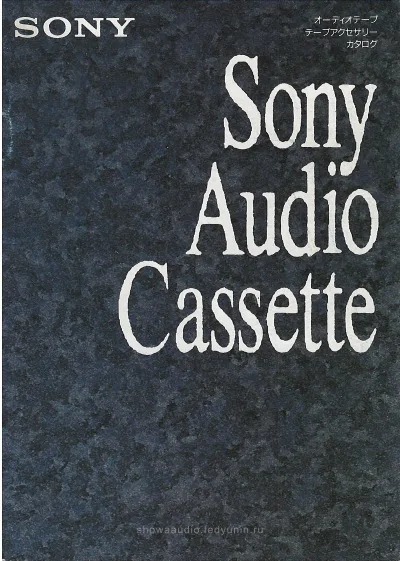
- Cassette Decks, DAT, Cassette Tapes, Amplifiers, Turntables, Speakers, CD Players, MiniDisc, Tuners, Portable Players, Headphones, Reel-to-Reel, Stereo Systems, Car Audio, Equalizers, Full Line, Microphones, AV / Video, Television
About the brand
Sony Group Corporation (ソニーグループ株式会社) was founded on 7 May 1946 in the Nihonbashi district of Tokyo by Masaru Ibuka (井深大, 1908-1997) and Akio Morita (盛田昭夫, 1921-1999) under the name Tokyo Tsushin Kogyo K.K. (東京通信工業, “Tokyo Telecommunications Engineering Corporation”). In January 1958 the firm was renamed Sony Corporation - a coinage that brought together the Latin sonus, the root of “sonic” and “sound”, with the 1950s American slang sonny (“young boy”). Operations ran from the Ginza district of Tokyo from 1947, and the head office later moved to Sony City in Minato, Tokyo. On 1 April 2021 Sony Corporation was reorganised into Sony Group Corporation as a holding structure, with the audio-video and consumer-electronics business carved out into a separate operating subsidiary that took back the Sony Corporation name.
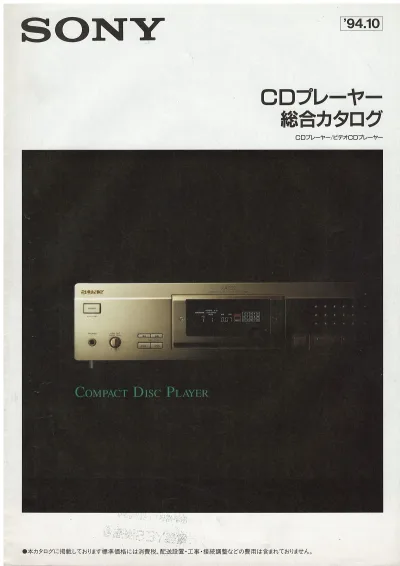
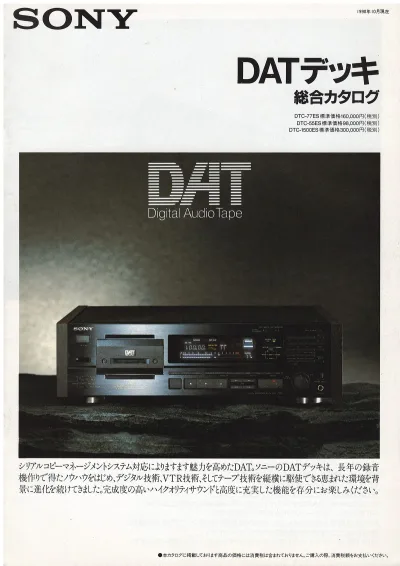
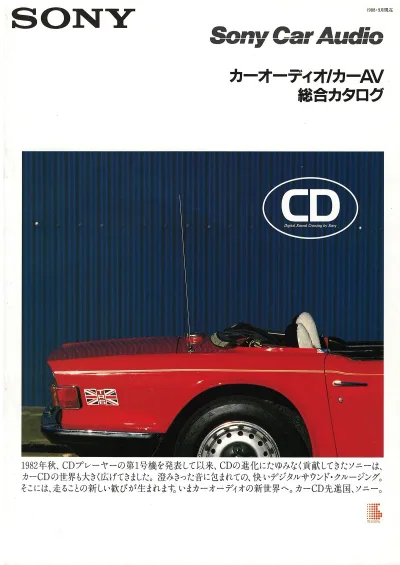
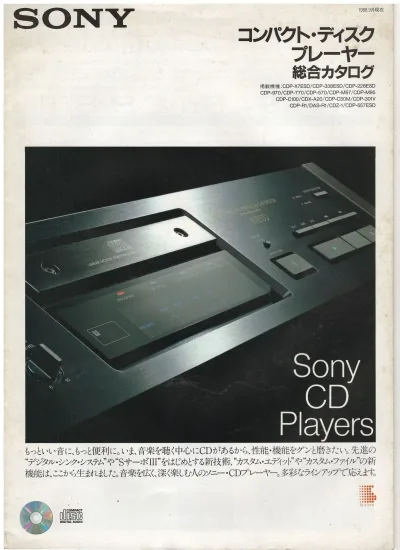
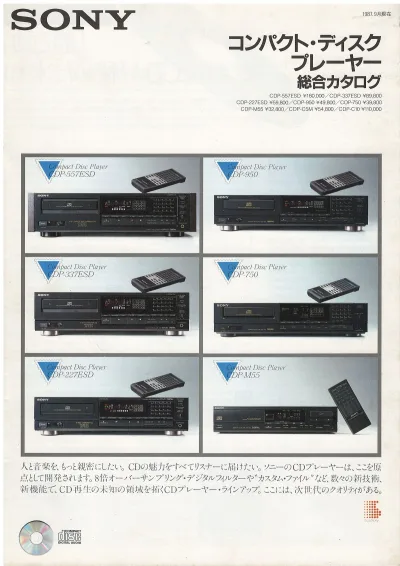
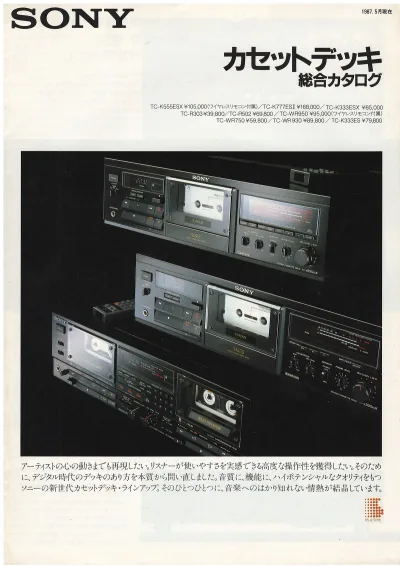
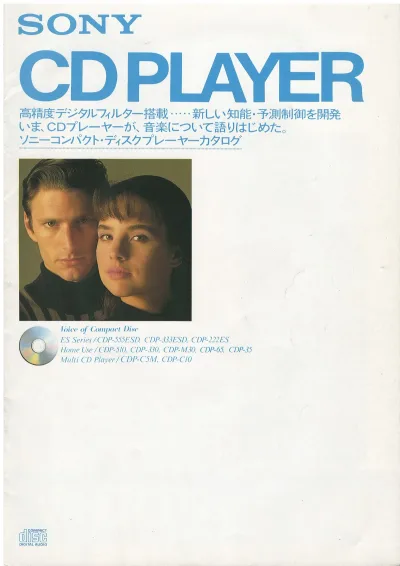
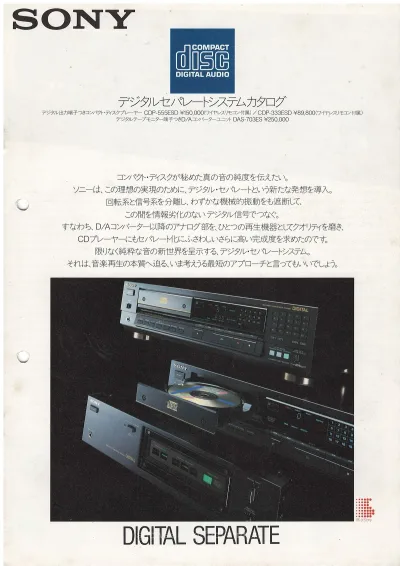
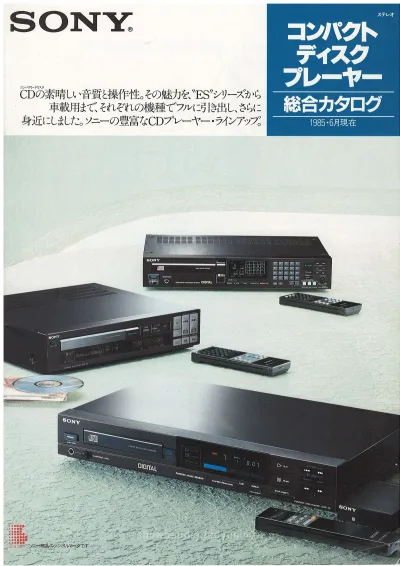
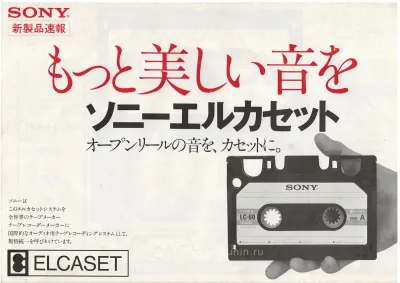
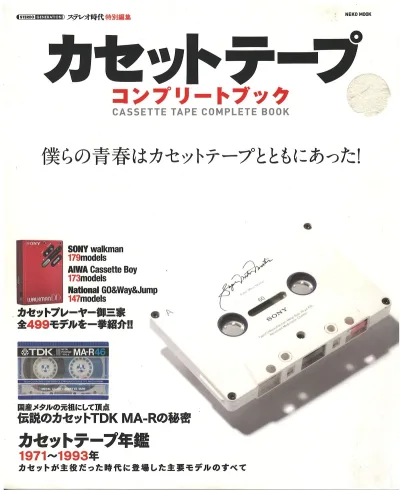
From the 1970s into the 1980s Sony took several new audio formats to market and put out the single product that anchored the modern personal-electronics business. The 1955 TR-55 was Japan’s first transistor radio, and the 1957 TR-63 was claimed as the world’s first pocket-size transistor radio. On 1 October 1982 Sony, with its Dutch partner Philips, launched the Compact Disc format and shipped the CDP-101, the world’s first commercial CD player, the same day. The brand’s defining consumer product is the Walkman TPS-L2, unveiled on 1 July 1979 - a play-only portable cassette player that put the idea of personal mobile music listening into the mainstream. Other Sony format bets did not catch on at scale: the 1976 Elcaset (the EL-7 at ¥198,000 and the EL-5 at ¥128,000, with a 6.3 mm tape ribbon in a 106 × 152 mm cassette shell, three motors and a Closed Loop Dual Capstan) lasted only four years; DAT, starting with the 1987 DTC-1000ES, never became a consumer mainstay; MiniDisc (launched in 1992) stayed largely a Japanese-domestic format. The cassette-tape side of the story is covered in the translated articles History of Sony cassette tapes, Junichi Matsuzaki on the Walkman cassette deck and How we listen to the Walkman.
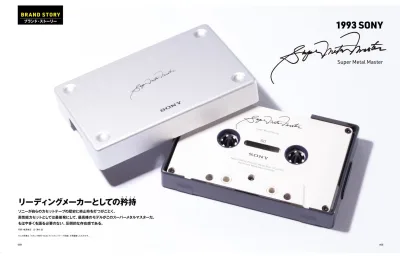
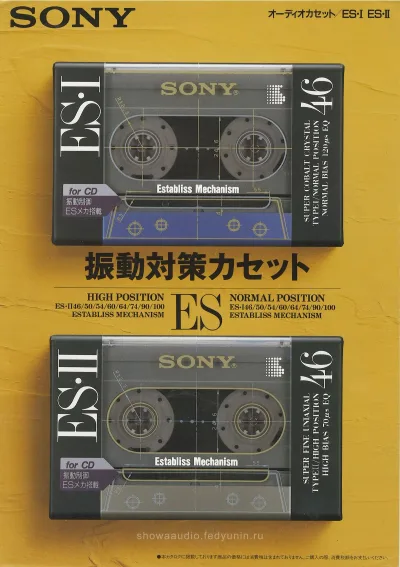
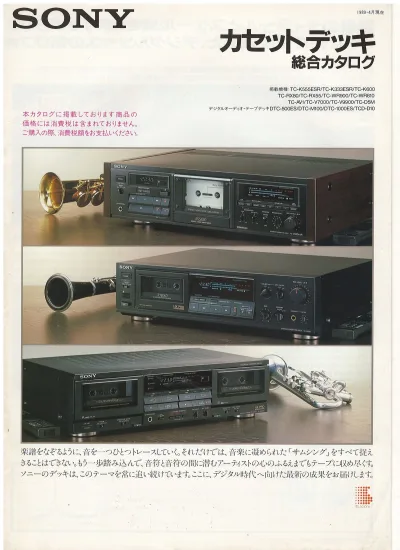
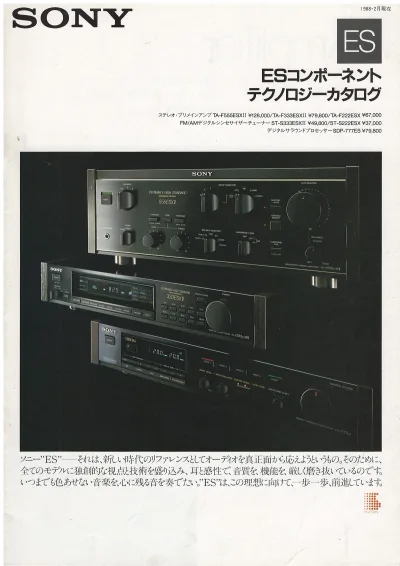
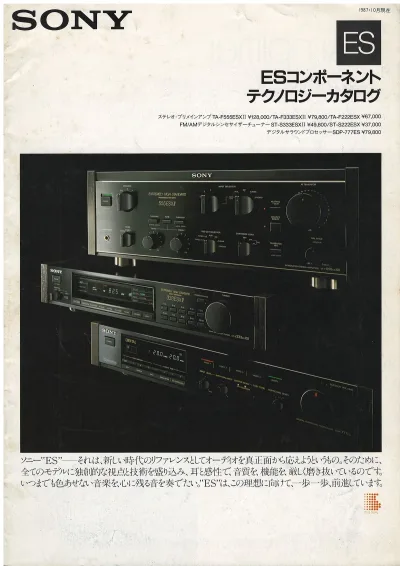
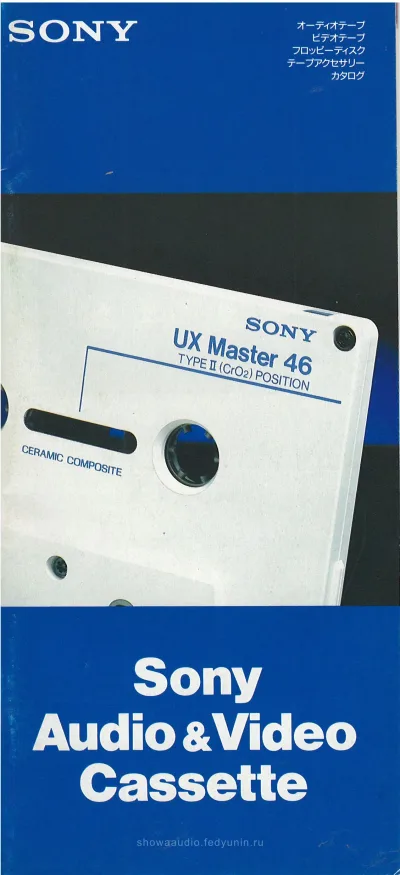
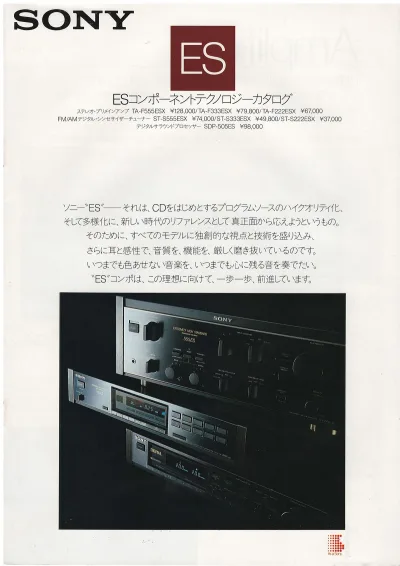
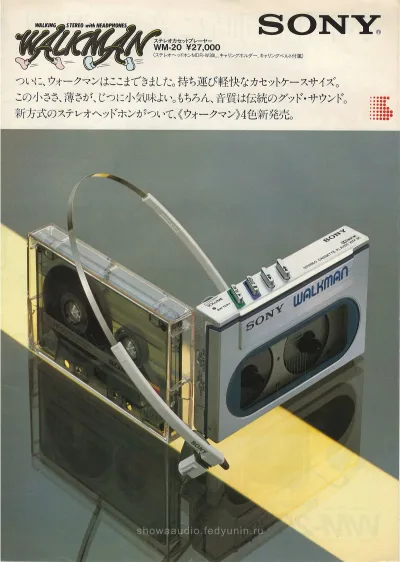
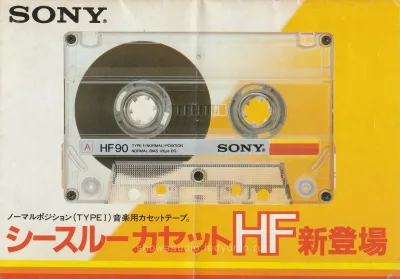
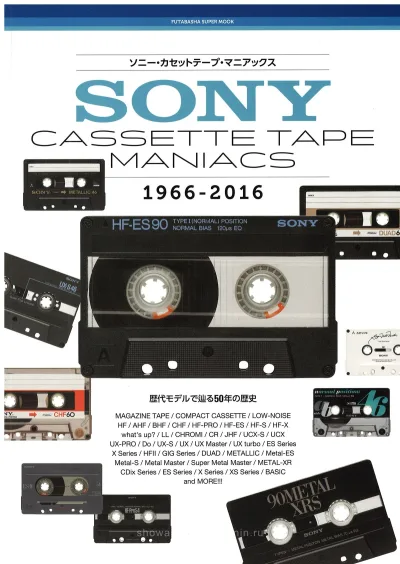
The Walkman ran on the WM model code: the 1983 WM-20 at ¥27,000 had a chassis the same footprint as the cassette inside it and used a brushless, slotless BSL motor; the WM-DD9 ran a twin-capstan transport for the audiophile end of the line; the WM-D6C was a professional portable recorder. The Compact Disc equivalent of the Walkman, the Discman D-50, shipped in 1984. The high-end component line carried the ES suffix (Elevated Standard) - TA integrated amplifiers, TC cassette decks and CDP CD players in ES trim formed a distinct upper tier of the catalogue. In-house Sony cassette tape went through the HF (Hi-Fi), BHF, AHF, UCX (chromium dioxide) and HF-PRO labels of the late 1980s, capped by the 1986 Metal Master in a ceramic composite shell and the 1993 Super Metal Master in an aluminium case. ELCASET, in production from 1976 to 1980, ran the EL deck line: the EL-7 flagship with three motors, Closed Loop Dual Capstan and ferrite heads, plus the smaller EL-5. The full Sony cassette catalogue from the first TRK tapes of 1968 through to the late CDix series of the 2010s is set out in the translated History of Sony cassette tapes.
- Founded:
- 1946, Minato, Tokyo
- Founder:
- Masaru Ibuka (井深大), Akio Morita (盛田昭夫)
- Full name:
- Sony Group Corporation (ソニーグループ株式会社, formerly Tokyo Tsushin Kogyo K.K. 1946-1958, Sony Corporation 1958-2021)
- Links:
- Wikipedia Official site