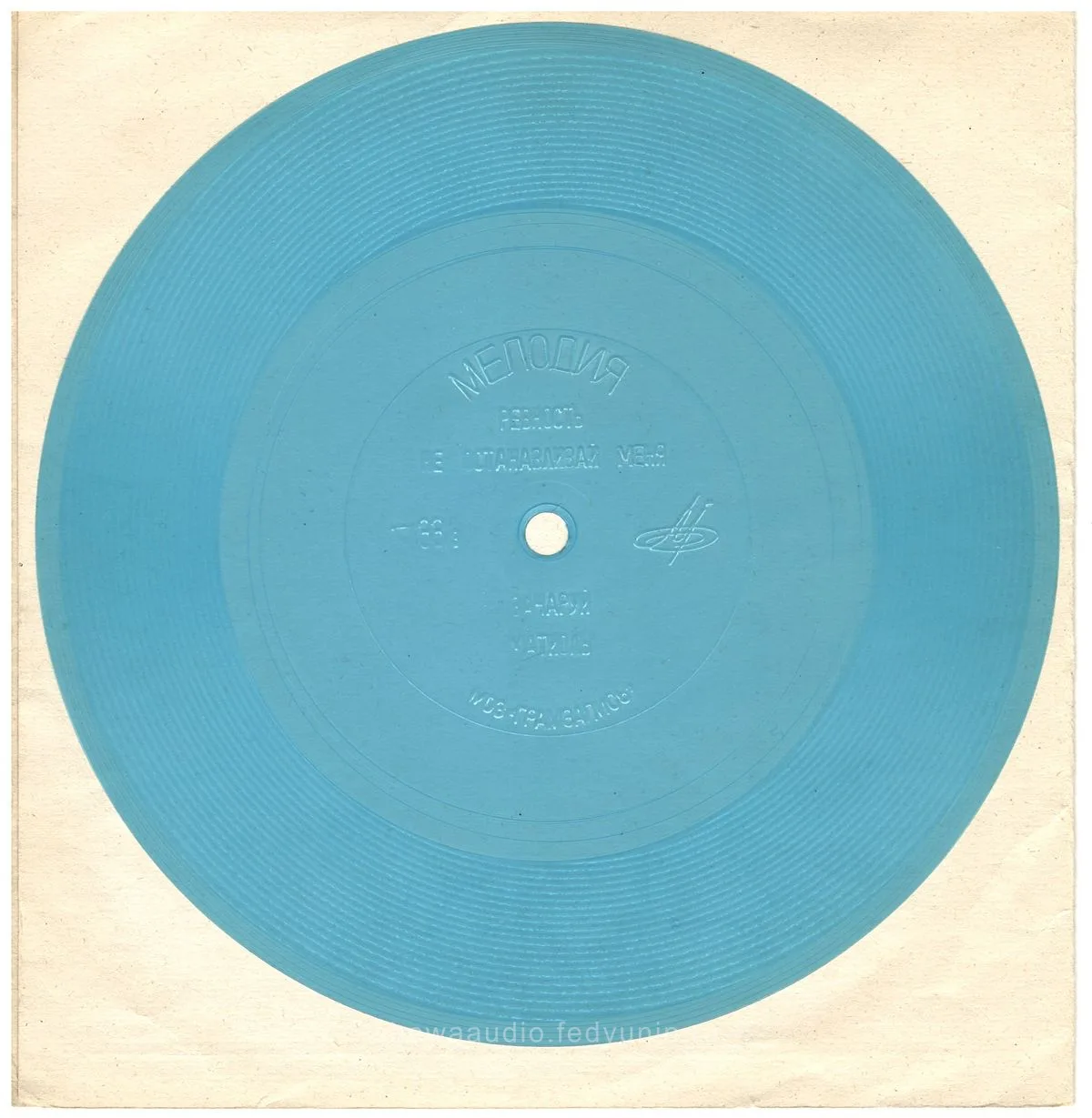
Melodiya Queen / Smerichka flexi 1980
https://storage.yandexcloud.net/showaaudio-media/images/items/melodiya-queen-smerichka-1980/main-01.webp1980others
This exhibit sits outside the museum’s usual Japanese lane, but it is too good to walk past. Besides - Queen for the Japanese is something close to gods, and the era is clearly Showa, so it earns a place in the museum.
Sergey Kuvshinnikov ran a VK post for the 47th anniversary of the Jealousy single, and it became obvious that the collection had to include this record. Started looking around for one on sale - Meshok had a reasonably priced copy in stock right nearby, in Leningrad Oblast. Talked the condition over with the seller (no defects), picked it up, scanned it and digitised both sides myself, so as not to rely on anyone else’s sources.
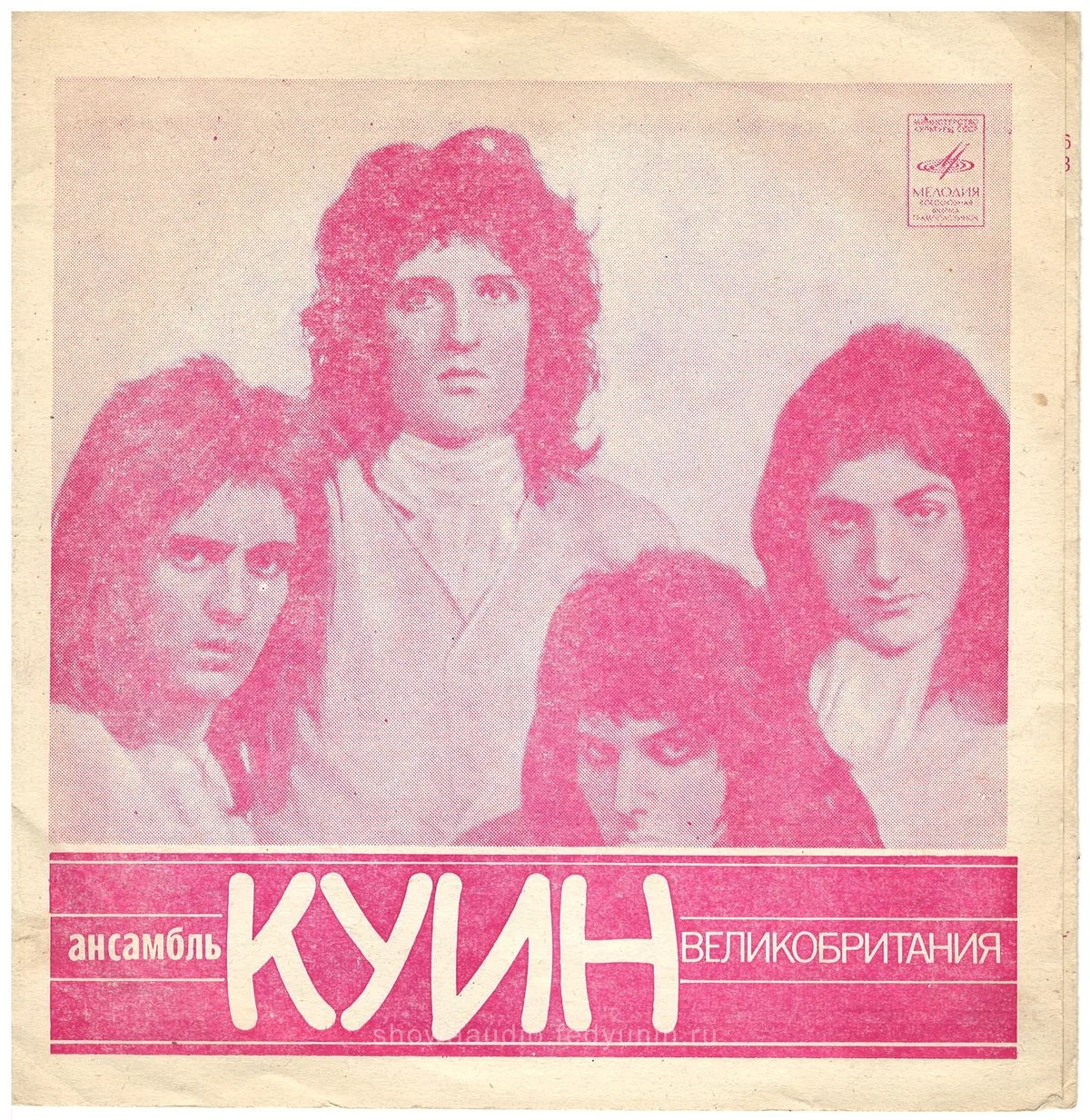
According to what is around online: the only official Queen record released in the USSR before 1990 came out not as a proper seven-inch in a glossy sleeve, but as a thin flexi insert for 60 kopecks, printed in fuchsia ink on paper. And not as its own release either - a split with the Ukrainian VIA Smerichka on the other side. There also seems to have been a similar version in one of the issues of the «Krugozor» magazine, but a standalone «half-single» feels like a better fit for the collection.
The Queen side has two tracks: «Ревность» (Jealousy) and «Не останавливай меня теперь» (Don’t Stop Me Now), both credited to F. Mercury. The international Jealousy single had Fun It on the B-side, while Melodiya suddenly puts Don’t Stop Me Now there - the editor knows best, as they say. Catalogue number Г62-07895-6, technical standard ТУ 43-03-48-73, Moscow Experimental Plant «МОЗГ (literally BRAIN)»1, article 09-3, price 60 kopecks.
ENSEMBLE «КУИН» (GREAT BRITAIN)
Jealousy
Don't Stop Me Now
F. Mercury
MP3 96 kbps, stereo, 44.1 kHz - preview for listening right on the page.
full FLAC 44.1 kHz / stereo / 16 bit is here
The sound quality is exactly what you would expect from a flexi, and on top of that I am not quite sure where they sourced the audio - might well be from some unofficial bootleg.
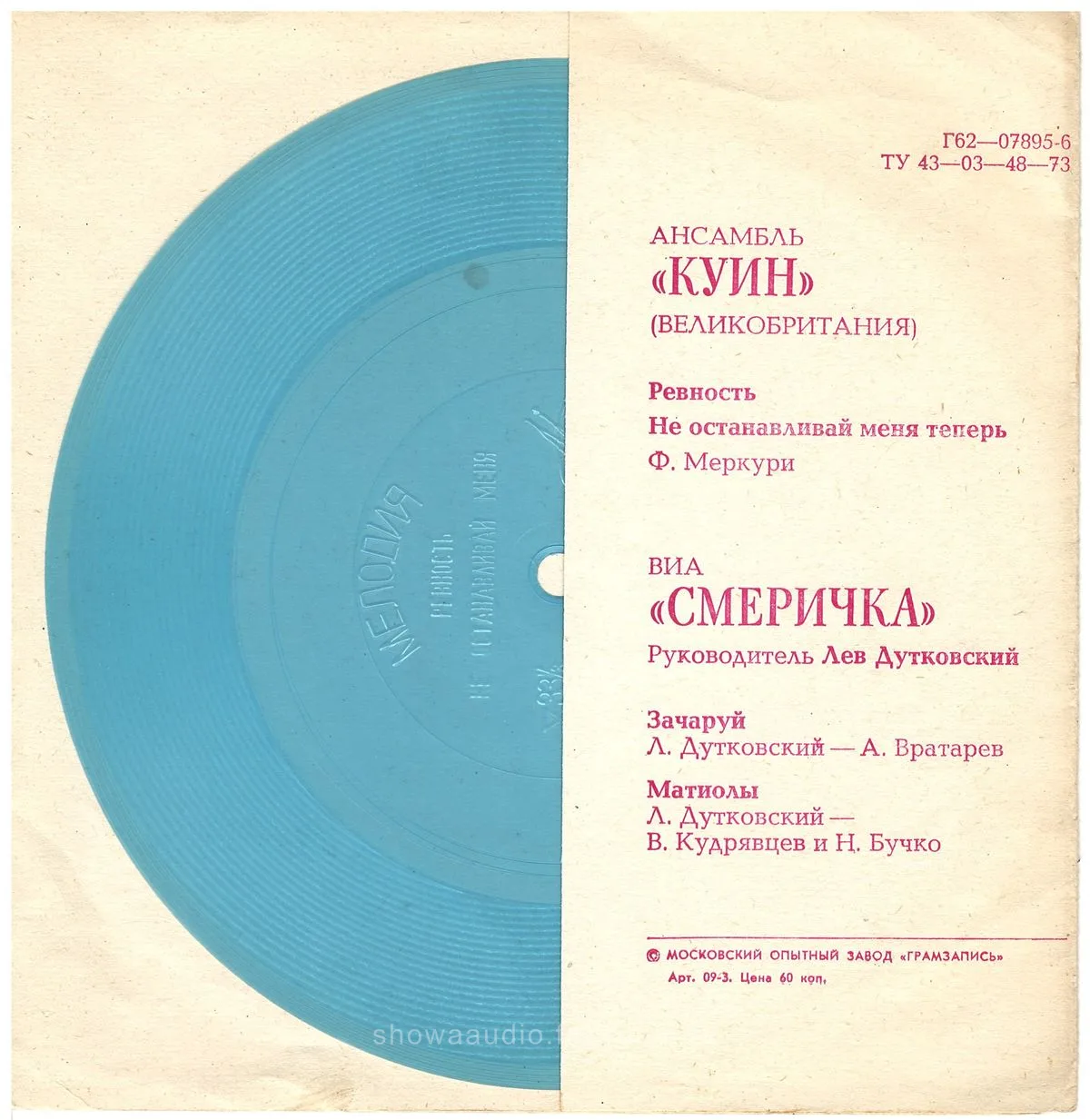
The other side belongs to VIA «Smerichka», led by Lev Dutkovsky: «Zacharuy» (L. Dutkovsky / A. Vratarev) and «Matioly» (L. Dutkovsky / V. Kudryavtsev and N. Buchko). And here is the unexpected bit - once digitised and played back, Smerichka turns out to have a properly rock-and-roll intro and arrangements that fit surprisingly well next to КУИН.
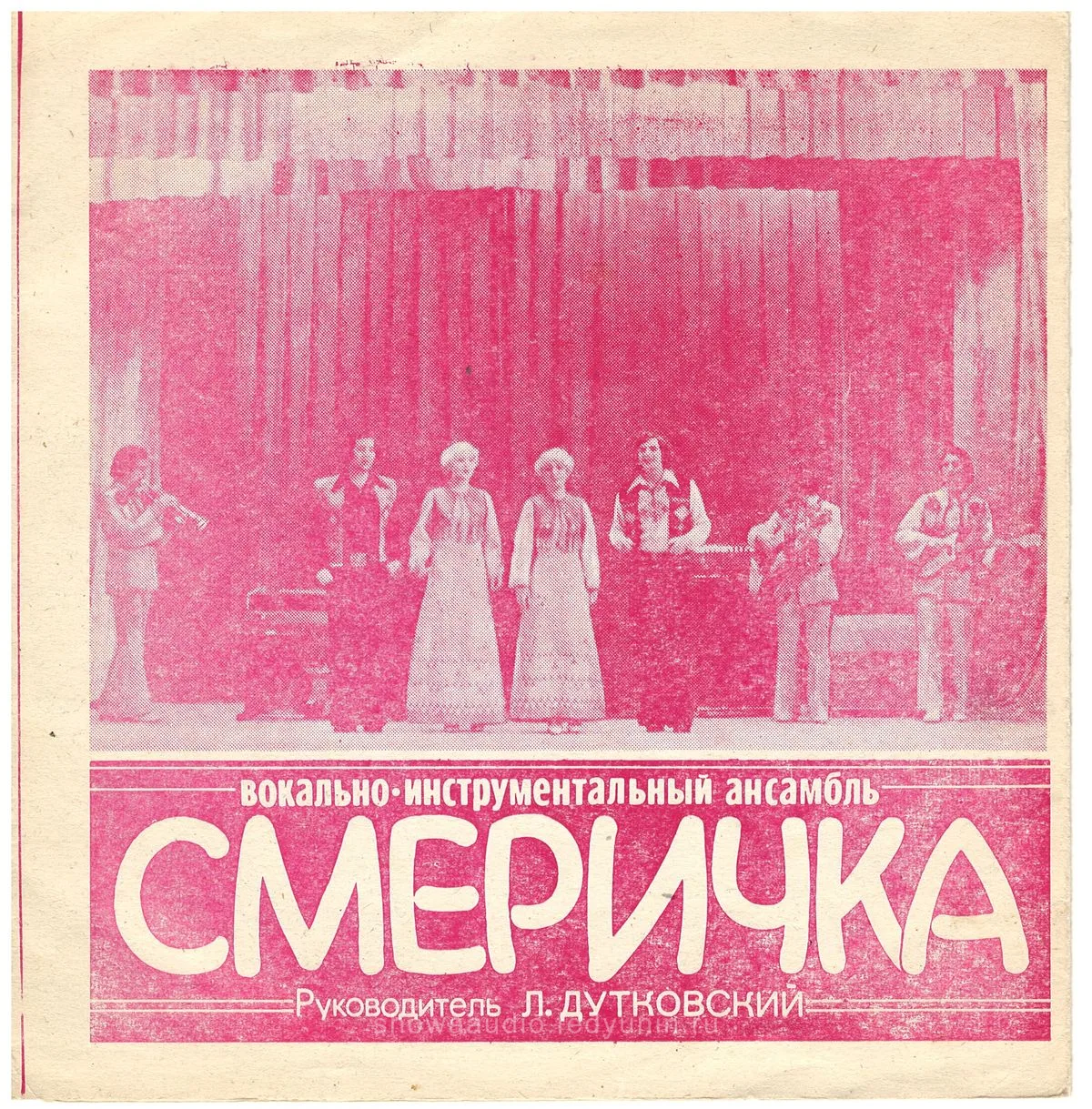
VOCAL-INSTRUMENTAL ENSEMBLE «SMERICHKA»
Director L. Dutkovsky
Zacharuy (L. Dutkovsky / A. Vratarev)
Matioly (L. Dutkovsky / V. Kudryavtsev and N. Buchko)
MP3 96 kbps, stereo, 44.1 kHz - preview for listening right on the page.
full FLAC 44.1 kHz / stereo / 16 bit is here
Background on Melodiya and licensed releases. Legal publication of foreign recordings in the USSR only began in 1973, when the country joined the Universal Copyright Convention - before that, Western music circulated as magnitoalbums and samizdat copies. Melodiya obtained source recordings from foreign companies or ordered them through the catalogues of the foreign-trade organisation «Mezhdunarodnaya Kniga»; each title was vetted by a Licensing Council made up of Melodiya and Ministry of Culture specialists, musicologists and Moscow record collectors, with the main criterion being «the absence of pornographic lyrics and of propaganda of aspects of bourgeois life unacceptable to us». By 1982 they were signing 30+ contracts a year with combined print runs of more than 1 million copies, and by the early 1990s the total reached around 450 licensed titles (EMI, Decca, Deutsche Grammophon, Polydor, CBS and others), with a typical licensed pressing of ~33,000 copies and no right of reissue. In the first half of the 1980s the output was dominated by classical and pop, with rock and jazz only really catching up in the second half of the decade - the 1980 КУИН single came out before that shift, which goes a long way towards explaining its format. The full text on how Melodiya worked, on which this note is based: german121german.blogspot.com.
Примечания
-
The Moscow Experimental Plant «Gramzapis» (МОЗГ) at 7 Kronstadtsky Boulevard came into operation in 1978, originally planned for around 70 million records a year. Before 1978 the copper masters and nickel originals had been made by VSG; МОЗГ took over that part of the cycle. ↩