TEAC
ティアック
TEAC Corporation (ティアック株式会社) was founded on 29 August 1953 in Tokyo by Katsuma Tani, a former aviation and aerospace engineer. The company name came out of the merger of two firms set up by Tani: Tokyo Television Acoustic Company in 1953 and Tokyo Electro-Acoustic Company in 1956; the TEAC acronym is taken from the second of those, not the first. In 1971 Tani's company opened a US subsidiary in Los Angeles - the first Tascam office sat at 5440 McConnell Avenue - to develop and sell professional and semi-professional recording equipment. TEAC's head office sits in the Ochiai district of Tama, Tokyo. In 2013 the American firm Gibson Brands bought a controlling 54.42% stake in TEAC; after Gibson's 2018 bankruptcy TEAC announced it would carry on independently. … more

- Japanese name
- ティアック
- Catalogs in the Museum:
- 18
- Catalog years:
- 1971-1993
- Equipment types
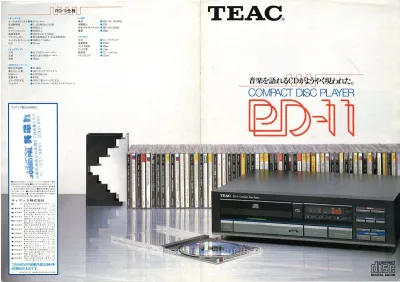
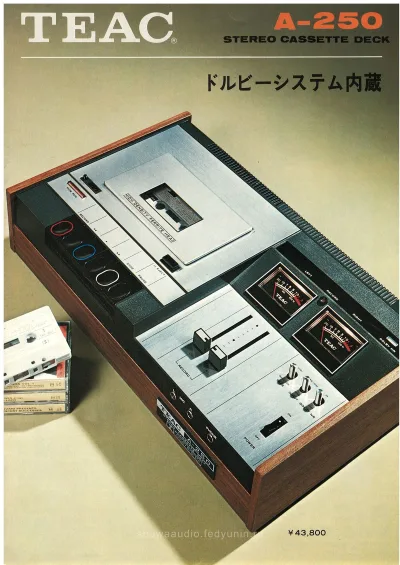
- Cassette Decks, Speakers, CD Players, Reel-to-Reel, Full Line, AV / Video
About the brand
TEAC Corporation (ティアック株式会社) was founded on 29 August 1953 in Tokyo by Katsuma Tani, a former aviation and aerospace engineer. The company name came out of the merger of two firms set up by Tani: Tokyo Television Acoustic Company in 1953 and Tokyo Electro-Acoustic Company in 1956; the TEAC acronym is taken from the second of those, not the first. In 1971 Tani’s company opened a US subsidiary in Los Angeles - the first Tascam office sat at 5440 McConnell Avenue - to develop and sell professional and semi-professional recording equipment. TEAC’s head office sits in the Ochiai district of Tama, Tokyo. In 2013 the American firm Gibson Brands bought a controlling 54.42% stake in TEAC; after Gibson’s 2018 bankruptcy TEAC announced it would carry on independently.
What TEAC and Tascam are best known for in the Showa era is bringing multitrack recording within reach of the home user. In 1972 TEAC released the first consumer four-track open-reel deck with the Simul-Sync system, which let the operator overdub new tracks in sync with tracks already recorded - a workflow that until then lived only in expensive studio multitrack machines. Tascam followed in 1979 with the Portastudio 144, advertised as the world’s first four-track portable recorder built around a standard compact cassette, packing a cassette transport and a mixing desk into a single chassis; in 2006 it was inducted into the Mix Magazine TECnology Hall of Fame. On the open-reel side Tascam shipped the 80-8 in 1975 (an eight-channel ½-inch multitrack), and in 1985 the Tascam 388 Studio appeared as the claimed world-first eight-track ¼-inch multitrack with an integrated mixing console.
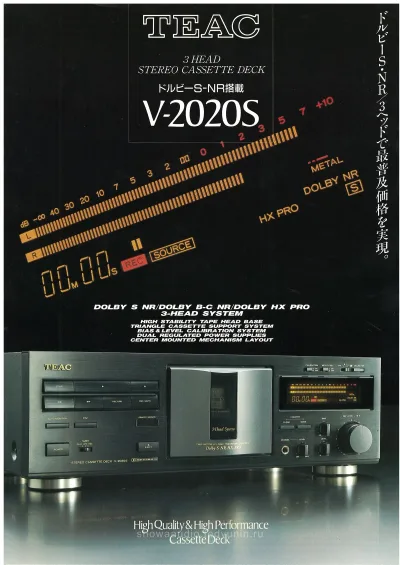
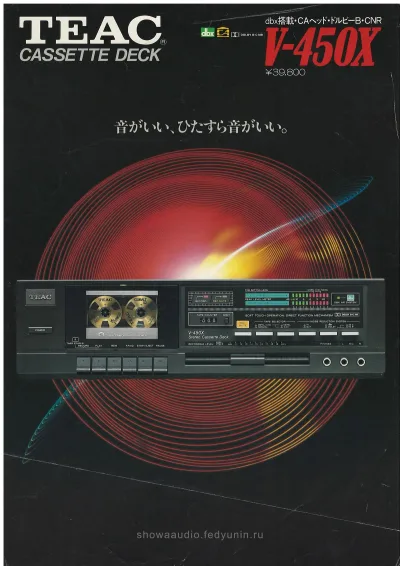
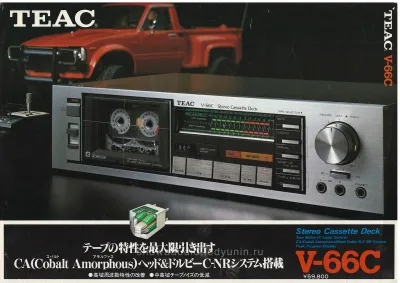
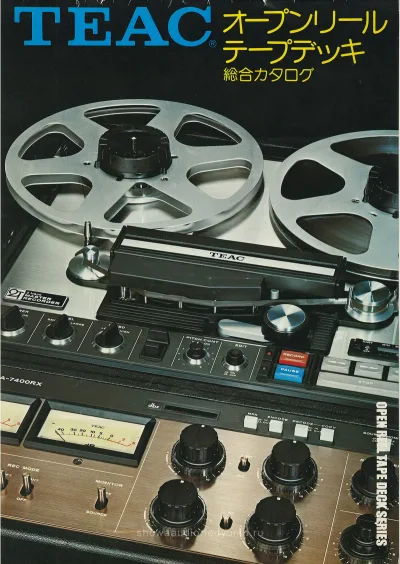
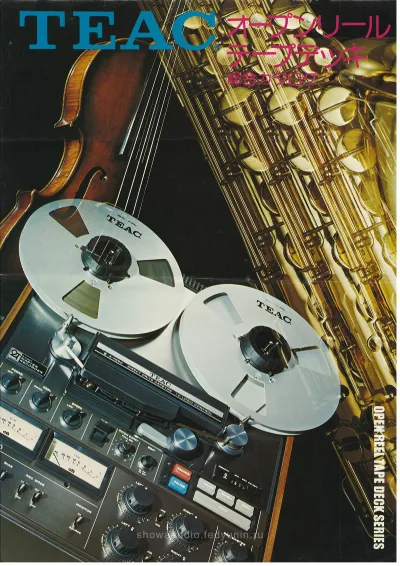
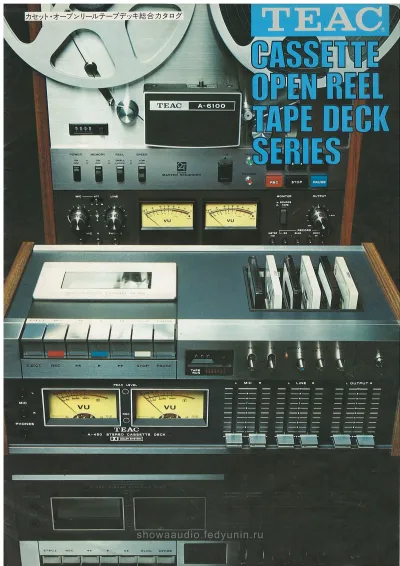
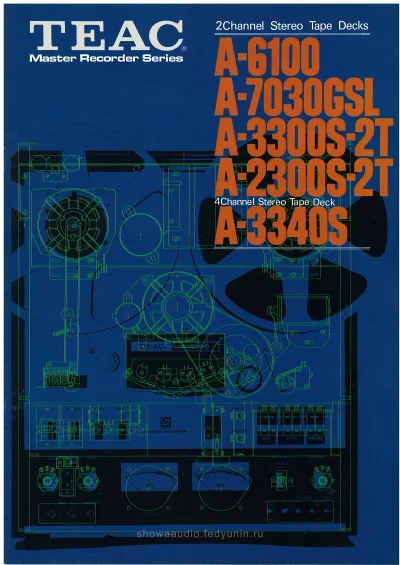
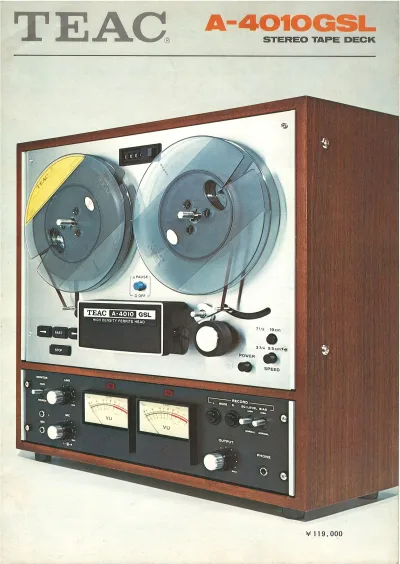
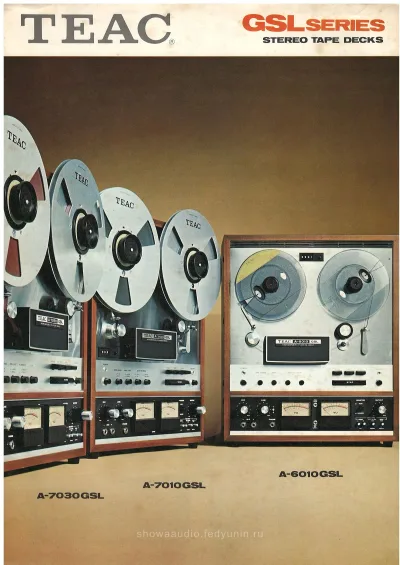
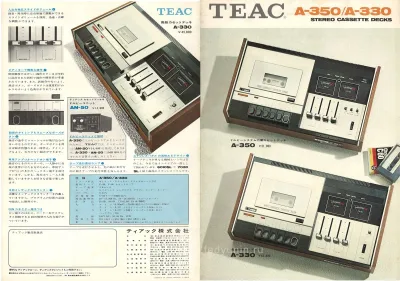
TEAC’s open-reel range broke down into two lines. The A series carried the consumer component decks: the A-4010 sold in well over two hundred thousand units, and the 1974 GSL family built on the in-house HD Ferrite Head (a high-density ferrite head in a hard-glass shell with a ferrite barrier between tracks for crosstalk rejection) - the A-7030GSL and A-7010GSL flagships at ¥205,000 with four heads and 26 cm reels, the mid-tier A-6010GSL at ¥175,000 with 17 cm reels, and the smaller A-4010GSL below them. The X series sat at the top - bidirectional open-reel decks like the X-1000R and X-2000R that physically reversed transport direction without azimuth shift. Cassette decks went on the V code: the 1982 V-66C flagship at ¥59,800 used the in-house CA (Cobalt Amorphous) head with Dolby C NR, marketed under the Super Amorphous-Metal Sound name, and the line then ran through the V-7000, V-770 and V-90R. On the professional side Tascam shipped, alongside the Portastudio 144, the 244, 246 and 388 Studio multitrack recorders together with the 80-8 reel-to-reel.
- Founded:
- 1953, Tama, Tokyo
- Founder:
- Katsuma Tani
- Full name:
- TEAC Corporation (ティアック株式会社, Tokyo Electro-Acoustic Company)
- Links:
- Wikipedia Official site