COLUMBIA
日本コロムビア
Nippon Columbia Co., Ltd. (日本コロムビア株式会社) was founded on October 1, 1910, in Tokyo by the American entrepreneur Frederick W. Horn under the name Nipponophone Co., Ltd. - 日本蓄音器商会 (Nippon Chikuonki Shokai, "Japan Gramophone Trading Company"). From 1931 the firm operated under the trademarks of the UK Columbia Graphophone Company, including the Magic Notes logo, and in 1946 it was renamed Nippon Columbia. The 1947 merger with Nippon Denki Onkyo (日本電氣音響) created the DENON brand - a contraction of Denki Onkyō - as the group's audio-equipment arm. In 2001 the audio business was spun off as Denon Ltd., with 98% of the shares held by Ripplewood Holdings and 2% by Hitachi; in May 2002 Denon Ltd. merged with Marantz Japan to form D&M Holdings. Faith Inc. took full ownership of Nippon Columbia in 2017, and the company now trades purely as a music label and game publisher. … more

- Japanese name
- 日本コロムビア
- Catalogs in the Museum:
- 11
- Catalog years:
- 1968-2001
- Equipment types
- Cassette Decks, Cassette Tapes, Amplifiers, Turntables, Speakers, CD Players, MiniDisc, Tuners, Boomboxes, Headphones, Reel-to-Reel, Stereo Systems, Mini Systems, Full Line, AV / Video
About the brand
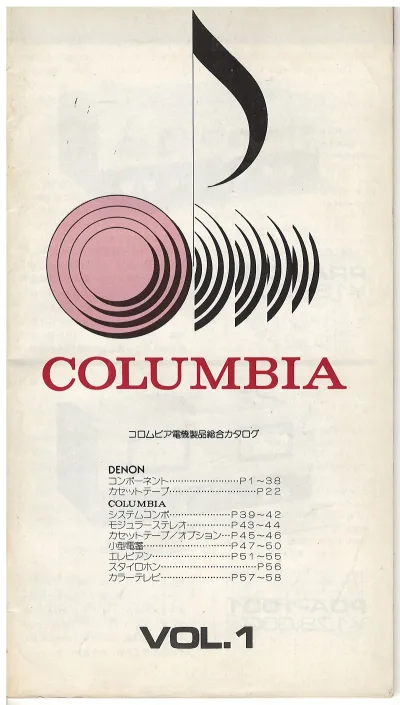
Nippon Columbia Co., Ltd. (日本コロムビア株式会社) was founded on October 1, 1910, in Tokyo by the American entrepreneur Frederick W. Horn under the name Nipponophone Co., Ltd. - 日本蓄音器商会 (Nippon Chikuonki Shokai, “Japan Gramophone Trading Company”). From 1931 the firm operated under the trademarks of the UK Columbia Graphophone Company, including the Magic Notes logo, and in 1946 it was renamed Nippon Columbia. The 1947 merger with Nippon Denki Onkyo (日本電氣音響) created the DENON brand - a contraction of Denki Onkyō - as the group’s audio-equipment arm. In 2001 the audio business was spun off as Denon Ltd., with 98% of the shares held by Ripplewood Holdings and 2% by Hitachi; in May 2002 Denon Ltd. merged with Marantz Japan to form D&M Holdings. Faith Inc. took full ownership of Nippon Columbia in 2017, and the company now trades purely as a music label and game publisher.
Magnetic tape engineered by Nippon Denki Onkyo specialists and produced at Nippon Columbia’s Kawasaki plant was adopted by Japan’s national broadcaster NHK as the standard reel-to-reel medium in 1962. Cassette production began in 1968 with the TRK series - the TRK-612 and TRK-902 shipped in cardboard sleeves styled like LP album covers. An unusual early format was the “sound album”: two cassettes packaged inside a single LP-style album case, a presentation that few other manufacturers attempted. From 1978 all cassette media under the group were unified under the DENON brand, and Columbia-branded cassettes were retired. For the full cassette story see also the translated mook article on Denon cassette history, which traces Nippon Columbia tape from the TRK era through to the end of production in the early 2000s.
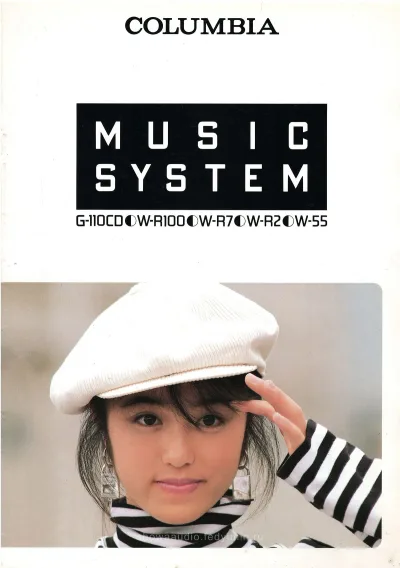
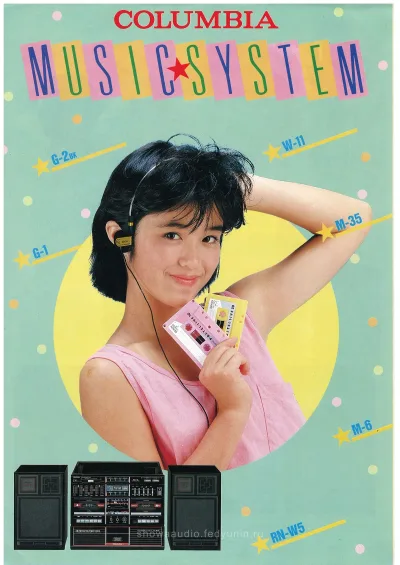
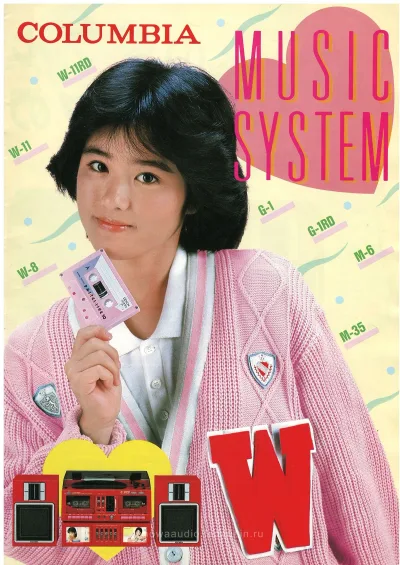
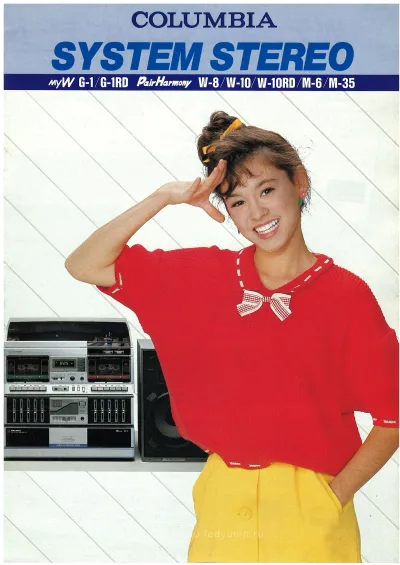
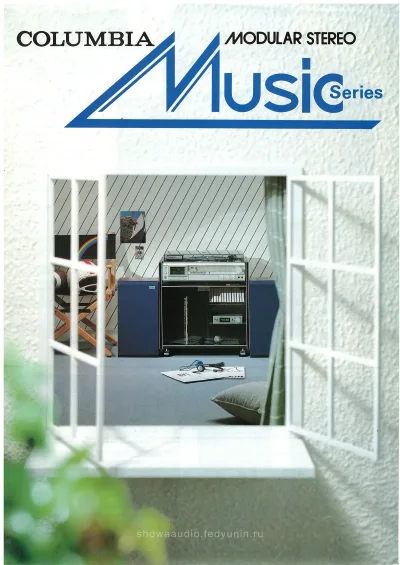
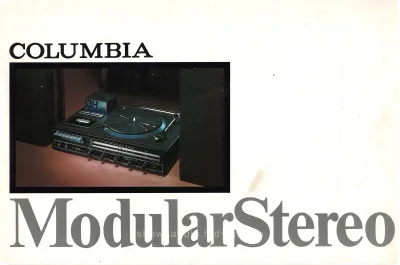
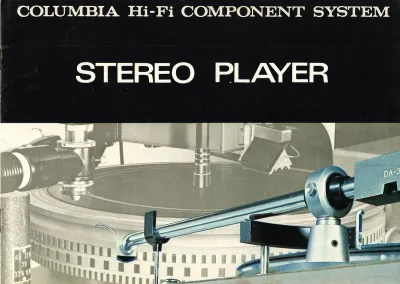
In the late 1960s the Columbia name was carried by a line of vinyl record players: the flagship DP-4500, developed jointly with professional broadcast studios, and the consumer series GP-200 / GP-300 / GP-400 / GP-500 with a two-speed automatic belt drive and a then-new patented anti-skating mechanism. Through the 1970s and 1980s the Columbia brand shifted onto mass-market integrated systems: the Beat25 and Beat25V modular stereos, the myW music centres (flagship G-1, a dual cassette deck paired with a built-in equaliser aimed at home recording) and the Pair Harmony line (W-8, W-10, M-6, M-35, each combining a receiver, turntable and dual deck in one unit). The CD era brought the G-FRIEND and W-FRIEND systems - top of the line was the G-110CD with a built-in CD player, a 56-watt amplifier, a 7-band graphic equaliser (グラフィックイコライザー) and a full-logic auto-reverse dual deck called Full Logic W-reverse (フルロジックWリバース). Through the 1970s and 1990s, Columbia integrated systems and DENON hi-fi components ran side by side as the two product lines of one corporation.
- Founded:
- 1910, Minato, Tokyo
- Founder:
- Frederick W. Horn
- Full name:
- Nippon Columbia Co., Ltd. (日本コロムビア株式会社)
- Links:
- Wikipedia Official site